
 E-Paper



HT Archive: Despite big economic gains, many gaps remain
We must recognise that the task is far from being over.

 Prefer HTon Google


(Edited excerpts of an article written by former Prime Minister Manmohan Singh that appeared on August 15, 1997.)
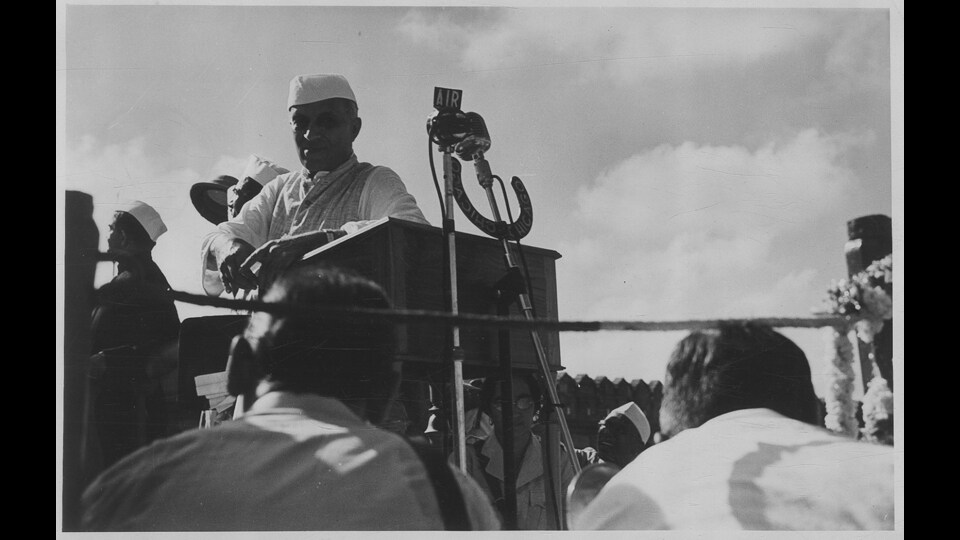
In a memorable speech delivered to the Constituent Assembly on the eve of Independence on August 14, 1947, Pandit Jawaharlal Nehru outlined the country’s basic, social and economic objectives as follows: The future is not one of case or resting but of incessant striving so that we may fulfil the pledges we have so often taken and the one we shall take today. The service of India means the service of the millions who suffer. It means the ending of poverty and ignorance and disease and inequality of opportunity.
The ambition of the greatest man of our generation has been to wipe every tear from every eye. That may be beyond us, but as long as there are tears and suffering, so long our task will not be over.
Also Read: Tales from Delhi of homes lost, hope found
We must recognise that the task is far from being over. Our country has made impressive all-round progress since Independence. We can take legitimate pride in the fact that this progress has been sustained in the framework of a democratic polity and an open society deeply committed to fundamental human freedoms and the rule of law. Our economic structure has been considerably diversified. We have now a vast reservoir of scientific, technological and managerial skills. There has been a significant improvement in the nation’s educational and health status as measured by school enrolment, literacy rate and life expectancy at birth.
Also Read: How Partition reshaped Delhi – and its soul
Nevertheless, we have to face the reality that the overall pace of social and economic development has fallen short of the aspirations of our people and the objective potential of our economy. Our long-term rate of economic growth compares unfavourably with China as well as many other countries of East and South East Asia.
The employment opportunities have not grown fast enough to absorb both the new entrants to our growing labour force and the backlog of previous unemployment. As a result, there is an increasing feeling of unrest and even of alienation among a section of our youth.
Also Read: Foot soldiers who won India freedom
The overall pace and pattern of industrial growth has not led to a significant reduction in the proportion of people dependent on agriculture for their livelihood. Since agriculture’s share in our national income has fallen from nearly 50% in the early fifties to less than 34% in the late eighties, the income gap between rural and urban India is now much wider than at the time of Independence.
Extreme poverty and affluence walk side by side. The growing degradation of India’s land and water resources now threatens the livelihood of millions of small and marginal farmers who live on the edge of subsistence. For many of them life remains marginal at best.
Self-reliance has been a basic objective of planning in India since the early 1960s. Yet until recently, the country had to face a chronic shortage of foreign exchange. Our exports in the 1980s financed only about 60% of our imports and the country has had to depend heavily on such artificial props as concessional aid equal to 2-3% of our national income year after year.
India was probably the first developing country to launch an official family planning programme. However, its impact on the rate of growth of population has been rather modest.
Also Read: When Delhi’s monuments became shelters
These harsh realities are now well known. And it was this recognition which led to a considerable amount of rethinking in the 1980s about our basic economic strategies. The grave economic crisis of 1991-92 accelerated this process of rethinking and far-reaching changes have been made in our economic policies during the last six years so as to align them with contemporary realities.
Despite many controversies associated with these changes, it is now generally recognised that the initial results on the whole have been very positive. The country was able to overcome the crisis of 1991-92 with the least possible damage to the underlying rhythm of the growth process and without any major social upheavals as witnessed elsewhere in the developing world. Indeed, a basis has been laid for a sustained improvement in the country’s development prospects. However, that task is still unfinished.
Fortunately, six years of intense national debate and the actual performance of the economy since the introduction of reforms in 1991-92 have now produced a broad national consensus about the basic design of our economic policies. It is now agreed that the fiscal systems both at the Centre and the States need major restructuring. But there must also be an explicit recognition that an effective agenda of economic reforms can succeed only if backed up by credible political reforms to modernise the apparatus of the Indian State at all levels.
India needs a significant set up in savings and investment rates, and in particular in the rate of public savings, if it aspires to compete with East Asia and South East Asia in the race for economic development. Yet, the pressures of competitive populism are now so strong that very few politicians have the courage to cut subsidies, to curb wasteful spending or to adopt credible measures to deal with the chronic sickness and low productivity of a large number of public enterprises both at the Centre and the states. There is unwillingness to face the harsh reality that if tax cuts (essential though they may be in some cases) and rising subsidies were all that was needed for development, there would hardly be any poor country left in the world.
The problem is further compounded by widespread deterioration of standards of public administration leading to large scale leakages of funds meant to promote development.
Frequent changes in postings and transfers are increasingly being used to make civil servants a subservient tool in the hands of politicians. Lack of transparency in public sector bidding and contracting procedures is giving rise to arbitrary use of power and corruption.
Although we have a country which takes pride in being governed by the rule of law, weak law enforcement and inordinate delays in the settlement of legal disputes often make a mockery of such claims. Citizens are often helpless silent victims of an apathetic and indifferent administration. What is all the more distressing is that Parliament and state legislatures find very little time to deal systematically with the growing erosion of both efficiency and integrity in our system of public administration.
Sustained and people centred development is not like going to a free dinner party. It requires hard political decisions for which the necessary political will has to be mobilised. We need to draw up a credible programme of reform of our political and bureaucratic structures so as to restore our people’s faith in politics as a genuine vehicle of social change.
HT Archive: Integration to integrity - The mission before India


