E-Paper



I-Day Special: When Delhi’s monuments became shelters
In the chaos after Partition, beneath domes, thousands of families cooked, wept, and picked up the pieces of their lives

 Prefer HTon Google


In the months after Independence, as trains crammed with refugees screeched into Delhi, the city’s most iconic landmarks became unlikely shelters.
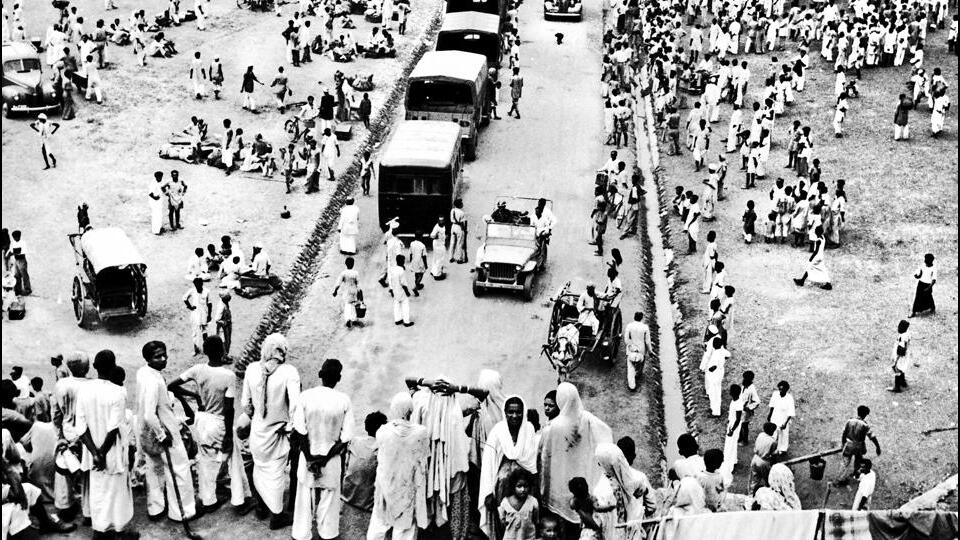
Humayun’s Tomb, Purana Qila, Tughlaqabad Fort, Safdarjung’s Tomb – the postcard icons of Mughal grandeur in Delhi – turned into vast refugee camps. Beneath marble domes and along crumbling battlements, tents flapped in the wind, cooking fires smoked, and families huddled under thin blankets through one of the coldest winters in living memory – or at least that’s what it felt like to them.
Also Read: Tales from Delhi of homes lost, hope found
In 1947, these monuments were not backdrops for heritage walks like they are today. They were the frontlines of Delhi’s post-Partition upheaval.
“It was a turbulent time,” recalled Sohail Hashmi, author and chronicler of the city’s layered past. He remembers family stories of how Partition carved up not just maps, but daily lives. Muslims heading for Pakistan gravitated to Humayun’s Tomb and Purana Qila – as both were within walking distance of Nizamuddin railway station, the departure point for trains bound west. Hindus and Sikhs arriving from the Punjab and Sindh provinces were steered to other camps, including Tughlaqabad and Feroz Shah Kotla.
“A fairly large settlement came up outside the Red Fort,” Hashmi said. “People stayed wherever remains of the old city walls existed and wherever there was any shelter.”
Also Read: Foot soldiers who won India freedom
Hashmi recalled that his mother’s family – her parents, three brothers, sister, sister-in-law, and two young children – were among those adrift. They set out for Pakistan, but never made it onto a train. When they returned to Purana Qila, they found themselves erased from the camp’s register. “They were told to go to Humayun’s Tomb instead, but not to say they were coming from the Old Fort,” Hashmi said. “They had to say they had just come out of hiding.”
For months they moved between the two monuments, trying to keep dry in leaky government-issue tents. Hashmi remembers one story his mother told him vividly: “She described to me the cold freezing winters they spent there. My maternal grandfather, a Persian poet, huddled in a corner during a downpour, hugging his manuscripts to keep the ink from running.”
A city under strain
The refugee influx swelled almost overnight. Violence erupted, pushing Muslim families from their homes in the old city toward monuments that could offer space and some measure of safety. Then came the waves in reverse – Hindus and Sikhs fleeing across the new border, in need of shelter until permanent housing could be found.
Also Read: How Partition reshaped Delhi – and its soul
“Many of these monuments had been lived in before,” said historian and author Swapna Liddle. Purana Qila, she pointed out, still had a village inside its walls until the 1920s, when residents were relocated to make way for landscaping projects during the construction of New Delhi. “So, when people suddenly needed housing again, it was instinctive to use these spaces.”
Sites near the Yamuna, with ready access to water, became especially prized. Safdarjung’s Tomb was set aside for women and children who had arrived without male relatives. Old Fort, with its massive courtyards, became a semi-permanent settlement. Markets, latrines, and even makeshift shops sprang up inside the walls.
“In some cases, people stayed for years,” Liddle said. “When they finally left, all that construction was torn down.”
Ratish Nanda, CEO of the Aga Khan Trust for Culture, has pored over photographs from the period. “You see rows of tents stretching across the lawns of Humayun’s Tomb, right up to the plinth of the main chamber. These weren’t temporary in the way we think of it now – they remained there for a long time.”
Life between domes
A 2023 research paper by Deborah Ruth Sutton, from department of history at Lancaster University, titled “Masjids, Monuments and Refugees in the Partition City of Delhi”, reconstructs that world in granular detail. She wrote that in February 1948, more than 17,000 people were living in and around Humayun’s Tomb.
When a fire ripped through Kingsway Camp later that year, displacing 10,000, the tomb was thrown open again to accommodate them. By January 1949, some 3,000 people remained, surrounded by hastily built latrines, bathing facilities, and brick-walled shelters.
Also Read: How India’s demographic profile has changed over last 8 decades
Then at Feroz Shah Kotla, Sutton found, occupation spilled beyond the official camp, creating an informal settlement in the fort’s southern enclosure. And the government did not limit its commandeering of open space to ruins: even the manicured gardens of Lutyens’ Delhi bungalows – including those belonging to Prime Minister Jawaharlal Nehru, Maulana Abul Kalam Azad, and Rafi Ahmad Kidwai – sprouted tented encampments.
NDMC officials, Liddle notes in her book Connaught Place and the Making of New Delhi, were “horrified” at the thought of Humayun’s carefully landscaped lawns being dug up for latrines.
But at that moment, necessity overrode aesthetic preservation.
The memoir In Freedom’s Shade by activist-writer Anis Kidwai, originally published in Urdu, paints a searing portrait of life in these camps: the shortage of blankets, the sweep of pneumonia and influenza through tent rows, shrouds cut too short because cloth had run out, unclaimed bodies awaiting burial.
These were not just shelters, but stages for grief, improvisation, and endurance. The census tells the larger story: Delhi’s population surged by 90% between 1941 and 1951, transforming the city’s social and physical fabric.
Some refuges, however, were far from the main axis of heritage tourism. Historian Rana Safvi recounts how Khwaja Qutbuddin Bakhtiar Kaki’s dargah in Mehrauli became a stopover for those crossing into Delhi.
On January 27, 1948, Mahatma Gandhi arrived for the shrine’s annual urs.
According to his aide Pyare Lal Nayar, Gandhi was “devastated” to see the dargah damaged in the violence, with refugees from Pakistan camped nearby. He urged them to help rebuild it and pressed Nehru to allocate ₹50,000 for repairs – an enormous sum at the time.
Before leaving, Gandhi delivered what would be one of his last appeals for peace:
“I request Muslims, Hindus, and Sikhs who have come here with cleansed hearts to take a vow that they will never allow strife to raise its head, but will live in amity, united as friends and brothers. We must purify ourselves and meet even our opponents with love.”
From camps to colonies
It would take years before the refugee population moved out of these improvised shelters. Government-planned colonies like Lajpat Nagar, Rajinder Nagar, and Jangpura eventually absorbed many of those who had once slept beneath Humayun’s great dome or in the arcades of Purana Qila.
The makeshift markets and shelters inside the forts were dismantled, lawns relaid, and walls patched. Yet the episode left an indelible mark on the city’s monuments – and on the families who passed through them.
Today, a visitor to Humayun’s Tomb might pause at the symmetry of its gardens, the cool echo of its chambers, the stillness of its sandstone. Few would guess that in living memory, this quiet was once broken by the clang of tin utensils, the crying of infants, the muffled weeping of the bereaved.
The marble still bears no visible trace of 1947. But for those who were there — and for the city itself — the memory remains etched, in stone, and in the stories handed down by the people who were there.
HT Archive: Integration to integrity - The mission before India
HT Archive: Despite big economic gains, many gaps remain