
 E-Paper



Independence Day Special: Foot soldiers who won India freedom
Everyday heroes who helped win freedom

 Prefer HTon Google


Independence was won not just by stalwarts but also ordinary people, 13,212 of whom are still alive today.
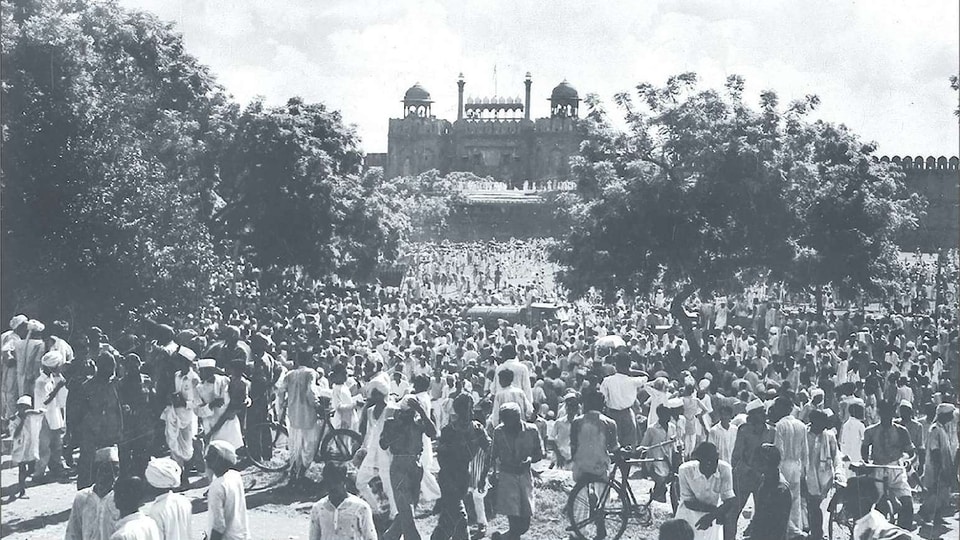
HT profiles some of them.
P Vasu: He fought for freedom, and against Emergency

P Vasu might be 102 but still moves about his house in Cheruvannur in Kerala’s Kozhikode district with the help of a walker, reads at least two newspapers a day, and watches television news with great intent, trying to keep himself informed of what’s happening in the country.
Born in January 1923, Vasu got a whiff of nationalistic sentiments early when his father took him to hear Mahatma Gandhi when the latter visited Kozhikode in 1934. He was just 11 then, but by the time he was in his late-teens in 1942, Vasu found himself leading an agitation by the Congress in his native Cheruvannur on the sidelines of the Quit India movement. That year, he was arrested and sentenced by a judge to three-and-a-half months in jail , where he was tortured.
In 1943, Vasu had to go underground in erstwhile Madras for over nine months after the police attempted to put him in preventive custody in connection with a case of a bomb threat on Farook bridge. “I had nothing to do with it but because I was jailed previously, my name was on the police list and I had to go into hiding. It was an extremely tough period,” Vasu told HT over phone.
Also Read: Tales from Delhi of homes lost, hope found
After Independence, Vasu joined the socialist party and was given its membership by stalwart Jayaprakash Narayan in Kozhikode. His strong beliefs in socialist ideals earned him the nickname among locals -- ‘Socio Vasu’.
In 1951, the then Madras presidency, under which the Malabar region in Kerala fell at the time, offered 10 acres of land in Wayanad and ₹2,000 to several freedom fighters including Vasu. But he refused to accept. “Jayaprakash Narayan told us that we fought for the country’s freedom, not for financial gains. Accepting it would have gone against my socialist ideals,” said Vasu.
In 1975 during the Emergency, Vasu was beaten by the police for picketing the local post office. He spent 23 days at the Kozhikode Medical College hospital for treatment. In 1997, on the 50th anniversary of independence, Vasu was felicitated in Delhi by then President KR Narayanan.
Is he happy about the present state of the country? “No,” came the reply. “It is not the India we envisioned in 1947. We are losing our secular ideals,” he said.
Lt Rangaswamy Madhavan Pillai: ‘Freedom demands sacrifice...’
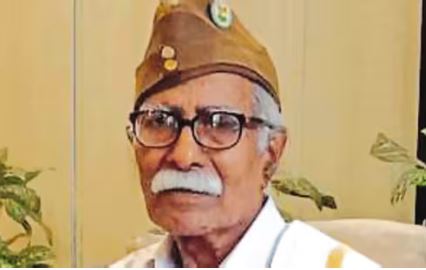
Lieutenant Rangaswamy Madhavan Pillai, a member of the Azad Hind Fauj, founded by Netaji Subhash Chandra Bose, is among the last few recognised freedom fighters living in Delhi.
Born on March 13, 1926, in the Saryan township of Rangoon district in Burma (now Myanmar), he is now 99. He joined the Indian Independence League as a civilian in 1942 under Rash Behari Bose.When Netaji arrived in Singapore, Lt Pillai formally enlisted in the Indian National army, also known as the Azad Hind Fauj, on November 1, 1943, at the age of 17. He served as a recruitment and fund-raising officer.
Also Read: How Partition reshaped Delhi – and its soul
“We would go to families and ask mothers and fathers to enlist their sons for the sake of the country. Freedom demands the sacrifice of blood, that is what Netaji said. We had a mission that could be accomplished only at a cost. We had to return to those families and inform them about the passing of their sons when they fought and paid with their lives,” said Pillai, now bedridden for the past six months.
He was imprisoned for eight months in Rangoon Jail in 1945. He returned to India with his family in 1971 and was officially recognised as a freedom fighter by the Government of India on August 1, 1980. His son Ganesh Pillai said that around 1945-46, when most of his recruits died during World War II, Pillai was disturbed, took up Buddhism and learnt the Pali language.
Iqbal Singh went to jail when children his age learnt the alphabet
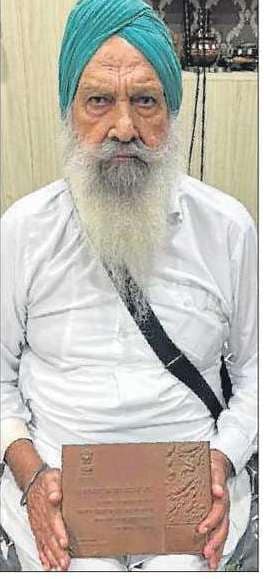
At an age when most children are busy learning the alphabet and numbers, Iqbal Singh was learning the harsh realities of colonial oppression — inside a prison cell.
Now 89, the freedom fighter from Ferozepur district, who has lived in Ludhiana for 45 years, recalled how he was just 7 or 8 when he joined a protest against British rule. “They arrested me along with other protestors and sent us to Lahore Central Jail. My age didn’t matter to them; the British officers thrashed me mercilessly,” he said.
Also Read: When Delhi’s monuments became shelters
After coming to Ludhiana, he started dairy farming. His son Gursewak Singh is continuing the business. He takes pride in India’s development but he has one regret. “The state government used to invite us to attend Independence Day and Republic Day celebrations every year,” he said. “Now, very few of us freedom fighters are alive. Yet many of our demands, like proper housing and free medical facilities, remain unmet.”
Tarachand Jain: ‘I am happy with the country’s progress’
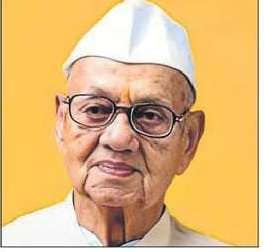
Born on December 12, 1925, in Madhya Pradesh’s Sagar district, Tarachand Jain aspired to become a teacher, just like his father. However, his life took a dramatic turn when he was dismissed from his school at 17 for participating in the Quit India Movement in 1942. Inspired by Mahatma Gandhi, Jain joined the freedom struggle and was imprisoned for six months.
An athlete and long-time supporter of the Indian National Congress, Jain expressed concern over the party’s current state. “I am happy with the country’s progress — be it access to water, road construction, housing for the poor, or improvements in education. But I feel distressed about the Congress’s condition due to weak leadership,” he said.
Also Read: How India’s demographic profile has changed over last 8 decades
Jain is also disappointed with the growing influence of caste and religion in politics. “When we fought for freedom, we were united by a dream of a united India—free from divisions based on caste and religion. Even after 78 years of independence, political parties continue to promote reservation and division. Progress should not only be material but also mental and social,” he said.
Narayan Chandra Maiti: ‘I went underground to evade arrest, used to hide in jute fields’
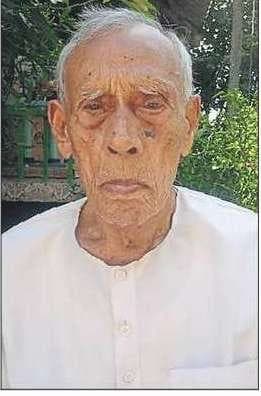
Today, the nation marks its Independence Day. But 101-year-old Narayan Chandra Maiti, a resident of Chakdurgadas, a remote village in West Bengal’s East Midnapore district, is still fighting a legal battle in the Calcutta high court to get a pension under the Swatantrata Sainik Samman Pension Scheme.
“I had to go underground to evade arrest. I used to hide in jute fields. But one day when I was hiding in an abandoned village house, a villager recognised me and informed the police. I was arrested. Later I got bail,” he said.
Maiti participated in the Quit India Movement of 1942 under the leadership of Sushil Kumar Dhara, freedom fighter who was later elected as an MLA in the West Bengal assembly and a Lok Sabha MP. A certificate given to Maiti by Dhara in 1981, states that between 1942 and 1944, Maiti was a worker of the government styled Tamralipta Jatiya Sarkar and a soldier of its militia.
“Several decades have passed since we gained independence. But there are many freedom fighters who are yet to get their due respect. There are many like me who are still fighting to get a freedom fighters’ pension,” said Maiti.
Dharam K Singh: My family was placed under house arrest
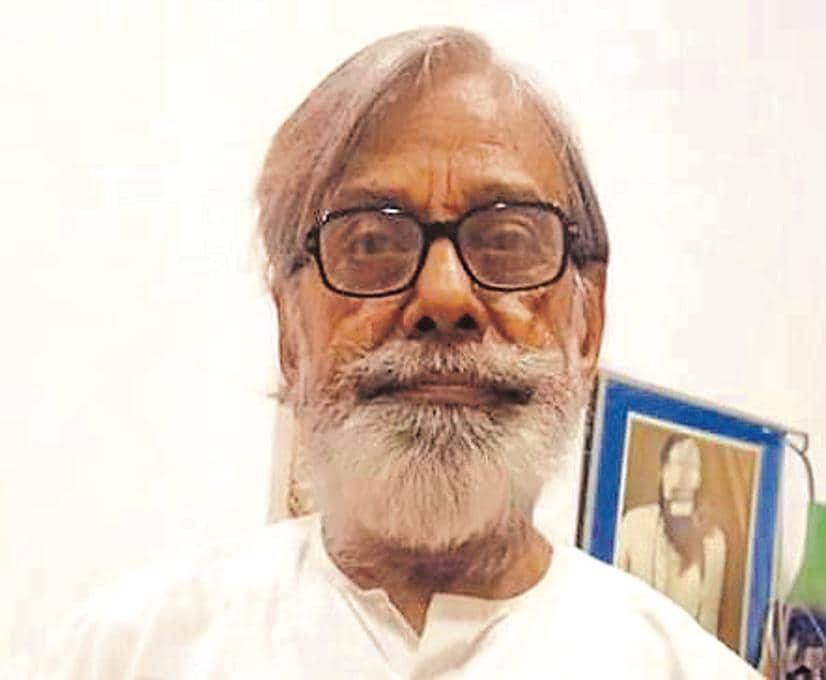
Dharam Kumar Singh was 10 when the Quit India Movement swept across the country in 1942. His grandfather, father and uncles were deeply involved in mobilising people against the British in Shivli and Rasoolabad regions, then part of Kanpur.
“When the authorities failed to trace my father and others, our entire family was placed under house arrest,” he said. At that time, bands of children aiding the freedom movement were popularly called the Vanar Sena.
“I was part of one such group in my village. Our role was to raise patriotic slogans, distribute pamphlets, paste posters, and carry food to revolutionaries in hiding, including my father, all while evading British spies,” he said.
Eventually, the chowkidar of the village, Tendi Khurd in Shivli, alerted the police. “I too was placed under house arrest, along with my siblings, for over three months,” he added.The vision of independent India that Singh had cherished, however, remains unfulfilled, he claimed. “Crime has risen sharply, and corruption has reached alarming levels. Although we have made remarkable economic progress, crime and corruption have also grown alongside it.”


