E-Paper



HT Interview: The China-plus-one thinking is old news; it’s now India-only, says Goyal
The G20 Summit under PM Modi's leadership has established the country as a reliable and trustworthy partner in global trade and diplomacy, the minister said

 Prefer HTon Google


The G20 Summit happened at the right time, in the right place, under the right leader, Union minister of commerce and industry, food and public distribution, and textiles Piyush Goyal told Rajeev Jayaswal, adding that the multilateral forum has established India in a leadership position where the global community’s confidence on the country’s supply chain resilience has changed from “China-plus-one” to “India only”. Edited excerpts:
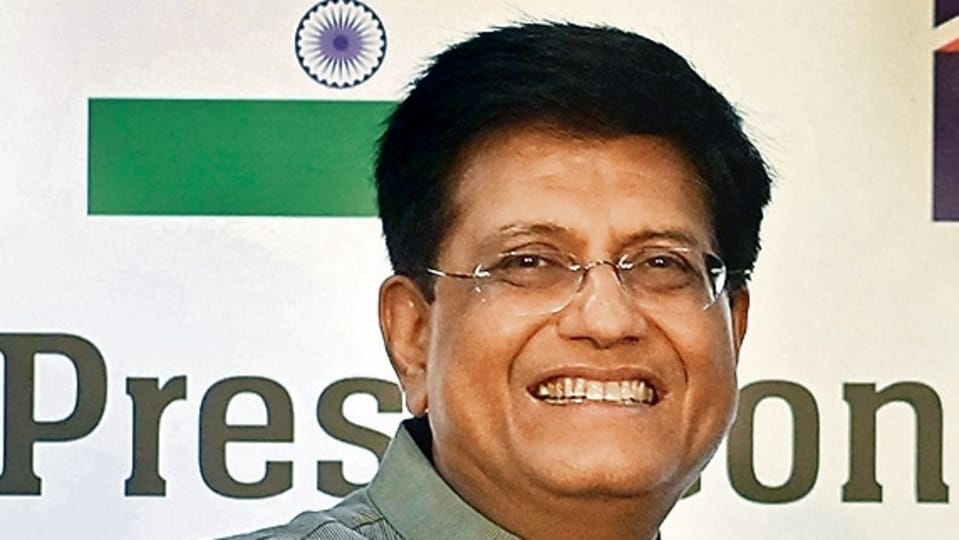
How do you see the G20 India Presidency, the Delhi Declaration, and the Leaders’ Summit held in the Capital on September 9-10? If I have to sum it up in just one world, I would say: “Trust”. The unanimity in the prevailing geopolitical situation at the Leaders’ Summit was absolutely unprecedented. It reflected the trust of all G20 countries on Prime Minister Narendra Modi and on 140 crore Indians. Prime Minister Modi united all members at a time when they held divergent views on geopolitical matters. Due to efforts of Modi ji, the theme of India’s G20 Presidency -- “Vasudhaiva Kutumbakam” or “One Earth, One Family, One Future” was actually realised. The G20 India Presidency happened at the right time, right place, under the right leader, who believed in multilateralism and inclusiveness. Prime Minister Modi also took India to greater heights. And from the most popular leader of India, he became a popular leader of the world today.
Also Read: HT interview: Felt G20 consensus won’t be reached multiple times, says Kant
How did the G20 India presidency help India’s economic diplomacy, trade, and investments? The G20 has demonstrated India’s emergence on the world stage -- as a nation that provides leadership of vision, leadership that is sensitive and cares for the world, leadership that can be trusted, and leadership that can take along very divergent view points and build consensus for the good of all of humanity. Prime Minister Narendra Modi has made every Indian, 140 crore Indians, proud of their achievements. He made 140 crore Indian recognise their own strengths, which will hold us in good stead. It will help us in this Amrit Kaal (the 25 years leading to 100 years of India’s independence in 2047) to lead the world to the more sustainable future.
So, If I have to break down to three elements how India took international diplomacy to a completely new elevated plane,I would describe it as: one, bridging the global trust deficit to bring a consensus in vastly difficult circumstances; two, demonstrating the confidence the world has in Prime Minister Modi’s leadership, and the trust that he has earned and the trust that the world has bestowed on him; and three, the emergence of India as the voice of the Global South. We are leading the world in recognising the importance of meeting the sustainable development goals (SDGs) for a just future for every nation in the world.
Do you think that the world accepted India as part of their China-plus-one strategy? I think, after this G20 Summit, and in the last few years, the way Prime Minister Modi has communicated our achievements to the world, India is now recognised on its own. Now it is no longer China-plus-one. The global community accepts India as a reliable and trustworthy partner. Our abilities, resolve, grit and tenacity are acknowledged globally. We delivered whenever world needed us. We were on the forefront with India vaccines when Covid-19 pandemic devastated global economies. The China-plus-one is now an old expression. It is now “India only”.
The Delhi Declaration contains elements of trade – reaffirming a rules-based, non-discriminatory, fair, open, inclusive, equitable, sustainable and transparent multilateral trading system, with WTO at its core. Similarly, it welcomes the ‘Jaipur Call for Action’ to enhance small businesses’ access to information to promote the integration of micro, small and medium enterprises (MSMEs) into international trade. How do you see the vision being translated into action? First of all, I’m grateful to all the leaders recognising the importance of multilateralism, which in a way got strengthened by the fact that India could come up with the Leaders’ Declaration in such difficult time. Multilateralism in trade and commerce is represented by WTO (World Trade Organization), where also the world has seen how India provided pathways to forge consensus during the last ministerial and came out with an outcome document where the expectation was none. The leaders have collectively strengthened multilateralism in trade for a rules-based global order, which is particularly beneficial for developing and less developing countries. The principles of WTO enshrine rightly certain carve-outs and benefits for the developing and less developed countries to give them a chance to build a better economy.
What are the key or unique features of the G20 under India’s presidency? It’s a people’s G20, and we have been able to establish that the purpose of a forum like G20 is to include everyone. It has strengthened India’s position in the global arena, and under the leadership of Prime Minister Modi, we have been able to make it more inclusive. Arriving at a consensus to make African Union as part of the G20 was not a small achievement. It exhibits India’s vision of inclusiveness. The trust and goodwill of both developed and developing countries, thus earned, will help in attracting foreign investments. India is considered as the provider of a reliable global supply chain. It will help countries trade and commerce to flourish and create jobs.
The 13th WTO Ministerial Conference (MC13) will take place in the week of February 26, 2024 in Abu Dhabi. What is India’s plan and preparedness? We have already started preparations and we will continue to protect our interest along with the interests of the Global South. For example, even the last time (MC12 in Geneva), India played a key role in protecting interests of developing and least-developed nations. We helped in securing a protective shield to the fishing communities, and farmers were also protected.
Similarly, on food security, we ensured securing food for the people of India was our first priority. It was ensured that India would first meet its own requirement before exporting foodgrain. In order to ensure availability of food items for our own people, we secured rights to impose restrictions (export restrictions). Similarly, TRIPS (Trade-Related Aspects of Intellectual Property Rights) waiver was achieved in the fields of pharmaceuticals and medicines. Keeping the interest of the people, we did not allow passing of any adversarial decision. In the similar manner, with similar intensity, India will protect interests and rights of developing and least developed countries in the coming Abu Dhabi Ministerial.