
 E-Paper



Era of US dollar over? Economist James Galbraith expresses confidence in American currency
James Galbraith said he believes economic policies should aim to search for a set of balanced relationships that “respect national interest of all players”.

 Prefer HTon Google


American economist and author James Galbraith, while speaking about whether the era of the US dollar as the world's reserve currency is over, expressed confidence in the American currency and indicated that there's no risk to it as other asset classes, like gold, aren't as liquid.
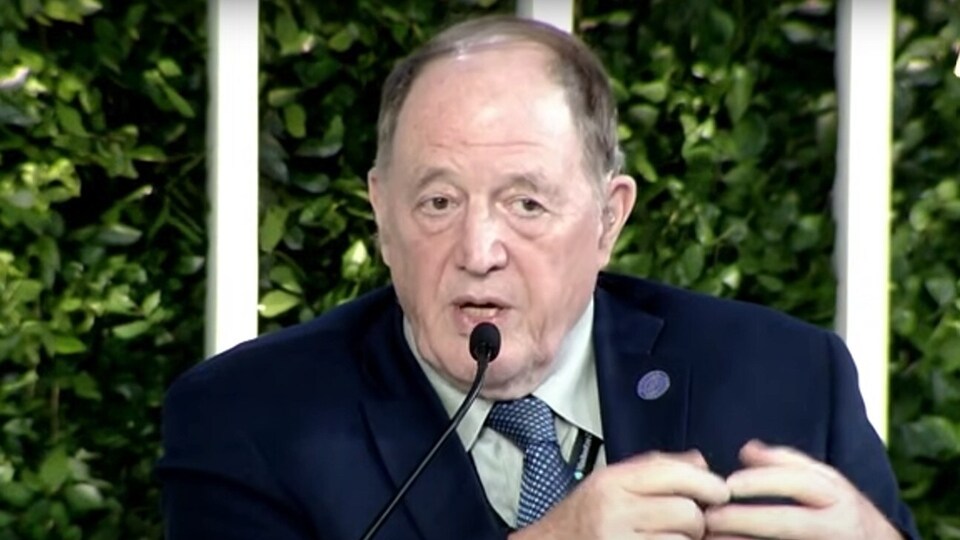
"I think it is much harder to replace the role of US government debt with some combination of other assets. Gold obviously can play a role and so forth but to do that, you have to essentially mix a portfolio of alternative assets and that gets you into all kinds of, let's say, speculative risks. So my guess is the role of US government debt as a reserve asset would continue, not forever, but for the time being," Galbraith said while speaking at the the 23rd edition of the Hindustan Times Leadership Summit.
Track live updates of Hindustan Times Leadership Summit here.
‘China has won the tariff war’
Diving into the tariff war between the United States and China under the current Trump administration, Galbraith said that the latter has essentially won the war with its retaliation against US tariffs by using exports of rare-earths as leverage.
Speaking about the trade deal the world's two biggest economies struck earlier this year, Galbraith said, “China said we will give you a relief from the export controls (on rare-earth materials) for one year. This is what is known in judicial parlance as a deferred adjudication.”
“I think we are in a situation where the relationship is now stabilised because there is nothing the US can do in a year that will significantly affect its need and availability of rare-earths and there is nothing they can do on any time horizon that will give them an alternative supply of gallium,” he added.
What should be the aim of economic policies?
Earlier, he also spoke about what should be the aim of economic policies particularly at this time when growth is no longer guaranteed and said that it should be the “search of peace” and “search of stability”.
“And a search for a return to, I am not a pure free trader, but to a set of balanced relationships that respect the national interest of all the players, especially of the most dangerous major players and that is something which requires revisiting the vision of the world, which developed with the collapse of the Soviet Union in the 1990s,” he said.
"...there was essentially going to be one steward of the world system, which was going to be the United States, and a whole generation of American political leaders who have grown up with that vision and with a certain set of doctrines that go along with that vision, which are economic doctrines, doctrines that essentially point to open trade, open finance and let's say a hierarchy in the world system, it is clear that that ideal is now effectively defunct. And what has to happen is for those who are still in positions of authority to come to grips with that reality," he continued.


