
 E-Paper



IED attacks rise as terrorists, insurgents change strategy to avoid direct clashes
Terrorists and insurgents in Jammu and Kashmir, Maoist-affected states, the northeast and other parts of India used more improvised bombs to target security forces and the public last year compared to 2020.


Terrorists and insurgents in Jammu and Kashmir, Maoist-affected states, the northeast and other parts of India used more improvised bombs to target security forces and the public last year compared to 2020.
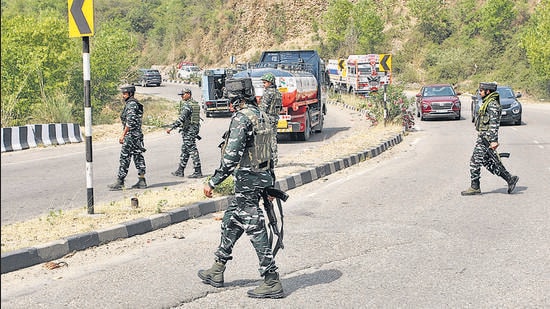
An analysis on the use of improvised explosive devices (IEDs) by National Bomb Data Centre (NBDC) of the elite counter-terrorism force, the National Security Guard (NSG), said 132 such blasts took place across the country in 2021 in which 80 people were killed. In 2020, 120 blasts with 40 fatalities were recorded.
However, due to the alertness of the security forces, an all-time high recovery of 536 crude bombs was also made in 2021, 311 more than 2020, the analysis showed.
Most IED attacks – 55 out of 132 last year – were carried out by Maoists, followed by 50 by terror groups in other parts of the country. Sixteen attacks took place in Jammu and Kashmir, while 11 were recorded in the northeastern states.
In 2020, 49 bomb blasts were carried out by Maoists, 12 by terrorists in Kashmir and 11 by insurgents in the northeast. Forty-eight IED attacks took place in the hinterland, the analysis showed.
“IED blasts have increased across the country, except in the northeast. Terrorists are relying more on IEDs to avoid direct confrontation with security forces. But the agencies have done an exemplary job in tracing IEDs as well,” a counter-terrorism officer said, requesting anonymity.
Besides a rise in bomb attacks last year, agencies have seen a sudden shift to use of victim-operated IEDs by terrorists and insurgents, who no longer prefer to be present at the spot, the officer said.
A victim-operated IED is set up by the perpetrators in a way that the victim unknowingly causes it to explode. Terrorists worldwide use methods such as a trip wire or a pressure pad to activate such bombs.
“In India, terrorists have conventionally preferred command mechanism to trigger the IEDs, and this was consistent till 2020. However, this trend changed last year, when more victim-operated IEDs were planted,” a second officer said on condition of anonymity.
A command-based IED is the one where terrorists explode the bomb through command wire, radio control or suicide switch. A third method is the delay mechanism involving use of timer devices. This is also used in India, but the number of such blasts ranged from zero to four since 2017.
The analysis also found increasing use of high explosives in IED attacks in India, particularly those carried out by Maoists.
In 2021, high explosives were used for 67% of all crude bomb attacks. This ratio was 62% of high explosives compared with 38% of low explosives the previous year.
High explosives, or detonating explosives such as dynamite and ammonium nitrate, are commercially available in India and. They used in mines and stone quarries. Military grade high explosive is procured by terrorists from Pakistan.
Low or deflagrating explosives such as black powder and nitrocellulose undergo slow auto-combustion when set off and evolve large volumes of gas in a controllable manner.
“In majority (55%) of IED attacks, security forces are the target of insurgents and terrorists, mostly in Jammu and Kashmir and left-wing extremism theatres,” the second officer said. “In 45% cases, the general public faced the brunt of the bombs.”
In Jammu and Kashmir and Punjab, as already alerted by intelligence agencies, there has been an increase in procurement of improvised bombs using drones in the past two years. Pakistan-backed terror outfits and Khalistani networks have been using drones extensively to send these bombs to carry out coordinated attacks, officials said.
Subsequently, Jammu and Kashmir for the first time last year recorded the advent of the so-called sticky bombs, procured by terror outfits via drones from Pakistan, according to a third officer. The officer did not disclose the number of cases in which sticky bombs have been found.
Sticky bombs are small and come with an attached magnet. These can be attached to vehicles and detonated using a timer and a remotely held device.
“As the 2019 Pulwama attack showed, IEDs can wreak real havoc on security forces,” said Sameer Patil, a Mumbai-based internal security expert. “Over the years, in Kashmir valley and in Maoist-infested areas, security forces have sustained many casualties due to the IEDs and roadside bombs.
“The threat from them is serious because their lethality can be enhanced by adding materials such as shrapnels, glasses, etc., which can cause grievous injuries,” Patil said. “Moreover, the easy availability of materials and techniques for assembly are the reasons why IEDs pose a significant threat.”
“To counter this threat, forces have taken several measures like an advanced party to secure roads and undertake de-mining initiatives,” the expert said. “Expanded use of robotic systems to defuse IEDs can help, but the real challenge for forces is to prevent terrorists from getting access to the material.”
NBDC is the national repository of all bombing activities in India and foreign countries. It collects and analyses such attacks, based on which Indian government formulates its explosives regulations and counter-terrorism strategy.
The central government is currently working on a national level artificial intelligence-based project in which any police officer located anywhere in India will be able to instantly analyse the nature and past connection of an IED found in an area.
The number of IED blasts increased last year after a downward trend from 2017 till 2020. Terrorists and insurgents carried out 224 bomb blasts in 2017, 174 in 2018 and 133 in 2019; 401 IEDs were recovered in 2017, 279 in 2018 and 239 in 2019 by security forces before they were defused or exploded.


