
 E-Paper



‘If Sena wasn't divided’, ‘if some switch’, what data says: Decoding the many ‘ifs’ in BMC, Maharashtra results
Most glaring question emerging from BMC results is: what could have happened had the Shiv Sena remained a single entity? Let's look at numbers and beyond.

 Prefer HTon Google


The story from Mumbai's high-stakes local election seems fairly straightforward on one count: The BJP shattered the 25-year Thackeray hegemony over the Brihanmumbai Municipal Corporation (BMC), marking a historic shift in the political landscape of India’s financial capital.
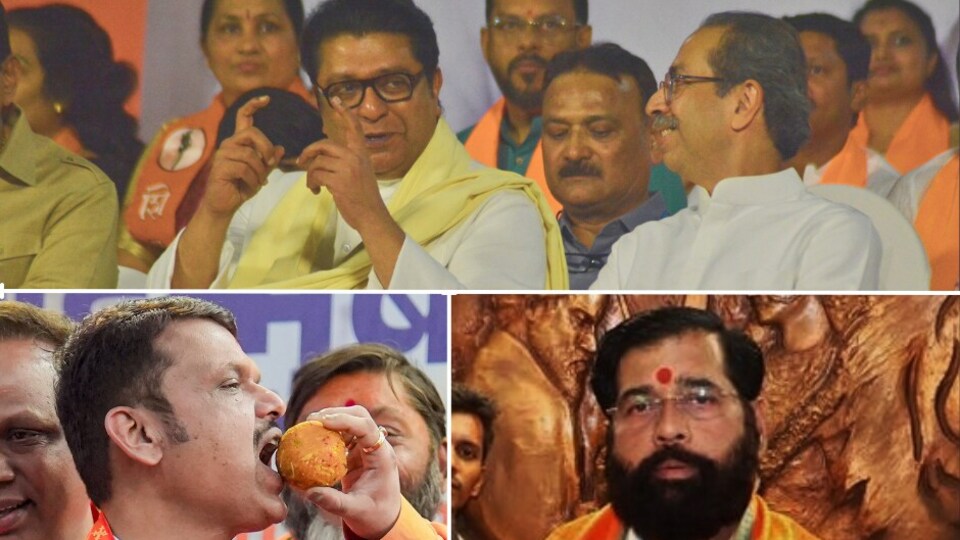
The numbers speak after all. The ruling party at the state and central levels is now the single-largest party in India's richest municipal body, with 89 seats. Eknath Shinde’s Shiv Sena has won enough for them to together cross the majority mark of 114 in a House of 227.
Yet, behind these numbers lies a landscape of "ifs" and political theories.
What if Shiv Sena was undivided?
The most glaring question emerging from the BMC results is, what could have happened had the Shiv Sena remained a single entity. Data suggests they would've been close to holding the reins.
Uddhav Thackeray’s Shiv Sena (UBT) won 65 seats, while deputy CM Shinde’s Shiv Sena secured 29. If together, their tally of 94 seats would have surpassed the BJP’s 89. Aligning with, say, the Congress would mean majority.
Sena (UBT) leader Sunil Prabhu has said the BJP’s victory was only possible because they divided the Shiv Sena. Former Congress leader Sanjay Jha echoed this theory in a post on X, noting that the combined strength of the two Shiv Senas remains formidable.
“If SS was united, the BJP had no chance in the BMC elections,” he posted on X, and suggested that if the factions truly wanted to “restore the SS glory”, a patch-up could still force the BJP into the opposition.
Resorting to resort politics: What about possible defections?
Uddhav cryptically remarked on Saturday, a day after the results, that his party could still have its mayor in Mumbai, though he did not say how.
Shinde, meanwhile, moved all his corporators to a hotel, a usual political move when fearing switchovers.
That shows the mathematics of the seats could play another way.
What BJP has: The BJP and deputy CM Shinde's Sena together have 118, past the majority of 114. Plus deputy CM Ajit Pawar's NCP, thought it contested on its own, has three. That's a comfortable 121.
How Opposition is stacked up: On the other side, Uddhav's and Raj's Senas have 71 together, plus one seat of pre-poll ally NCP(SP). If the Congress comes with them, that's another 24. That's 96. If other anti-BJP forces come together, such as Asaduddin Owaisi's AIMIM with eight seats and Samajwadi Party's two, that would make it 106. And that's just eight short of majority.
What of the third ‘Sena’: Was Raj worth losing Cong over?
Perhaps the biggest headline for months ahead of the BMC polls was about the late Bal Thackeray’s son Uddhav and nephew Raj coming together two decades after their succession war.
Their bid was to consolidate the “Marathi manoos” (‘sons of the soil’) vote. This reunion was a cornerstone of the Sena (UBT) campaign, with Raj adding aggression around nativist rhetoric, and the perceived "battle of self-respect" for Maharashtra, versus the idea that the BJP is an “outsider” party.
Analysts suggest the Thackerays' alliance was a strategic miscalculation, at least for Uddhav. Despite the hype and the packed rallies at Shivaji Park, Raj Thackeray’s Maharashtra Navnirman Sena (MNS) failed to grow, stagnating at its 2017 tally of seven corporators. Political commentator Rajendra Sathe observed, “Raj Thackeray can gather crowds with good speeches, but can't bring in votes”.
More critically, the relatively moderate Uddhav's closeness to the MNS alienated the Congress, which feared a dent in its North Indian and Muslim voter base due to Raj Thackeray’s rhetoric. Analyst Pratap Asbe said the Congress's decision to go solo, or only tie up with smaller parties locally, split the non-BJP vote and contributed to the BJP's victory. He told HT, “Uddhav Thackeray’s decision to dump the Congress to go with the MNS backfired badly.”
Is all lost for the Thackerays?
Losing the BMC is a structural and financial blow to the Thackeray legacy. For decades, the corporation served as the party’s primary source of political patronage and organisational muscle.
The results were not a wipeout, though.
By winning 65 seats in the BMC, Uddhav Thackeray remained ahead of Eknath Shinde’s Sena in Mumbai, reinforcing his claim as the principal face of Bal Thackeray’s “Sena” in the city. Senior journalist Sandeep Sonwalkar was measured in his assessment. “By winning more than 60 seats in Mumbai, he saved his party from extinction,” he reportedly said.
Uddhav Thackeray thus emerges as the de facto Opposition leader in Mumbai, a position analysts say may help his brand get sharper in the longer run.
But suggestions include becoming more “inclusive”. “The Thackeray brand will continue to shine and can bounce back if they rework and adopt a more inclusive strategy beyond its core Maharashtrian vote base,” Deshpande said.
This means a possible rethink, or not, on Raj Thackeray’s anti-migrant pitch in the name of gathering local support, as part of which he even recycled Bal Thackeray’s 1960s slogan “hatao lungi, bajao pungi” against South Indians.
What stops Sena make-up?
A reasoning for a possible Sena reconciliation may simply be found in the BMC seat tally. Sanjay Jha’s argument is that with additional support from the Congress, a united Sena could still force the BJP into the opposition, noting that "politics is the art of the possible".
Jha wrote: “The CM is a BJP man now. Shinde has been outmaneuvered by the BJP.”
Jha's theory, apparently, is that once Shinde broke the Sena, he was made CM by the larger party BJP; but was later made deputy and now finds himself as a small player in Mumbai too. Shinde indeed has the original party name and symbol, but his influence has been largely confined to Thane, failing to breach Uddhav’s core voters in South Mumbai for instance.
The BJP now controls 23 out of 29 municipal corporations, and senior journalist Sonwalkar reportedly suggested that Shinde’s utility to the BJP may be reaching its end. And the same may be the case with the other deputy CM Ajit Pawar’s NCP, which emerged in a similar fashion by breaking up stalwart Sharad Pawar’s original party.
“The BJP has now won entire Maharashtra in a way. BJP leaders are in power in all three places: Lok Sabha, assembly and now local bodies. However, this is a warning bell for BJP's allies. Eknath Shinde's Shiv Sena has been confined to Thane. Ajit Pawar's party NCP is not in a position to make even a single mayor across the state,” Sonwalkar told Bhaskar.
If Hindutva is the core issue…
But statements and claims on ideology — Hindutva, in particular — make a Sena reconciliation appear difficult. While the BJP has credited the win to its core Hindutva ideology, Shinde has laid claim to Bal Thackeray’s aggressive front-facing of Hindutva. He has accused Uddhav of being “soft” and abandoning those principles by aligning with the Congress to become CM after the 2019 assembly election.
Uddhav once appeared to move towards a more inclusive “Mi Mumbaikar” strategy to reach out to Muslim and North Indian voters, which is where aligning with Raj seemed counter-intuitive.
There is personal friction, too, between Uddhav and Shinde, with both calling each other “traitor”.
Where does the other clan, the Pawars, stand in this?
In the realm of ifs and possibilities, is another clan — the Pawars. In Pune and Pimpri-Chinchwad, they attempted a reconciliation much like the Thackerays’.
While being a deputy CM, Ajit Pawar went against the state’s ruling alliance. He aligned his NCP, which holds the original name and symbol, with uncle Sharad Pawar and his daughter Supriya Sule’s NCP(SP) for the municipal contests.
The BJP defeated them in their traditional strongholds. This means Ajit Pawar’s NCP is not in a position to have a mayor anywhere in Maharashtra. There is already talk, though, that the two NCPs may come together under Ajit, as Sharad Pawar finally retires.
How it raises the profile of Fadnavis
An undisputed architect of this "saffron surge" is CM Devendra Fadnavis, who personally took command of the local body elections, executing a plan that was theorised as having begun six years ago, after the 2019 assembly results.
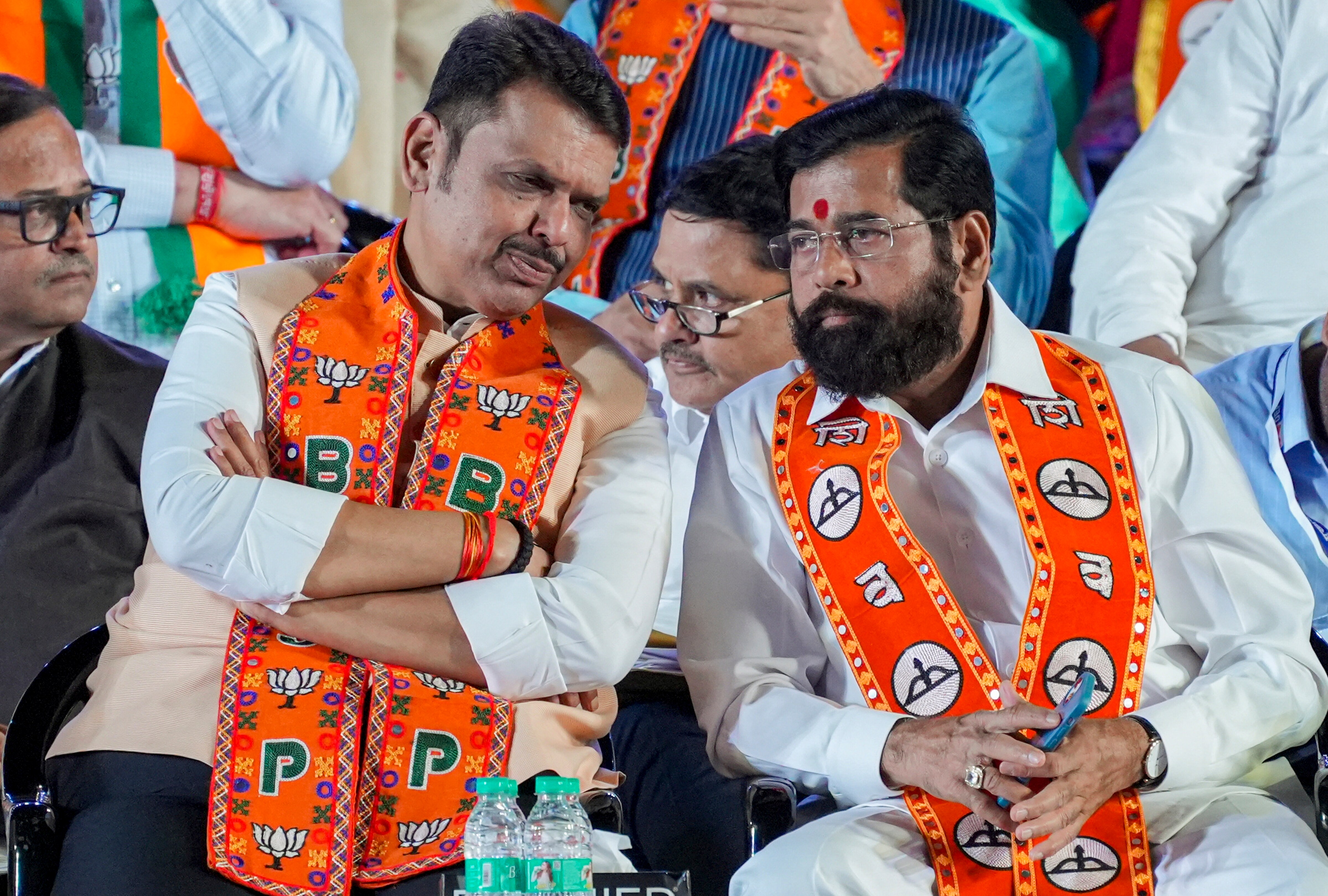
This purported strategy focused on making the BJP self-reliant after Uddhav went with the Congress and NCP to become CM in 2019.
Three years on, Fadnavis was seen as the man who engineered the weakening of the Shiv Sena through the Shinde split in 2022.
He even took the lower position of deputy CM to give Eknath Shinde the CMship between 2022–24. In 2023, Ajit Pawar also came to the BJP's side.
The statewide surge now wins him brownie points within the party, and adds inches to his political standing.


