With just four days left for the much-awaited consecration ceremony at the Ram temple, the India Meteorological Department (IMD) on Thursday launched a dedicated webpage providing weather-related information for Ayodhya and nearby areas.
The webpage shows information on temperature predictions, precipitation, humidity, and wind patterns. It shows a weekly forecast from January 17 to January 24 in major languages including Hindi, English, Urdu, Chinese, French, and Spanish.
Along with this, a weather bulletin containing a seven-day forecast and sunrise and sunset timings is also available to users in both Hindi and English languages.
Also read: Lord Ram pictures displayed on clock tower in Dehradun. Watch
According to the IMD, January 22, the day of the main consecration ceremony, is expected to record a minimum temperature of 10.7 degrees Celsius, while the maximum temperature is expected to reach 22.2 degrees Celsius. Meanwhile, on Thursday, Ayodhya recorded a temperature of 11.6 degrees Celsius.
The webpage also features weather information for other cities including Prayagraj, Varanasi, Lucknow, and New Delhi, among others.
Ram temple consecration ceremony
{{/usCountry}}The webpage also features weather information for other cities including Prayagraj, Varanasi, Lucknow, and New Delhi, among others.
Ram temple consecration ceremony
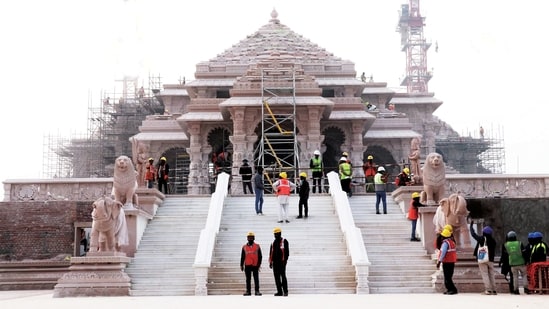
{{/usCountry}}The consecration ceremony at Ram temple in the holy city of Ayodhya is set to take place at 12:30 pm on January 22. Prime Minister Narendra Modi will be the chief guest at the grand event. Thousands of people including saints, politicians, and celebrities have been invited to the event.
Ahead of the event, a seven-day ‘Pran Pratishtha’ - that began on Tuesday - is being held in Ayodhya. On the third day of the Vedic rituals, the idol of Ram Lalla is installed in the Garbh Grah’ (sanctum sanctorum) of the Ram temple - a day after the idol toured the temple premises. The next three days will witness rituals such as Aushadhadhivas, Kesaradhivas, Ghritadhivas, Dhanyadhivas, Pushpadhivas, and Madhyadhivas.