
 E-Paper



Odisha recorded 9 lakh lightning strikes this year: IMD
The report has also revealed that the most number of deaths due to lightning strikes were reported from Uttar Pradesh.


With 9 lakh lightning strikes between April 1 and July 31 this year, Odisha recorded the highest number of lightning strikes in the country, while Jammu and Kashmir recorded the least with about 20,000 strikes, a report by a research body of the India Meteorological Department (IMD) has found.
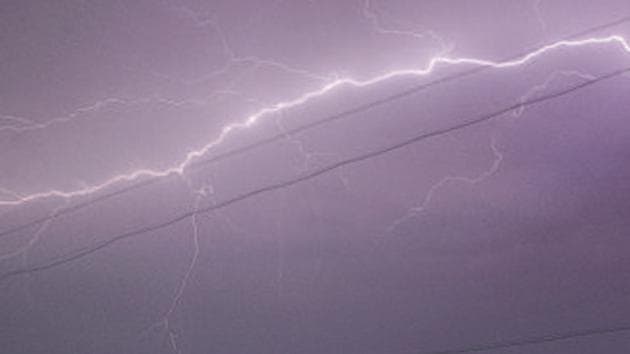
The report has also revealed that the most number of deaths due to lightning strikes were reported from Uttar Pradesh. Uttar Pradesh recorded double the number of deaths that Odisha between April and July, even though it was hit by only one-third of the total lightning strikes that hit Odisha.
This is the first time the weather monitoring body has releases the data on total lightening strikes across the country. The date for the months of April till July was compiled by IMD’s Climate Resilient Observing Systems Promotion Council (CROSPC).
According to the report, Mid-Monsoon 2019 Lightning, Odisha was followed by Maharashtra with 6.26 lakh strikes and Karnataka with 6.21 lakh.
The report, prepared as part of a three-year study period under Lightning Resilient India campaign, used date from IMD’s lightning forecasts, Indian Institute of Tropical Management’s lightning network data, Indian Space Research Organsiation (Isro), National Remote Sensing Centre (NRSC) and from ground impact reports.
The Met department started lightning forecast from April 1 this year by integrating inputs from Indian Air Force sensors, IITM Pune’s sensors network and INSAT-3D.
Col (retired) Sanjay Srivastava, chairman of the council, said this is the first ever scientific mapping of lightning strikes that has been done in the country.
“We will monitor the strikes throughout the year as it is happening even in winter. The final monsoon 2019 lightning report will be published in November 2019 after south-western monsoon withdraws completely,” he said.
Along with the number of strikes, the study will focus on intensity and frequency of the lightning bolt, he said. “The cyclone shelters that we studied we found they received current intensity of up to 180 kiloamperes while the lightning arresters at cyclone shelters could withstand over 200 kiloamperes,” he said.
During the study, it was found that the highest intensity lightning strikes were observed in Chhotanagpur plateau in East Singhbhum district of Jharkhand. The area also received the maximum number of strikes for a district.
With 224 deaths, Uttar Pradesh recorded the highest casualties, followed by 170 in Bihar and 129 in Odisha. Tamil Nadu saw the least number of deaths due to lightning strikes in the corresponding period.
According to the report, during Cyclone Fani, over 1 lakh intense lightning strikes hit Odisha between May 3 and 4. Not a single casualty was reported in these 24 hours as over 1.6 million people were evacuated to cyclone shelters which were fitted with lightning arresters.
In July, the Odisha government had said that the administration was able to reduce the number of deaths in lightning strikes by over 30% this year by sending alerts through its early warning system at least 45 minutes ahead of the potential hit.
The study also revealed that the number of lightning days (number of days when lightning strikes happened) across India has been increasing every month.
July witnessed the highest number of lightning days, especially in the latter half due to the onset of monsoon. Between July 25 and 31, there were over 4 lakh strikes in Uttar Pradesh , Bihar, Jharkhand, Rajasthan, Gujarat and few other States which claimed over 200 lives. On April 16 alone, western disturbance-induced lightning caused 41,000 strikes in central and western India causing 89 deaths in 11 states with Rajasthan alone accounting for 26 deaths followed by 16 in Madhya Pradesh, the report said.
Though weather experts are yet to identify the reason behind Odisha getting hit by an unusual number of lightning strikes, they said microzonation (the process of subdividing a potential seismic or lightning prone area into smaller zones) of forecasts, landfall and impact of lightning strikes was necessary to prevent deaths.
“We have to go for microzonation. The state governments should identify which are the villages and talukas that are vulnerable to lightning strikes which would help them to prevent loss of lives in those areas,” said Sarat Sahu, former director of Bhubaneswar’s IMD centre.
The Met department gives a warning 30 minutes to 3 hours before an expected lightning strike.
As per National Crime Records Bureau, on an average more than 2500 people die in India every year due to lightning. Maharashtra has highest deaths due to lightning in India and majority of the lightning victims are the people working on the field in rural area. From 1967 to 2012, lightning accounted for about 39 per cent of deaths that resulted from natural disasters in India.
CROSPC plans to develop Lightning Resilience Index for States which would include Lightning risk assessment, Lightning early warning and dissemination system, capacity building programme, Lightning protection system –its quality and density, Lightning research etc.


