
 E-Paper



In Kerala, temples take a hit as devotees shy away from online donations
The online donations are a fraction of the physical donations and many devotees says they are not enthused by electronic payments.


The lockdown to check the spread of coronavirus has put a squeeze on the donations for two of Kerala’s most famous temples with devotees yet to warm up to online contributions.
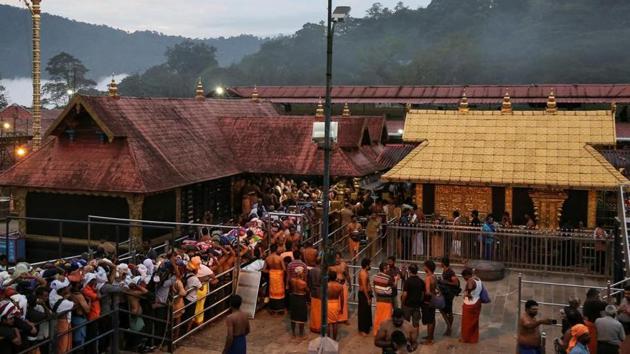
After the lockdown prevented people from travelling to the holy places resulting in severely dented coffers, major temples in the state including Guruvayur Sri Krishna temple and hill shrine Sabarimala had taken the e-route to ensure cash flow. But statistics show virtual offerings are yet to catch up with devotees.
Electronic offerings began with much fanfare at the Guruvayur temple on April 14 on the day of the Vishu festival. But in ten days e-collection was a paltry Rs 22,840, temple statistics show. An average monthly hundi (donation box) collection in Guruvayur is anywhere between Rs 4 crore and five crore. Besides currency it often gets gold, silver and at times diamonds too. The daily poojas (called sevas) also bring in steady money.
“It seems devotees are yet to catch up with the virtual offering. We have to popularize it more. Many feel direct offerings after praying at the temple will do good. In changing times we have to do away with winding queues and crowding. In the given scenario virtual offering is the best alternative and it will pick up,” said a senior official of the temple board. The temple was closed on March 21, three days before the countrywide lockdown began.
“We used to visit Guruvayur temple every first day of the Malayalam calendar. In the changed scenario usual darshan is impossible. Since we are old fashioned people, virtual donation or online offering has failed to enthuse us. So we are waiting for these dark clouds to disappear for a real darshan,” said Sulochana Nair, a retired teacher.
Though temple officials are in favour of altering traditional offerings, devotees like her aren’t amused and prefer ‘real offering.’ Interestingly, the most sought after offering at Guruvayur ‘Udayasthmana pooja (which literally means worship from sunrise to sunset), has been booked next 30 years, till 2050 and fresh bookings were closed for the time being.
In 2008, the temple discontinued the tradition of an elephant being offered to the presiding deity after the number of elephants’ numbers rose -- now the temple has 56 elephants, the largest collection of captive elephants.
In the hill temple of Sabarimala also virtual offerings have failed to pick up. The Travancore Devasom Board (TDB), which runs the temple, had tried to encourage online offerings from the first week of this month said skeleton employees will be deployed at the hilltop to perform these rituals. The temple’s collection has remained below Rs one lakh in the last ten days.
Sabarimala’s revenue is usually used to fund smaller temples in south Kerala and for salaries of 3,500-odd employees of the TDB. “True, online offerings are yet to pick up. It is just the beginning. We have to popularise it. We are planning a (advertising) campaign towards this,” said TDB president N Vasu. For now though, the TDB has asked its employees to forgo one month’s salary.
The TDB had made an announcement on its website and is planning to launch advertisements in four southern states -- Andhra Pradesh, Tamil Nadu, Karnataka and Telangana from where devotees throng the temple in large numbers. The temple was closed after monthly pooja on March 18.
Despite the government warning not to crowd the temple, at least 14,000 devotees trekked to the shrine after thermal screening and other formalities in March first week. This forced the TDB to do away with the ten-day temple festival in March end and Vishu festival on April 14.
For now, with thronging crowds only a memory, temples authorities want to encourage devotees to make their offerings online.


