
 E-Paper



In photos: Nadda offers prayers at Tripura temple, releases BJP's poll manifesto
While releasing BJP's poll manifesto in Agartala, JP Nadda called it a ‘vision document’.

 Prefer HTon Google


Ahead of the release of Bharatiya Janata Party’s (BJP) manifesto for Tripura assembly elections, party president Jagat Prakash Nadda offered prayers at Mata Tripura Sundari Temple in Udaipur town on Thursday morning. He was accompanied by Tripura Chief Minister Manik Saha.
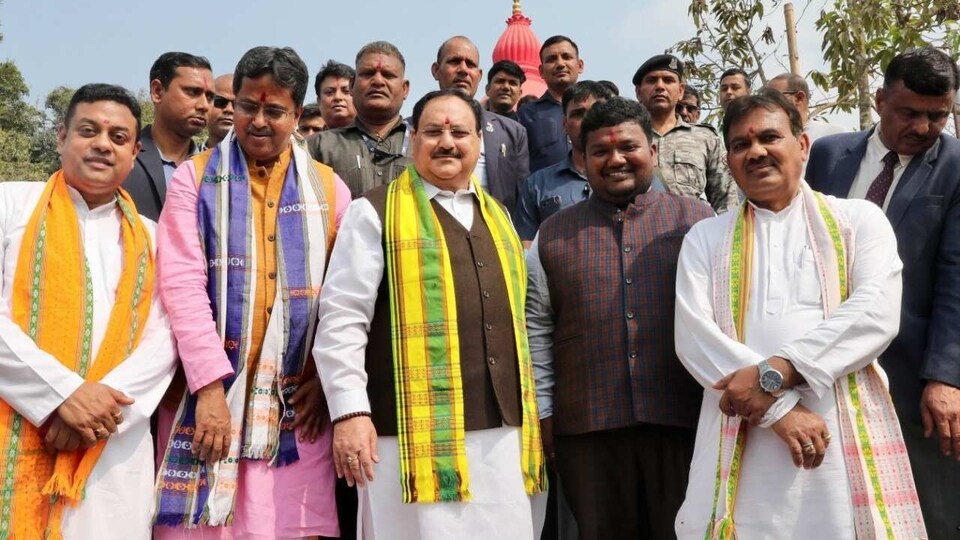
Tweeting pictures of his visit to the temple, Nadda wrote, “Today, I visited Adishakti Maa Tripurasundari in Tripura and prayed for the happiness and fortune of all the people of the country. Coming to the courtyard of Mother, there is always a beautiful feeling of spirituality and peace.
While releasing the poll manifesto in Agartala, Nadda called it a ‘vision document’ and not just a piece of paper. He added that the ‘Sankalp Patra’ demonstrated the party’s ‘commitment’ to the people of Northeast.
Nadda said that Tripura was now renowned for peace, prosperity and development, while earlier the state was infamous for ‘blockades and insurgency’. "13 lakh Ayushman Bharat health cards have been given in Tripura, with ₹107 crores given in settlement till now," he added.
Speaking to news agency ANI, Nadda said, "Today I got the opportunity to offer prayers at Mata Sundari Temple. Whenever I come here, I get new energy. Under PM Modi's leadership we are taking society forward with the mantra of 'Sabka Sath Sabka Vikas'."
BJP has reportedly incorporated several new highlights to the manifesto, focusing on the ‘development’ of the state. Ahead of the Tripura elections slated for February 16, Prime Minister Narendra Modi is likely to visit the state on February 13.
A total of 259 candidates will contest the polls for which the counting of votes will take place on March 2. BJP has the highest number of candidates in the fray - 55.
Meanwhile, TMC’s manifesto contained 42 promises with stress on job creation, private investment and economic growth. The party promised to implement a Bengal model of development via employment, agriculture, economy, law and order, women’s empowerment, education, health, social security, and culture and tourism.
(With inputs from ANI)


