E-Paper



Climate crisis triggered extreme events: Data
As per the data, the monsoon this year was also more erratic with the rainfall intensity increasing in short durations, thereby causing damage to property and human life

 Prefer HTon Google


There has been an increase in cloudburst occurrences and landslide incidents due to extreme rainfall events in the western Himalayas this year, especially in July, when compared to previous years, according to data maintained by disaster management authorities of Jammu and Kashmir, Himachal Pradesh and Uttarakhand.
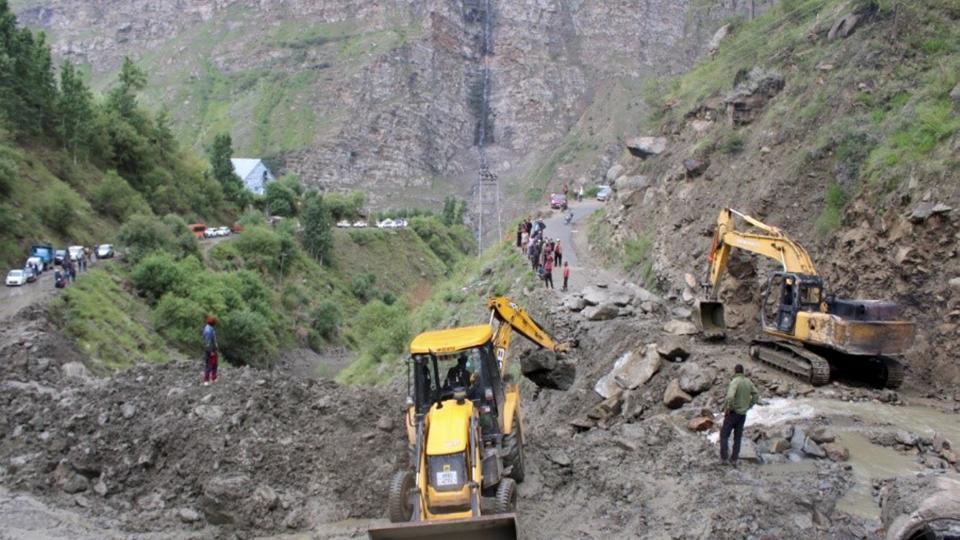
As per data, this year’s monsoon was also more erratic with the rainfall intensity increasing in short durations, causing damage to property and human life. “Most climate models agree that extreme rainfall events during the monsoon will increase and this was shown in July with heavy rainfall in many places in the last 20 days of the month,” said Prof Ravi Shankar Nanjundiah, director of Indian Institute of Tropical Meteorology.
While heavy rainfall caused flooding in Bihar, West Bengal and parts of north-east India, it triggered landslides in the western Himalayan region. According to the India Meteorological Department (IMD), the rainfall in the last 20 days of July in Himachal Pradesh, Uttarakhand and Jammu and Kashmir were around 110% above normal.
One of the reasons for higher-than-normal rainfall was the high frequency of cloudbursts in the Himalayas. At least 30 people were killed in rain-related incidents, as per the data available with the home ministry.
According to IMD, a precipitation event that exceeds 100mm of rainfall in an hour is considered to be a cloudburst. However, there may be heavy rainfall events that may not be described as a cloudburst and may cause flash floods. In July, the western Himalayan region saw several heavy rainfall days.
While experts agree that climate crisis is one of the main reasons for increase in the frequency of extreme rainfall, some blame localised factors.
“Unplanned road cutting and unabated stone mining are adding to the problem of frequent landslides, even during normal rainfall... authorities turn a blind eye to the damage done to the environment,” said Professor GM Bhat, former head of geology department at the University of Jammu.