E-Paper



Increase in forest cover shows active involvement of communities: MoEFCC
YSR Congress Party lawmaker Baburao questioned the manner in which ministry comes to conclusion that granting forest rights to tribals causes forest degradation

 Prefer HTon Google


New Delhi: The India State of Forest Report (ISFR) 2023, prepared by the Forest Survey of India, has reported a substantial increase in forest and tree cover over the past decade, minister of state for environment Kirti Vardhan Singh said on Thursday.
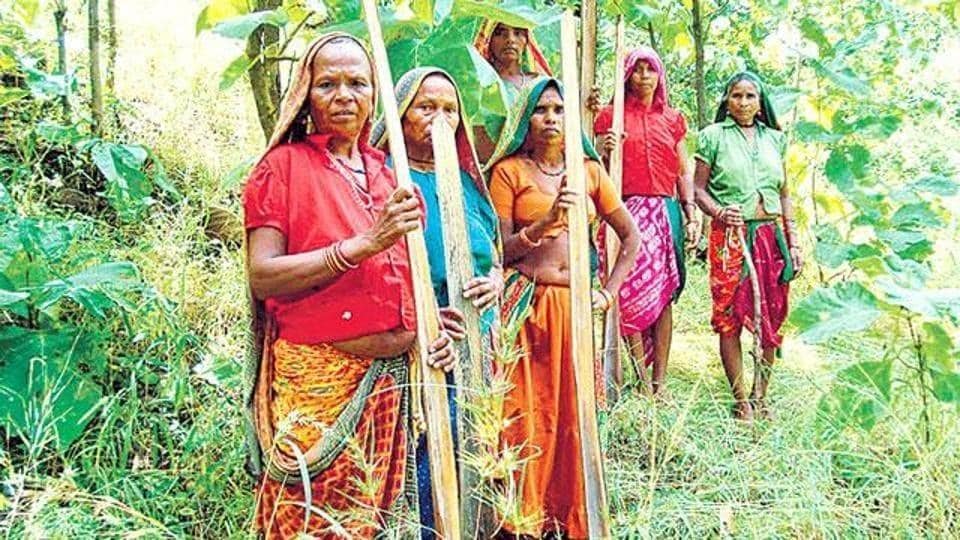
“This positive trend is indicative of the active involvement of communities and local stakeholders in the management and restoration of forest resources,” Singh said, responding to questions raised by YSR Congress Party lawmaker Golla Baburao in the Rajya Sabha.
Baburao questioned the manner in which the ministry comes to the conclusion that granting forest rights to tribals causes forest degradation; whether there is any scientific evidence to prove the above conclusion; and whether the tribal affairs ministry issued a Memorandum on 2nd July 2025, questioning the assertion of the Ministry in its State of Forest Report 2023, among others.
Singh said the National Forest Policy, 1988, emphasises the importance of closely associating tribal communities in the protection, regeneration, and development of forests, as well as providing gainful employment to people living in and around the forest, while safeguarding their customary rights and interests.
HT reported on July 6 that the ministry of tribal affairs has asked for scientific evidence from the environment ministry to substantiate claims that granting forest rights to tribal communities causes forest degradation, escalating a tussle over a landmark 2006 legislation that recognises traditional forest rights of tribal communities in protected areas.
In an office memorandum issued on July 2, the tribal affairs ministry questioned the environment ministry’s assertion in the India State of Forest Report 2023 that “titles given to beneficiaries under the Forest Rights Act (2006) (FRA)” contribute to negative changes in forest cover.
“In this regard, the Scheduled Tribes and Other Traditional Forest Dwellers (Recognition of Forest Rights) Act, 2006 is being implemented, which recognises the rights of forest-dwelling tribal communities and other traditional forest dwellers to forest resources, on which these communities were dependent for a variety of needs, including livelihood, habitation, and other socio-cultural needs,” Singh said.
Earlier, in a response to a submission to the Prime Minister by nearly 150 organisations working on forest rights, the environment ministry had said the government remains committed to tribal welfare and active involvement in forest management through traditional knowledge, whilst enhancing livelihood opportunities.
The ministry had also defended recent amendments to the Van (Sanrakshan Evam Samvardhan) Adhiniyam against allegations that changes were made “without an in-depth knowledge and understanding of its various provisions, the factual position, and its implementation.” Critics have argued these amendments undermine institutional authorities established under the Forest Rights Act.