E-Paper



India, China agree to hold fresh military-level talks on LAC row
The virtual meeting of the Working Mechanism for Consultation and Coordination on India, China border affairs was held against a backdrop of growing evidence of China building infrastructure and villages in disputed sections of the LAC.

 Prefer HTon Google


India and China emerged from the latest round of diplomatic talks on the border standoff in the Ladakh sector on Thursday with little to show but an agreement on holding the next discussions between senior military commanders at an early date.
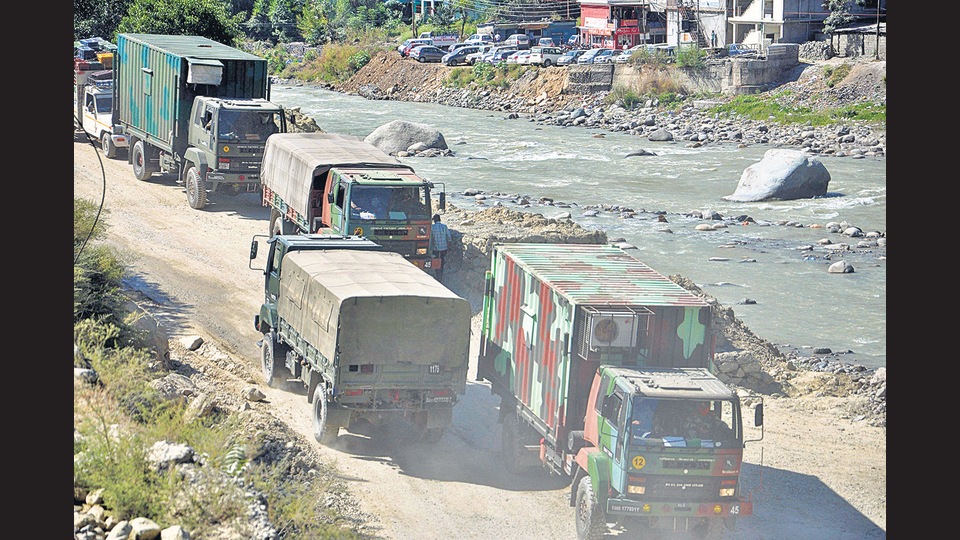
The virtual meeting of the Working Mechanism for Consultation and Coordination (WMCC) on border affairs was held against a backdrop of growing evidence of China building infrastructure and villages in disputed sections of the Line of Actual Control (LAC), and a lack of forward movement on disengagement at friction points such as Hot Springs and Depsang.
The external affairs ministry said in a statement after the WMCC meeting: “It was agreed that both sides should hold the next (14th) round of the senior commanders meeting at an early date to achieve the objective of complete disengagement from all the friction points along the LAC in the Western Sector in accordance with the existing bilateral agreements and protocols.”
A readout from China’s foreign ministry said the two sides agreed to maintain dialogue through diplomatic and military channels, and “actively prepare for the 14th round of military commander-level talks, and make efforts to resolve the remaining issues” in the western sector.
Both sides described the discussions at the WMCC meeting as “candid and in-depth”.
The last round of talks between the senior military commanders, which was held at the Chushul-Moldo border meeting point on October 10, failed to make any substantive progress as Beijing contended that New Delhi had made “unreasonable and unrealistic demands”.
The Chinese readout also said the two sides will “continue to work hard to further ease the border situation and strive to shift from emergency response to normalised control as soon as possible”. The shift from “emergency response” to “normalised control” was a repeat of what Chinese foreign minister Wang Yi told his Indian counterpart S Jaishankar during a meeting in Dushanbe in September.
The Indian statement said the two sides recalled the agreement between Jaishankar and Wang during their meeting in Dushanbe that military and diplomatic officials should continue discussions to resolve remaining issues along the LAC.
They also reviewed developments since the meeting of the military commanders on October 10, and “agreed on the need to find an early resolution to the remaining issues” in eastern Ladakh while fully abiding by bilateral agreements and protocols to restore peace and tranquillity, the Indian statement said.
The two sides also agreed that they would continue to “ensure a stable ground situation” and avoid any untoward incident, the Indian statement added.
The Chinese readout said the two sides agreed to consolidate the existing disengagement results, strictly abide by agreements and consensus, and avoid recurrences in the current situation.
The Indian side at the WMCC meeting was led by additional secretary (East Asia) Naveen Srivastava of the external affairs ministry, while the Chinese delegation was headed by Hong Liang, director of the boundary and oceanic department of the foreign ministry.
India and China withdrew frontline troops from the north and south banks of Pangong Lake in February and from Gogra in August after several rounds of diplomatic and military talks, but there has been no further movement on disengagement and de-escalation since then. The two sides have been locked in the military standoff for more than 18 months, sending bilateral ties plummeting to their worst in decades.
The Indian side has insisted relations can be normalised only when disengagement is completed at other friction points such as Hot Springs and Depsang. On the other hand, China has pushed for delinking the standoff from the overall bilateral relationship and greater contacts in areas such as trade and investment.
Sameer Patil fellow for international security studies at Gateway House, said the outcome of the WMCC meeting showed both sides were sticking to their respective stated positions and this is yielding no solution.
“In light of recent revelations about China’s activities in other sections of the border, this would mean that China won’t budge from its position. Clearly, there is no incentive for both sides to compromise. This stalemate will continue for some time to come,” Patil said.