
Sign in

India, China’s special reps to meet over LAC

Although both Indian and Chinese military commanders have stood firm during the 10-month stand-off, the governments on both sides are taking a step forward to normalise relations on a reciprocal basis.

Published on: Feb 21, 2021, 03:32:21 IST
By , Hindustan Times, New Delhi
Share
Share via
  • facebook
  • twitter
  • linkedin
  • whatsapp
Copy link
  • copy link

With India and China agreeing to restore status quo ante on the Line of Actual Control (LAC), a meeting between National Security Adviser Ajit Doval and Chinese foreign minister Wang Yi, both special representatives on boundary resolution, will take place soon to sort out differences in perception over the undefined border, according to people aware of the developments.
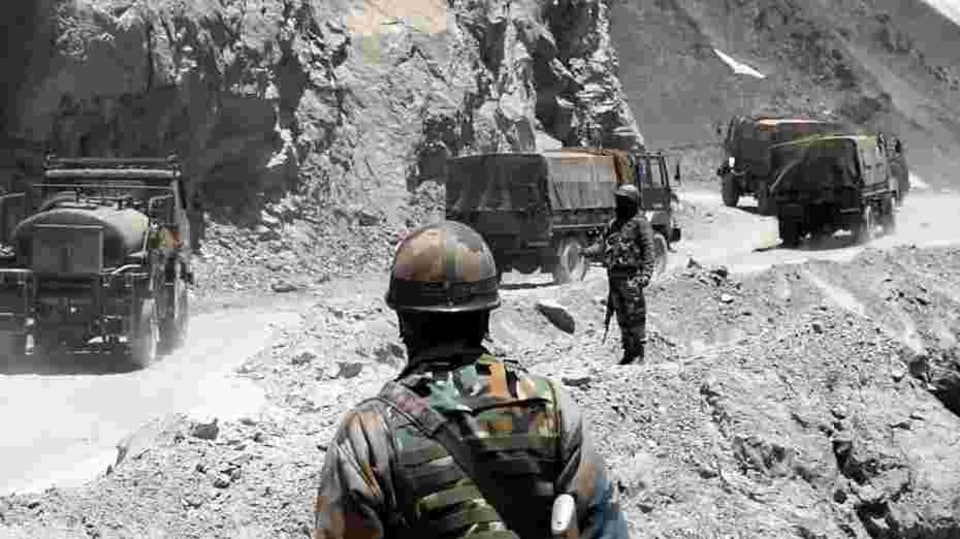
It is understood that the Indian side has made it clear that it will stand up to any use of force to alter the status quo but is willing to discuss and build a positive atmosphere for sorting out all outstanding issues related to the LAC. (Representative Image) (ANI file photo for representation)

While the 10th meeting between military commanders took place on Saturday, the backchannel talks between the special representatives have ensured that no side will unilaterally alter the status quo along the 3,488km-long LAC and the status quo will be restored on all points, the people quoted above said. Doval and Wang had a video conference on June 7, 2020, and have kept in touch with external affairs minister S Jaishankar, holding the diplomatic end of conversations with Beijing.

Although both Indian and Chinese military commanders have stood firm during the 10-month stand-off, the governments on both sides are taking a step forward to normalise relations on a reciprocal basis.

It is understood that the Indian side has made it clear that it will stand up to any use of force to alter the status quo but is willing to discuss and build a positive atmosphere for sorting out all outstanding issues related to the LAC.

“We have conveyed that the two sides can sit together and work their way towards resolving differences in perception over the LAC after China has created positivity by restoring status quo ante on Pangong Tso. There can be no dialogue if PLA uses force but if China can persuade that India is wrong or vice versa on border perception, then the two sides can mutually adjust to the perception line,” said a senior official in the know of the developments.

According to national security planners, it is for China to create a positive atmosphere for recording forward movement in bilateral ties as India will respond in kind and more.

“The trajectory that India and China ties take from Pangong Tso disengagement depends on Beijing but the PLA (People’s Liberation Army) withdrawal has been taken in the right spirit in New Delhi,” said a former Indian Army chief, asking not to be named.

After the disengagement from Pangong Tso, the military commanders on Saturday were working out the modalities of withdrawal of armour and artillery from friction points at Gogra-Hot Springs and working out the modalities for restoring full patrolling rights to the two sides in the Depsang Bulge area, south of Daulet Beg Oldi sector.

  • Shishir Gupta
    ABOUT THE AUTHOR
    Shishir Gupta

    Shishir Gupta is Executive Editor at Hindustan Times and one of India's top journalists covering national security, strategic affairs, foreign policy and geopolitics. Over the past three decades, he has extensively reported on India's military, diplomatic and security landscape, covering every major conflict and national security challenge, from the 1999 Kargil War and the 2020 East Ladakh standoff to Operation Sindoor in 2025. He has also covered major terror attacks, including the IC-814 hijacking, the 26/11 Mumbai attacks and the 2025 Pahalgam terror strike, along with numerous Pakistan-backed terrorist incidents in the Kashmir Valley and across India. He has reported on national and state elections for more than three decades. A recognised authority on strategic affairs, Gupta has covered India's nuclear programme since the Pokhran-II (Shakti series) tests in May 1998 and has written extensively on global nuclear issues, Indian diplomacy and the country's expanding global outreach. He has also reported widely on international conflicts and terrorism, with a special focus on the Indian subcontinent. Gupta has interviewed Prime Minister Narendra Modi more than four times, including Modi's first interview with the print media after becoming Prime Minister in May 2014. His other interviews include three with the Dalai Lama, as well as conversations with Benjamin Netanyahu, Amit Shah, Yogi Adityanath, S. Jaishankar, Nirmala Sitharaman and Piyush Goyal. He is the author of Indian Mujahideen: The Enemy Within (Hachette, 2011) and Himalayan Face-off: Chinese Assertion and Indian Riposte (Hachette, 2014). He was awarded the Chevening-Wolfson Joint Scholarship at Wolfson College, University of Cambridge, UK, in 1998 and participated in the International Visitor Leadership Program (IVLP) of the US State Department in 2006. He received the Ben Gurion Prize from Israel in 2011 and the K. Subrahmanyam Prize for Strategic Studies in 2015 from the Manohar Parrikar Institute for Defence Studies and Analyses (MP-IDSA). Since 2024, he has hosted Point Blank, Hindustan Times' weekly YouTube show on global geopolitics.Read More

Get the latest India News, breaking headlines and real-time updates from across the country. Stay informed about politics, government policies, crime, weather and major national developments.