E-Paper



India, France have shared interest in reducing risk of escalation in Ukraine
India has refrained from publicly criticising the Russian invasion of Ukraine though it has called for respecting the sovereignty and territorial integrity of all states

 Prefer HTon Google


NEW DELHI: France and India have a shared interest in reducing the risk of escalation in the Ukraine conflict and Paris hopes New Delhi will use its long-standing ties with Moscow to push efforts to find a resolution to the war, people familiar with the matter said on Tuesday.
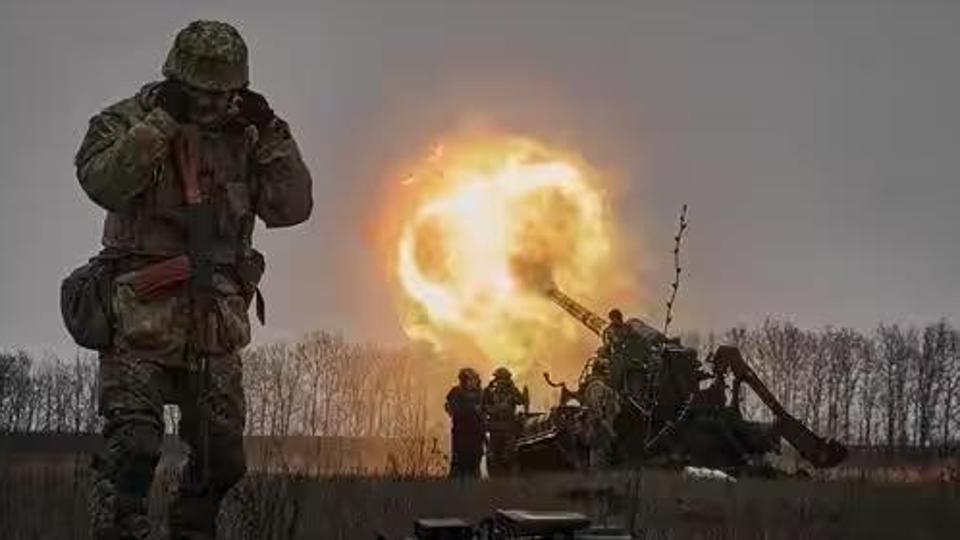
Ahead of the first anniversary of Russia’s invasion of Ukraine, the people familiar with thinking in the French diplomatic establishment acknowledged that France and India were not in the “exact same position” on the Ukriane crisis, but pointed out that there has been a change in the Indian position over the past year. In this context, they pointed to Prime Minister Narendra Modi’s remarks to Russian President Vladimir – that today’s era is not of war – during a meeting last September.
Where the two sides align is the desire to reduce the risk of escalation and to try to find a way towards peace, the people said. There are important links between the Indian and Russian governments, and the French side has asked India to use these links to push for peace. However, this is expected to be a long process, the people said.
Also Read | After Air India-Airbus deal, PM Modi underlines deepening India-France ties
The people acknowledged India is “most likely” to abstain when the UN General Assembly votes on February 23 on a draft resolution demanding that Russia withdraw its troops and end hostilities in Ukraine. India is unlikely to take sides as it is a “question of balance” and the French and Indian political leadership have had candid discussions on this matter, the people said.
France and its partners in the European Union (EU), as well as the US and the UK, have an intense political dialogue with India that allows the discussion of complex issues, the people said.
India has refrained from publicly criticising the Russian invasion of Ukraine though it has called for respecting the sovereignty and territorial integrity of all states. Modi’s remarks that “today’s era is not of war” were echoed by the joint communique adopted at the G20 Summit in Indonesia last year amid deep divisions within the grouping over the Ukraine crisis.
The people referred to India’s decision not to join the price cap enforced by the G7 and EU on Russian oil and gas and said this was not unusual given New Delhi’s history of adopting a non-aligned position. However, the stand taken by India on the price cap doesn’t prevent discussions on “difficult issues”, they said.
With the EU preparing to impose a tenth package of targeted sanctions against Russia, the people dispelled suggestions that the sanctions and oil price cap have not been effective in curbing Russia’s efforts to wage war in Ukraine.
The sanctions have had a “major impact” on the Russian economy, which has been paralysed. Russia cannot access substitutes to maintain its defence apparatus, its air defence, and its energy production apparatus, the people said.
Assets of Russia’s central bank worth 300 billion euros have been frozen outside the country and economic activity within Russia has been hit by a lack of domestic and foreign investments. Figures from international bodies suggest the Russian economy has been set back 20 years as far as investments are concerned, they added.
Though Russia has sought to diversify its energy exports, including through increased sales of crude to China and India, there are no new customers for Russian gas and resources derived even from the diversified oil exports are limited, the people said.
France does not expect all countries to join the EU sanctions, and it also understands that some countries are dependent on Russia for their economy and certain supplies. However, France is looking at people who are illegally subverting sanctions and will work on this issue with EU partners, the people said.
The people said there is currently no space whatsoever for negotiations, with Putin spurning Ukrainian President Volodymyr Zelenskyy’s 10-point peace plan and showing no willingness to join any peace process. Instead, Russia’s actions, such as increasing mobilisation of troops to 1.5 million and renewed strikes on civilian infrastructure, have pointed towards an escalation.