Sign in

India may lead Commonwealth meeting in April

An Indian official said the country saw the proposal as acknowledgement of its importance in terms of size, economic relevance, and population.

Updated on: Nov 24, 2017, 07:20:29 IST
Hindustan Times, New Delhi | By
Share
Share via
  • facebook
  • twitter
  • linkedin
  • whatsapp
Copy link
  • copy link

The UK has formally asked India whether it would like to take a lead role in the 52-nation Commonwealth grouping.

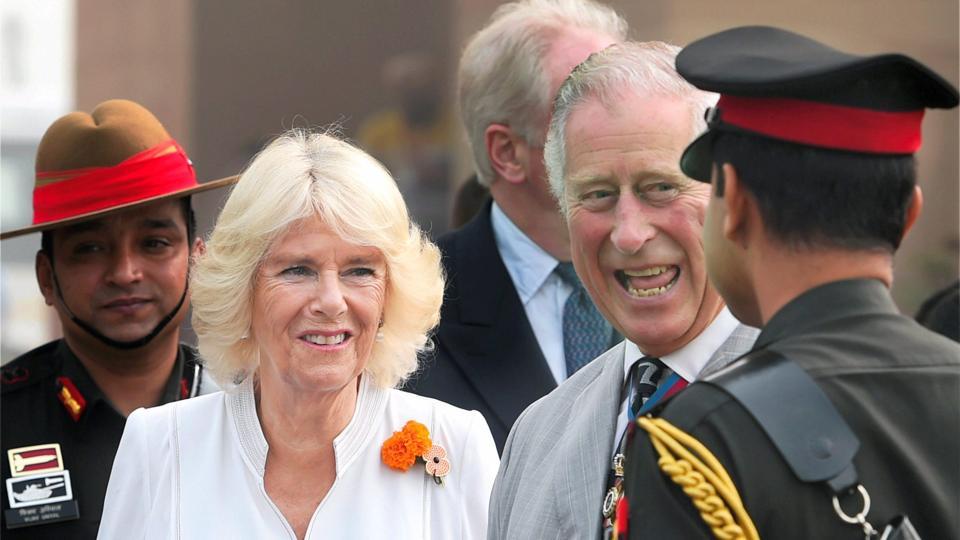
Britain’s Prince Charles and his wife Camilla during their visit to India last month. (PTI File Photo)

The proposal comes ahead of next April’s Commonwealth heads of Government Meeting (CHOGM) in London and at a time when Prince Charles is expected to take over from Queen Elizabeth as the head of state of some of the former territories of the erstwhile British Empire.

A senior Indian government official confirmed that the UK had sounded out India’s interest during Prince Charles’ visit to New Delhi last month.

Speaking on condition of anonymity, this person added that the proposal is being debated within the government with both the foreign affairs and the national security establishment providing their views.

Diplomatic circles in London were unaware of the proposal, but said it could have been made at the political level. Hindustan Times learns that there is an older proposal for a regional Commonwealth hub in New Delhi. The Indian official said the country saw the proposal as acknowledgement of its importance in terms of size, economic relevance, and population.

He added that the proposal entails that New Delhi play a larger role in the Commonwealth inter-governmental group; 18 of the 52 countries are from Africa and India is keen to use the platform to better its relations with them, especially given that many African countries have resources it needs.

Officials in India’s foreign ministry say India is interested because the world is becoming multi-polar, especially with the rise of China, and the country thinks a grouping of 52 nations could well be a pole.

Still, the thinking in New Delhi is that the countries in the grouping need to be bound diplomatically and economically, either through preferential trade agreements or smoother visa processes. “Merely being leader of 52 countries whose heads of state meet for lunch every two years is of no use. A group of 52 countries with over $10 trillion GDP should be a voice among the comity of nations… just like European Union or ASEAN or SCO,” said a senior official in the foreign ministry, asking not to be identified.

India, the foreign ministry officials add, is keen to explore ways to make the grouping more substantial than just one of countries with a similar imperial past.

No decision has been taken yet, the two Indian officials said.

(Prasun Sonwalkar in London contributed to this report)

  • Shishir Gupta
    ABOUT THE AUTHOR
    Shishir Gupta

    Shishir Gupta is Executive Editor at Hindustan Times and one of India's top journalists covering national security, strategic affairs, foreign policy and geopolitics. Over the past three decades, he has extensively reported on India's military, diplomatic and security landscape, covering every major conflict and national security challenge, from the 1999 Kargil War and the 2020 East Ladakh standoff to Operation Sindoor in 2025. He has also covered major terror attacks, including the IC-814 hijacking, the 26/11 Mumbai attacks and the 2025 Pahalgam terror strike, along with numerous Pakistan-backed terrorist incidents in the Kashmir Valley and across India. He has reported on national and state elections for more than three decades. A recognised authority on strategic affairs, Gupta has covered India's nuclear programme since the Pokhran-II (Shakti series) tests in May 1998 and has written extensively on global nuclear issues, Indian diplomacy and the country's expanding global outreach. He has also reported widely on international conflicts and terrorism, with a special focus on the Indian subcontinent. Gupta has interviewed Prime Minister Narendra Modi more than four times, including Modi's first interview with the print media after becoming Prime Minister in May 2014. His other interviews include three with the Dalai Lama, as well as conversations with Benjamin Netanyahu, Amit Shah, Yogi Adityanath, S. Jaishankar, Nirmala Sitharaman and Piyush Goyal. He is the author of Indian Mujahideen: The Enemy Within (Hachette, 2011) and Himalayan Face-off: Chinese Assertion and Indian Riposte (Hachette, 2014). He was awarded the Chevening-Wolfson Joint Scholarship at Wolfson College, University of Cambridge, UK, in 1998 and participated in the International Visitor Leadership Program (IVLP) of the US State Department in 2006. He received the Ben Gurion Prize from Israel in 2011 and the K. Subrahmanyam Prize for Strategic Studies in 2015 from the Manohar Parrikar Institute for Defence Studies and Analyses (MP-IDSA). Since 2024, he has hosted Point Blank, Hindustan Times' weekly YouTube show on global geopolitics.Read More

Get the latest India News, breaking headlines and real-time updates from across the country. Stay informed about politics, government policies, crime, weather and major national developments.