
 E-Paper



India rejects ‘illegal’ Court of Arbitration's ruling on J&K dams: ‘Charade at Pakistan’s behest’
The external affairs ministry said it never recognized the existence of the 'Court of Arbitration', saying it was in 'brazen violation' of Indus Waters Treaty.

 Prefer HTon Google


India on Friday rejected the ruling of a Court of Arbitration that issued a “supplemental award” on its competence concerning the Kishenganga and Ratle hydroelectric projects in the Union Territory of Jammu and Kashmir.
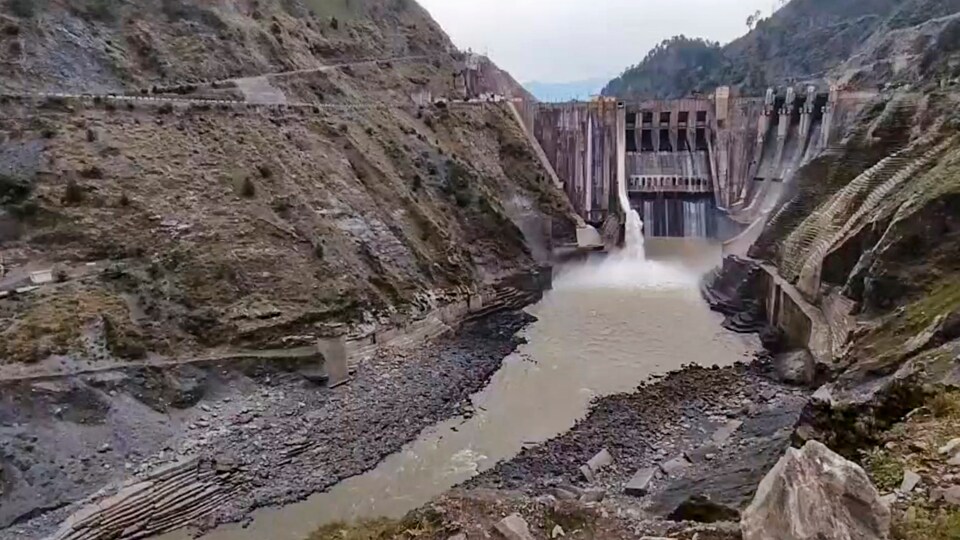
These projects are being constructed on the Indus river system, with this development coming after the pause India put on the Indus Waters Treaty in light of the April 22 Pahalgam terror attack.
The ministry of external affairs issued a statement in this regard and said it never recognised the existence of this so-called Court of Arbitration, saying that it is in “brazen violation” of the Indus Waters Treaty, 1960.
“Today, the illegal Court of Arbitration, purportedly constituted under the Indus Waters Treaty 1960, albeit in brazen violation of it, has issued what it characterizes as a ‘supplemental award’ on its competence concerning the Kishenganga and Ratle hydroelectric projects in the Indian Union Territory of Jammu and Kashmir,” the MEA statement read.
“India has never recognised the existence in law of this so-called Court of Arbitration, and India’s position has all along been that the constitution of this so-called arbitral body is in itself a serious breach of the Indus Waters Treaty and consequently any proceedings before this forum and any award or decision taken by it are also for that reason illegal and per se void,” it added.
ALSO READ | Pakistan urges India to restore Indus Waters Treaty in multiple letters
The ministry noted that India had placed the Indus Waters Treaty in abeyance after the Pahalgam terrorist attack, which claimed the lives of 26 people, mostly civilians. It said that the nation was no longer bound to perform any of its obligations under the treaty till it was in abeyance.
"No Court of Arbitration, much less this illegally constituted arbitral body which has no existence in the eye of law, has the jurisdiction to examine the legality of India’s actions in exercise of its rights as a sovereign," the statement read.
The MEA called this move the "latest charade" at Pakistan's behest, accusing Islamabad of trying to escape accountability for being the global epicenter of terrorism.
The external affairs ministry's official statement said, "This latest charade at Pakistan’s behest is yet another desperate attempt by it to escape accountability for its role as the global epicenter of terrorism. Pakistan's resort to this fabricated arbitration mechanism is consistent with its decades-long pattern of deception and manipulation of international forums."
ALSO READ | When will India restore Indus Waters Treaty with Pakistan? Amit Shah answers
"India, therefore, categorically rejects this so-called supplemental award as it has rejected all prior pronouncements of this body," the MEA said.
Why is Pakistan concerned?
Pakistan has objected to India's construction of the Kishenganga hydroelectric project and Ratle dam project on the Indus river system due to its concerns about the possible impacts on its own water resources.
The Indus system of rivers comprises the main Indus river, along with its five tributaries, the Ravi, the Beas, the Sutlej, the Jhelum and the Chenab.
Pradeep Kumar Saxena, who served as India's Indus Water Commissioner for over six years, had earlier told news agency PTI due to the abeyance, India is in no obligation to follow the restrictions on the "reservoir flushing" of the Kishenganga reservoir and other projects on Western rivers in Jammu and Kashmir.
ALSO READ | Pakistan’s letters won’t change India’s stand on Indus Waters Treaty: Jal Shakti minister
Flushing can help desilt India's reservoir, but then filling the entire reservoir could also take days. While under the IWT, India was to do the filling in August, during the peak monsoon period, it can do the process anytime now due to the abeyance of the treaty.
If the filling is done during the sowing season in Pakistan, it could be detrimental, especially since a large part of Punjab in Pakistan is dependent on the Indus and its tributaries for irrigation.
According to the treaty, there are design restrictions on building structures like dams on Indus and its tributaries. However, India is not longer obligated to take the Pakistani concerns onboard.
Indus Waters Treaty
The Indus Waters Treaty, 1960, was brokered by the World Bank and set a mechanism for water sharing and information exchange between India and Pakistan.
The treaty was signed after over nine years of negotiations.
While the treaty allocates the Western rivers (Chenab, Jhelum, and Indus) to Pakistan and Eastern rivers (Ravi, Beas and Sutlej) to India for unrestricted use, New Delhi is allowed to use water from the western side for domestic use, non-consumptive use, agricultural and generation of hydro-electric power.
The right to generate hydroelectricity from Western rivers is unrestricted, but subject to conditions for design and operation of the Treaty, a PTI report said.


