
 E-Paper



India rejects Pak’s province status for Gilgit-Baltistan
India on Sunday rejected the Pakistan government’s decision to give “provisional provincial status” to Gilgit-Baltistan, saying Islamabad has no locus standi on Indian territory under its illegal and forcible occupation.

 Prefer HTon Google


India on Sunday rejected the Pakistan government’s decision to give “provisional provincial status” to Gilgit-Baltistan, saying Islamabad has no locus standi on Indian territory under its illegal and forcible occupation.
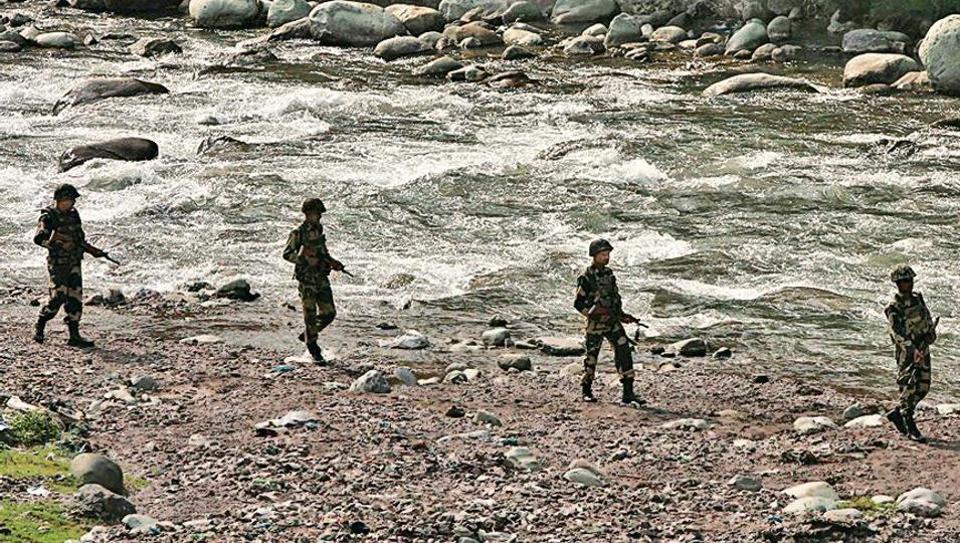
New Delhi’s response came hours after Pakistan Prime Minister Imran Khan announced the decision during a visit to Gilgit-Baltistan, giving another twist to the controversy over the region claimed by India as part of the erstwhile state of Jammu and Kashmir.
While addressing a gathering in Gilgit to mark the so-called “independence day” of Gilgit-Baltistan, Khan also accused the Indian government of trying to foment unrest in Pakistan and creating a divide between the Shia and Sunni communities.
“I want to greet the people of Gilgit-Baltistan today because we have decided that Gilgit-Baltistan will be given provisional provincial status, which was their demand for long,” Khan said, speaking in Urdu.
“We have made this decision while keeping in mind the UN Security Council resolutions. We made the decision in between the UN Security Council resolutions,” he said. He did not give further details or say when Gilgit-Baltistan would become Pakistan’s fifth province. Khan also said his government had a development package in mind for the region but that he couldn’t announce details because of polls to be held on November 15.
External affairs ministry spokesperson Anurag Srivastava responded to the announcement by saying: “The government of India firmly rejects the attempt by Pakistan to bring material changes to a part of Indian territory under its illegal and forcible occupation.”
The union territories of Jammu and Kashmir and Ladakh, “including the area of so-called ‘Gilgit-Baltistan’, are an integral part of India by virtue of the legal, complete and irrevocable accession of Jammu and Kashmir to the Union of India in 1947”, Srivastava said.
“The government of Pakistan has no locus standi on territories illegally and forcibly occupied by it,” he said. Srivastava further said attempts by Pakistan to “camouflage its illegal occupation cannot hide the grave human rights violations, exploitation and denial of freedom for over seven decades to the people residing in these Pakistan-occupied territories”. He added, “Instead of seeking to alter the status of these Indian territories, we call upon Pakistan to immediately vacate all areas under its illegal occupation.”
The Pakistan government intends to make Gilgit-Baltistan a full-fledged province with constitutional rights such as representation in both houses of Parliament. The plan has the backing of Pakistan’s powerful military establishment, and Khan’s Pakistan Tehreek-e-Insaf party is banking on the move to boost its chances in the elections in the region.
Two years ago, the powers of the Islamabad-controlled council for Gilgit-Baltistan were transferred to a local assembly. In 2009, the Gilgit-Baltistan Empowerment and Self-Governance Order renamed the Northern Areas as Gilgit-Baltistan and the region was given province-like status but without representation in Parliament.
During his speech, Khan highlighted the importance of a strong military in the face of what he described as a campaign by the Indian government to foment unrest across Pakistan and to create a split between the Sunni majority and Shia minority. He also said it was necessary for Pakistan to have a strong military in view of the oppression of the Kashmiri people by the Indian government following the scrapping of J&K’s special status on August 5 last year.
He praised Pakistan’s intelligence agencies for foiling what he said were India’s moves to create unrest at a time when opposition parties were making plans to discredit the military and judiciary. Khan particularly defended army chief Gen Qamar Bajwa and Inter-Services Intelligence (ISI) chief Lt Gen Faiz Hameed from attacks by the opposition parties.
Referring to PML-N leader Ayaz Sadiq’s remarks that Indian Air Force pilot Abhinandan Varthaman – shot down in a dogfight during the military standoff triggered by the Pulwama terror attack in February 2019 – was freed by Pakistan because of fears of an impending attack by India, Khan said the opposition leaders were “speaking like [Indian Prime Minister] Narendra Modi”.


