E-Paper



India backs WHO chief's call for further investigations into Covid-19 origin
WHO and China released the long-awaited report on the origins of Covid-19 on Tuesday.

 Prefer HTon Google


India on Thursday joined a growing number of countries demanding a comprehensive investigation into the origins of the Covid-19 outbreak in China as it backed the World Health Organization (WHO) chief’s proposal to deploy additional missions.
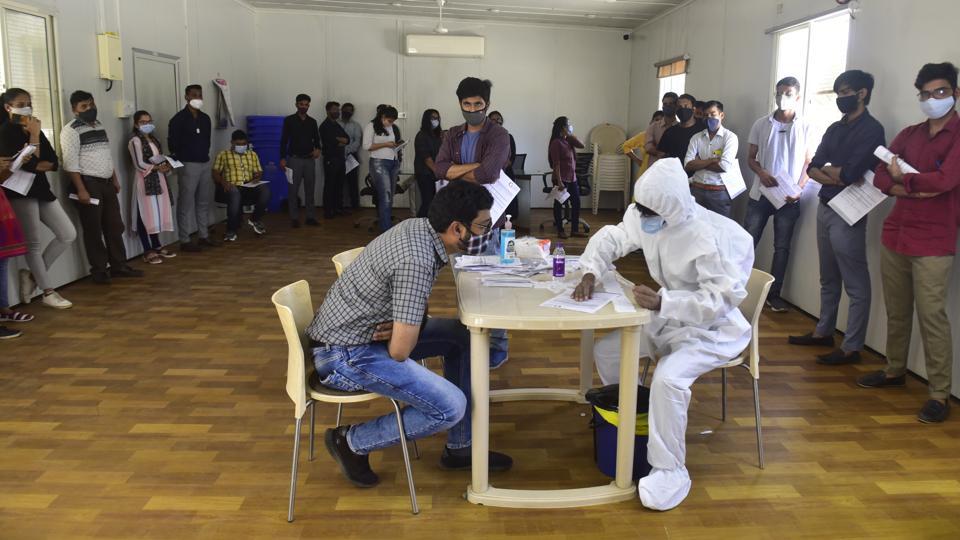
Without naming China, India noted that WHO director general Tedros Adhanom Ghebreyesus had raised the issue of “delays and difficulties in accessing raw data” for the UN health agency’s report on the origins of the Coronavirus. It also sought “more timely and comprehensive data sharing” for future investigations.
WHO and China released the long-awaited report on the origins of Covid-19 on Tuesday, listing four hypotheses in order of probability. The report said the SARS-CoV-2 virus that causes Covid-19 most probably jumped from bats to humans via an intermediary animal. It also said it was “extremely unlikely” that the virus had been leaked from a laboratory.
“We share the need for a comprehensive and expert-led mechanism that would expeditiously investigate the origin of Covid-19 in cooperation with all stakeholders,” external affairs ministry spokesperson Arindam Bagchi said.
“It is pertinent to note that the director-general of the WHO has separately raised the issue of delays and difficulties in accessing raw data for the team conducting the study. We fully support the director general’s expectation that future collaborative studies will include more timely and comprehensive data sharing,” he said.
Also read: Mumbai records highest spike with 8,646 cases, State sees jump of 43k infections
India also welcomes the WHO chief’s readiness to deploy additional missions, Bagchi said.
Ghebreyesus, who has for long been accused of being soft on China, has called for further investigation of the theory that Covid-19 began from a laboratory leak and also rebuked Beijing for sitting on crucial data. China has consistently rejected the hypothesis that the virus leaked from a lab.
“Although the team has concluded that a laboratory leak is the least likely hypothesis, this requires further investigation, potentially with additional missions involving specialist experts, which I am ready to deploy,” the director-general told WHO’s 194 member states during a briefing on the report.
“I do not believe that this assessment was extensive enough...Further data and studies will be needed to reach more robust conclusions,” he added.
The US and 13 other countries have raised concerns about the report in a joint statement, saying the WHO team was “significantly delayed and lacked access to complete, original data and samples”. These countries have also backed an “independent analysis and evaluation, free from interference and undue influence” of the origins of the pandemic.
Bagchi said the WHO report is an “important first step” in establishing the origins of the pandemic as it has stressed the “need for next-phase studies across the region”. He said, “The report also stresses the need for further data and studies to reach robust conclusions.”
He added, “We join other stakeholders in voicing their expectations that follow up to the WHO report or further studies, including on an understanding of the earliest human cases and clusters by the WHO on this critical issue, will receive the fullest cooperation of all concerned.”
India will continue to work with WHO to strengthen capacity and improve global health security so that the current report and further studies will provide inputs for developing protocols and building a knowledge base and expertise that facilitate genomic surveillance to track virus mutations and proactively respond to the next global pandemic, Bagchi said.