
 E-Paper



India says aim for inclusive development: Bhupender Yadav
Yadav’s remarks came during his statement at the Stockholm+50 conference in Sweden, which was convened to commemorate 50 years of the 1972 Stockholm Conference.


The principle of climate justice aims at providing a level playing field to all communities across the world by empowering them with financial and technological interventions, Union environment minister Bhupender Yadav said on Thursday.
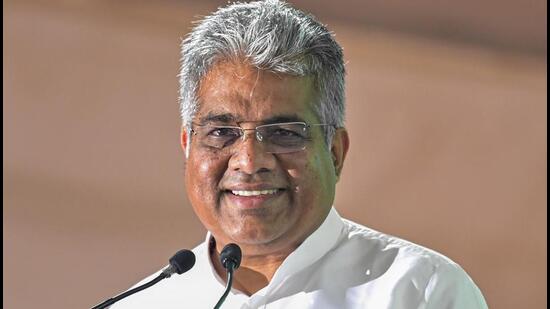
Yadav’s remarks came during his statement at the Stockholm+50 conference in Sweden, which was convened to commemorate 50 years of the 1972 Stockholm Conference — the first UN meeting on the environment.
The principles outlined during the 1972 conference remain relevant today, Yadav said.
“We aim for a futuristic, inclusive and sustainable development. Towards this ambition, India has worked with partners for significant global initiatives that include the Leadership Group for Industry Transition, International Solar Alliance, Infrastructure for Resilient Island States, and Coalition for Disaster Resilient Infrastructure. The principles of United Nations Framework Convention on Climate Change like equity, common but differentiated responsibilities and respective capabilities are the basis for providing a dignified life to all across the world based on respective national circumstances,” Yadav said.
He added that India has one of the youngest populations in the world, today and that youth are at the centre of creativity, innovation, and indigenisation of new technologies, including in areas of environment and climate actions in India.
“Lead us out of this mess,” UN Secretary General, Antonio Guterres urged delegates at the conference. He called for action on the triple planetary crisis that’s been caused by the climate emergency, biodiversity loss and pollution and waste.
“Hot air is killing us,” he said, repeating his call to all countries to abandon fossil fuel subsidies and invest in renewable energy.
Developed nations should at least double their support to poorer countries so that they can adapt to a growing number of climate shocks, he added.
Conference convenor and General Assembly President Abdulla Shahid, said there was a simple truth all need to acknowledge is human progress cannot occur on an earth that is starved of its own resources, marred by pollution, and is under relentless assault from a climate crisis of its own making.
Though the Stockholm Declaration of 1972 did not refer to climate change, it did stress on equality and people’s right to a life of dignity.
The first principle of the declaration stated: “Man has the fundamental right to freedom, equality and adequate conditions of life, in an environment of a quality that permits a life of dignity and well-being, and he bears a solemn responsibility to protect and improve the environment for present and future generations. In this respect, policies promoting or perpetuating apartheid, racial segregation, discrimination, colonial and other forms of oppression and foreign domination stand condemned and must be eliminated.”


