
 E-Paper



India to send 4 officers to UN to boost diplomatic presence
According to South Block, R Ravindran, a 1999 batch Indian Foreign Service (IFS) officer and presently joint secretary (Central and West Africa), will join the Indian Permanent Mission to the UN in New York with a rank equivalent to that of a DPR. Pratik Mathur, a 2007 IFS officer and deputy secretary (PMO), will join as a counsellor.

 Prefer HTon Google


India has decided to upgrade its diplomatic presence at the UN before taking over as a non-permanent member of the Security Council in January 2021 by appointing an additional deputy permanent representative (DPR) and a counsellor to handle UNSC matters. External affairs minister Subrahmanyam Jaishankar will personally review India’s stint at the UNSC every month.
According to South Block, R Ravindran, a 1999 batch Indian Foreign Service (IFS) officer and presently joint secretary (Central and West Africa), will join the Indian Permanent Mission to the UN in New York with a rank equivalent to that of a DPR. Pratik Mathur, a 2007 IFS officer and deputy secretary (PMO), will join as a counsellor.
While the mission is headed by T S Tirumurti and has Nagaraj Naidu as DPR, the two officers will join the group before the 75th UN General Assembly opens on September 15,2020. Preparatory work for new non-permanent members begins months before they formally join the UNSC.
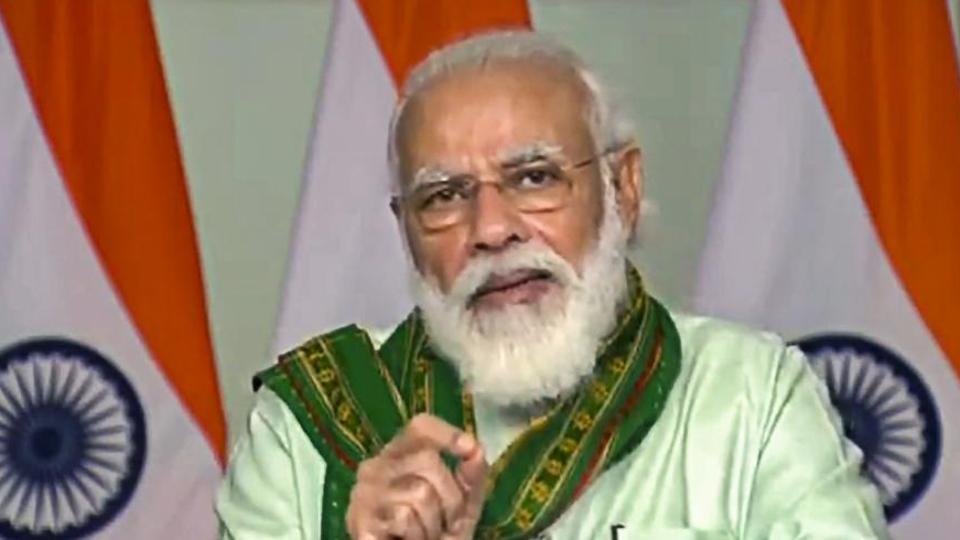
Ravindran served in the office of the Indian permanent representative to the UN under Hardeep Singh Puri, now minister of civil aviation, urban development and commerce, who headed the mission when India was a non-permanent member in 2011-2012. Prime Minister Narendra Modi has already spelled out India’s approach at the UNSC by spelling out a 5S approach -- Samman (respect), Samvad (dialogue), Sahyog (cooperation) , Shanti (global peace) and Samiriddhi (global prosperity) -- with the overall objective of a “New Orientation of a Reformed Multilateral System.”
While India got 184 out of 192 valid votes cast for the UNSC seat, the vote numbers surprised New Delhi as India’s adversaries, particularly Pakistan, Turkey, Malaysai and backed by Islamabad’s all-weather friend Chinam had spread negativity about the revocation of article 370 in Kashmir on August 5 last year.
“Our understanding is that India got these many votes as its forces stood up to China at Galwan in East Ladakh in June. Although only 129 votes are required, India got additional votes for having the capacity to fight for its territory,” said a senior government official.
It was a reference to the violent brawl that took place in Galwan on June 15 in which heavily outnumbered Indian soldiers fought back against Chinese troops. India lost 20 men in the skirmish and China suffered an unspecified number of casualties.
From conversations with a bunch of diplomats, it is quite evident that India is set to play a constructive role at the UNSC without forgetting that it is still waiting to become a permanent member of the Council after 75 years.


