
 E-Paper



India, UAE set to double trade to $200 bn before target of 2032: Envoy
Badr Jafar was appointed to the position by the UAE’s deputy prime minister Sheikh Abdullah bin Zayed Al Nahyan last year

 Prefer HTon Google


India and the United Arab Emirates (UAE) are likely to grow two-way trade to $200 billion before the target date of 2032, and there is growing interest in the Emirates for co-investments in areas such as artificial intelligence (AI) and aviation hubs built around airports, the UAE’s special envoy for business and philanthropy said on Tuesday.
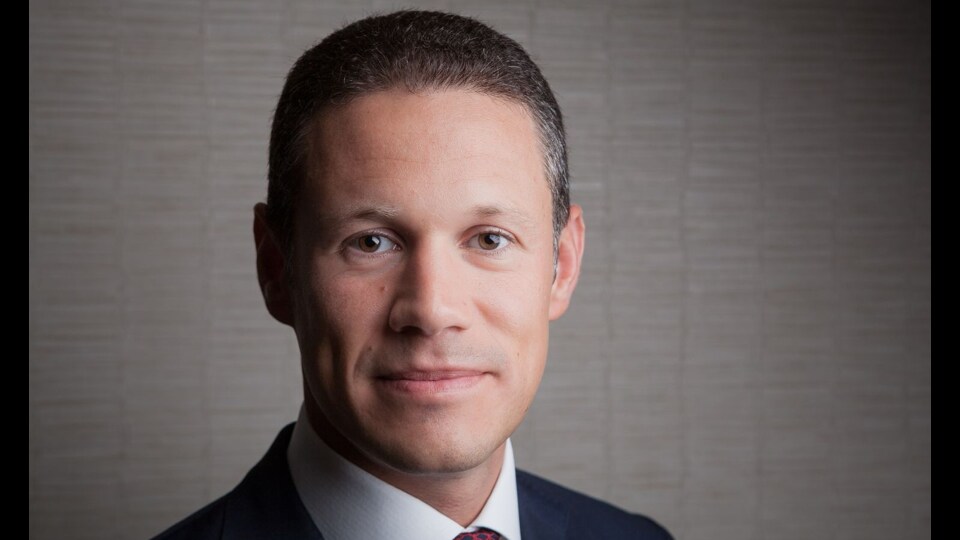
Badr Jafar, who was appointed to the position by the UAE’s deputy prime minister Sheikh Abdullah bin Zayed Al Nahyan last year, is visiting India this week to drum up business opportunities in new areas and to drive investments through meetings in New Delhi and Mumbai.
Jafar told HT in an interview that the UAE-India relationship is distinctive because it is “rooted in future-facing models” and built on trust and shared ambition at a time of widespread disruptions in the global economy.
“Bilateral trade now exceeds $100 billion annually, it hit that number five years before the original schedule [of 2030], and the leadership of the UAE and India have set a clear trajectory towards $200 billion, or doubling trade flows, by 2032. I think there’s a lot of optimism that we can hit that number well before 2032,” Jafar said.
The target of doubling bilateral trade to $200 billion by 2032 was set by Prime Minister Narendra Modi and UAE President Sheikh Mohamed bin Zayed when the Emirati leader visited New Delhi last month. The two sides also unveiled plans for a strategic defence partnership and a 10-year agreement for the supply of 0.5 million tonnes of LNG a year.
The UAE is India’s third-largest trade partner and second-largest export destination, with exports worth more than $36.63 billion in 2024-25. The UAE’s total exports during this period were worth more than $63.4 billion. The UAE is also India’s fourth-largest source of oil and second-largest supplier of LNG and LPG.
Referring to his meetings in New Delhi, Jafar said the India-UAE partnership is no longer built on energy, but also encompasses energy infrastructure, logistics, digital platforms, advanced manufacturing, innovation ecosystems, and next-gen industries. “The next phase of our partnership moves from trade to co-investment, and then to co-innovation,” he said, pointing to the interest in investing in India’s AI sector.
“India brings the extraordinary digital scale – more than 900 million internet users – alongside deep engineering and technical talent…In essence, India brings talent and industrial scale, the UAE brings capital, infrastructure, and global connectivity.”
Jafar pointed to the potential for investments in India’s aviation sector against the backdrop of extensive air connectivity with the UAE. With more than 1,200 flights a week between the two countries and airlines from both sides utilising their full capacity, the sector is “only set to grow”, he said.
“One of the ideas that is definitely of interest to the UAE is this idea of aero-cities, whereby you build not just airport terminals, but also infrastructure to support small and large industries,” Jafar said, adding that these facilities will include maintenance, repair, and overhaul (MRO) hubs. “There are a number of Indian companies that are focusing on this, which is something of deep interest to [the UAE].
Pointing to disruptions and uncertainty on the international stage, Jafar said, “The shift taking place in the global economy is a structural shift, not a cyclical one. Trade between the Gulf and emerging Asian economies is projected to exceed $680 billion by 2030, with over $80 billion in cross-border private capital flows in recent years. The centre of gravity in the global economy is moving, and I think the India-UAE corridor sits at the heart of this.”
With India as a market of 1.4 billion people and the UAE as a “global connectivity platform” with access across the Middle East, Africa, and Europe, the bilateral partnership will form the “bedrock of the future global economy”, Jafar said.



