
 E-Paper



Indian Army to monitor low-altitude airspace along China, Pakistan borders
The Indian Army is working to acquire the capacity to operate 10,000 drones along the western theatre and more than 20,000 drones along the 3,488 km LAC.

 Prefer HTon Google


New Delhi : The Indian Army has taken charge of the task of monitoring flying objects within 35 km from the country’s borders and up to a height ceiling of three kilometers to counter enemy drone intrusions into India — a move that comes amid the proliferation of surveillance and armed drones on the western and northern borders.
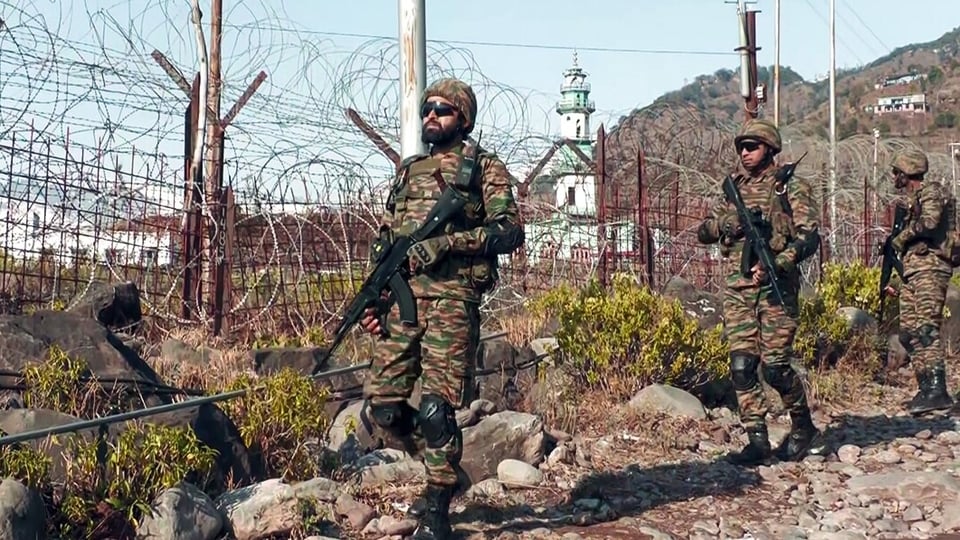
This is one of the many steps that Indian Army has undertaken after Operation Sindoor apart from tweaks in deployment strategy and introduction of rocket regiments .
HT learns that with the army conducting 97% of drone and anti-drone activity within the 35 km land and three km air envelope, air command and control centers are being established along the borders with China and Pakistan to not only monitor drone activity across borders but also launch drones as well as neutralize enemy drones.
The Indian Army is working to acquire the capacity to operate 10,000 drones along the western theatre and more than 20,000 drones along the 3,488 km Line of Actual Control (LAC). The area Corps Commander will work closely with the area Air Force commander to co-ordinate IAF, Intelligence or any other agency, HT learns.
The monitoring of 35x3 km envelope by the Indian Army along borders has been done after Pakistan used armed drones to target Indian Army and Air Force formations along the borders during Operation Sindoor using Turkish and Chinese drones.
PLA also deploys drones all along the eastern theatre to monitor Indian Army activity on the LAC.
In addition, the Indian Army has already deployed two units of rocket force, two combined armed brigades (Rudra brigades) and 21 Bhairav battalions with the range of Indian artillery brigades being increased from 150 to 1,000 km across borders.
The raising of rocket forces has been done after China deployed rocket regiments across the LAC in East Ladakh post its May 2020 transgressions and Pakistan used Fatah 1 and 2 rockets during Operation Sindoor.
India launched Operation Sindoor in the early hours of May 7 and struck terror and military installations in Pakistan and Pakistan-occupied Kashmir (PoK) before the May 10 ceasefire. The clash involved fighter jets, missiles, armed drones, and a fierce artillery duel.
A deadly clash in the Galwan Valley in 2020 to a sharp deterioration in bilateral relations between India and China.
The face-off effectively ended following the completion of the disengagement process from Demchok and Depsang’s last two friction points under an agreement finalised on October 21, 2024.
The introduction of Bhairav battalions by the Indian Army is aimed at ensuring that Special Forces are used for strategic purposes deep within the enemy territory with armed and surveillance drones, and loitering ammunition, with the Bhairavs being used for tactical roles along the border.
The changes in deployment strategy and the focus on more weaponry comes at a time when Pakistan has acquired armed drones, radars, missiles and rockets post Operation Sindoor.


