E-Paper



Indian govt amends environmental guidelines to slash industrial red tape
The movie is in line with recent efforts to streamline and fastrack regulatory processes for industries

 Prefer HTon Google


The union environment ministry has amended the Uniform Consent Guidelines notified under the Air (Prevention and Control of Pollution) Act, 1981 and the Water (Prevention and Control of Pollution) Act, 1974, allowing registered private environmental auditors to conduct industry visits and verify compliance with norms.
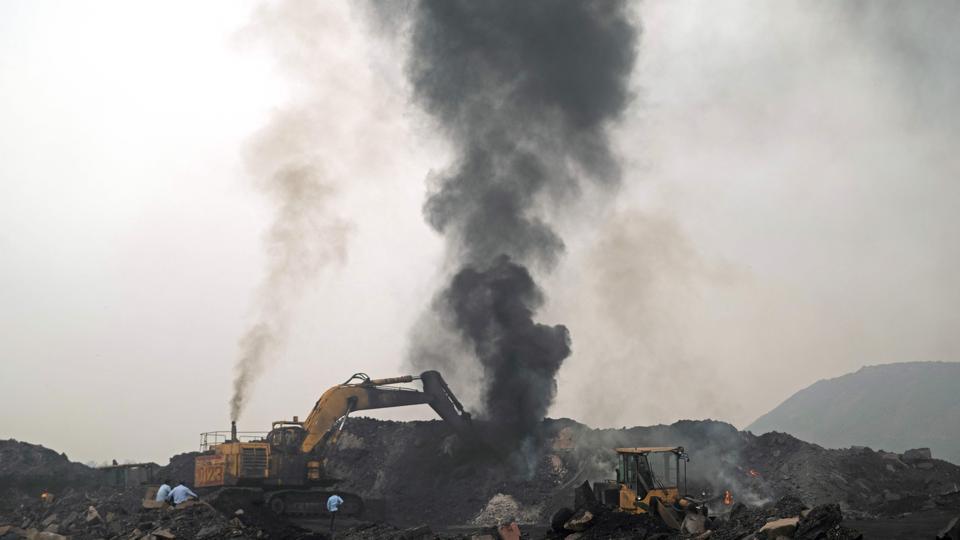
HT had reported on December 15 last year that India will soon have a cadre of private third party environmental auditors to ensure industries, processes, activities meet environmental norms, outsourcing a key responsibility of the state to cut delays and improve ease of doing business, although environmentalists are worried that this could end up giving industry a free rein.
Another major amendment relates to the validity of Consent to Operate (CTO), a key permit required to run any industry. Under the amended guidelines, CTO, once granted, will remain valid until it is cancelled. Environmental compliance will continue to be enforced through periodic inspections and the consent can be cancelled in case of violations, if any noticed, the environment ministry said in a note on Wednesday.
Also Read: Centre revives Haryana’s environmental clearance panels
“This removes the need for repeated renewals, reduces paperwork, compliance burden on industries and ensures continuity of industrial operations,” it added. Further, the processing time for grant of consent to Red Category (most polluting) industries has been reduced from 120 days to 90 days.
One of the important provisions in the amended guidelines also includes the provision for consolidated consent and authorisation. State Pollution Control Boards (SPCBs) can now process a common application and issue integrated permissions covering consents under the Air and Water Acts along with authorisations under various Waste Management Rules.
Integrated consents reduce multiple applications, timelines for approvals are shortened, and strong provisions for monitoring, compliance and cancellation remain in place, according to officials.
“The amendments aim to ensure faster, clearer and more efficient approval processes while maintaining environmental safeguards, while supporting the State Pollution Control Boards (SPCBs) and Pollution Control Committees (PCCs) in processing consent applications and conducting inspections. It also removes uncertainty and disruption in operations due to delays in renewal of Consent to Operate,” the ministry said on Wednesday.
Special provisions have been introduced for Micro and Small Enterprises located in notified industrial estates or areas. For such units, Consent to Establish is considered granted upon submission of a self-certified application, as the land has already been assessed from an environmental perspective, the note states.
The amended guidelines also replace rigid minimum-distance siting criteria with site-specific environmental assessment, allowing competent authorities to stipulate appropriate safeguards based on local facts and circumstances like proximity to water bodies, settlements, monuments and ecologically sensitive areas, it added.
The amendments also allow states and UTs to prescribe a one-time Consent to Operate fee for a period ranging from five to 25 years, reducing repetitive fee collection and administrative processing. “A clear and uniform definition of ‘capital investment’ has been introduced in Schedule 2 to remove ambiguity in fee assessment and ensure consistency across states,” it said.
“The amendments retain safeguards for refusal or cancellation of consent in cases of non-compliance with standards, violations of consent conditions, environmental damage, or location in prohibited areas. The revised framework balances ease of doing business with environmental protection through continuous monitoring, trust-based governance and a uniform national consent mechanism,” the note added.
HT had reported on October 30 that the Union environment ministry has changed the mandatory common green cover requirement for industrial estates from 33% to 10%, while introducing differentiated norms for individual industries based on their pollution potential, according to people aware of the matter who asked not to be named. The move, aimed at what the government sees as “rationalising” requirements and balancing land availability with environmental needs, marked a significant easing of uniform norms that have been in place since 2020.