
 E-Paper



Navy’s forward posture against PLA aggression in Ladakh muscles out Chinese threat on high seas
To counter the Chinese threat, the plan is to have a network of Indian airbases on islands in both Arabian Sea and Bay of Bengal so that freedom of navigation and overflights is maintained and not restricted like in South China Sea.

 Prefer HTon Google


While the Indian Army and Air Force are fully deployed on the Aksai Chin border, the Indian Navy through its forward posture has ensured that there is no Chinese People’s Liberation Army (PLA) Navy threat in either the Arabian Sea or the Bay of Bengal.
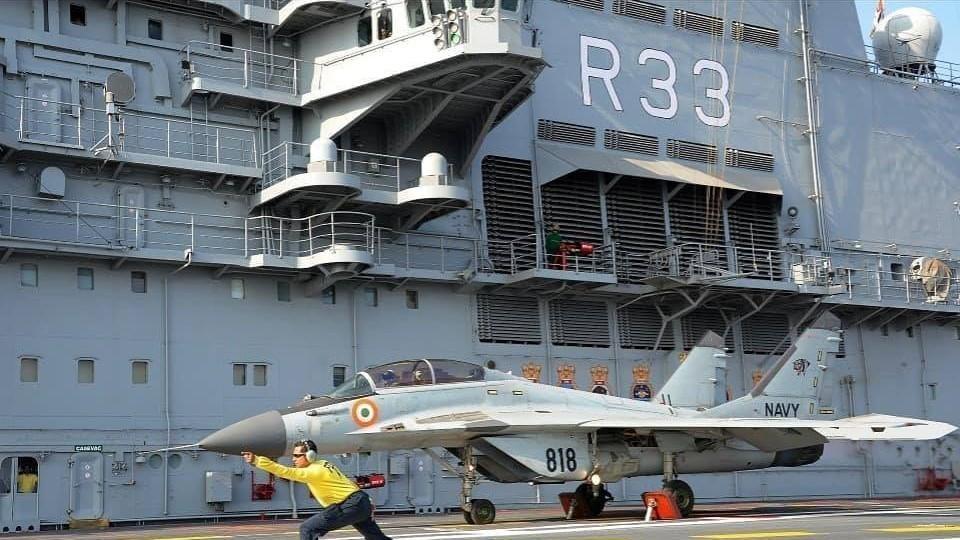
According to sources based in Mumbai, Vishakhapatnam and New Delhi, after the June 15 Galwan flare-up, the Indian Navy warships including aircraft carrier and submarines adopted an aggressive posture on both eastern and western seaboard to ward off any Chinese Navy threat to India from Malacca Straits to the Horn of Africa.
Also Read: QUAD is ready but no more free lunches for ASEAN on South China Sea
The PLA Navy warships using the cover of anti-piracy operations operate between Gwadar, their maintenance and logistics base in Balochistan, to acquired Djibouti Naval base on the mouth of Red Sea. The PLA warships also enter the Indian Ocean through Malacca Straits and operate in the international waters.
After the Galwan flare-up in East Ladakh, the Indian Navy’s forward posture has ensured that three PLA Navy warships have taken to safe waters in Gulf of Aden, off the coast of Djibouti and three other warships have exited through Malacca Straits to home base. “A Chinese warship which was entering through Indonesia towards the Indian Ocean also turned back as the Indian forces were fully prepared for any contingency,” said a senior commander.
Also Read: Apex China Study Group reviews East Ladakh: Key stand-off points record withdrawal
The PLA Navy has acquired a string of ports in Myanmar, Sri Lanka, Pakistan, Iran and east Africa to not only contain the Indian Navy but also challenge the presence of US Central Command forces as well as French and British Navy. Beijing has 70 per cent stake in Kyaukpyu port in Myanmar, which sits in the Bay of Bengal, Hambanthota port in South Sri Lanka dominates the Indian Ocean, Gwadar port in Pakistan sits on the mouth of Gulf of Oman and the port of Jask in Iran is located on the edge of Persian Gulf. While the countries in which these ports are may justify the Chinese tie-up due to push by the US, fact is that all these ports have been acquired through huge infusion of cash and muscle. With the PLA Navy moving full speed to acquire blue water navy status, it is only a matter of time that the global trade will be at mercy of the Chinese warships.
Also Read: US backs ASEAN on South China Sea, challenges China’s predatory world view
With a clear understanding of the Chinese posture, the Indian national security planners are working towards building of advance landing grounds in some of the 1062 islands under its sovereignty. Rather than buy more aircraft carriers, the Indian plan is to totally upgrade the military facilities in Andaman Nicobar Islands on eastern seaboard as well as Lakshadweep on western seaboard. To counter the Chinese threat, the plan is to have a network of Indian airbases on these islands in both Arabian Sea and Bay of Bengal so that freedom of navigation and overflights is maintained and not restricted like in South China Sea.


