
 E-Paper



Indian Navy studying the sinking of Russian cruiser Moskva
Even though the DRDO has developed the CHAFF system to tackle incoming anti-ship missiles, the sinking of Moskva by Ukrainian cruise missile poses questions on survivability of large warships.

 Prefer HTon Google


The Indian Navy’s operational planners are studying the sinking of the missile cruiser Moskva, the flagship of Russia’s Black Sea fleet, by two Ukrainian anti-ship cruise missiles on April 14 with the focus on how to protect Indian warships from anti-ship ballistic missiles like the Chinese DF-21. The last Russian flagship sunk was in the Battle of Tsushima by the Japanese imperial navy in 1905, 117 years ago.
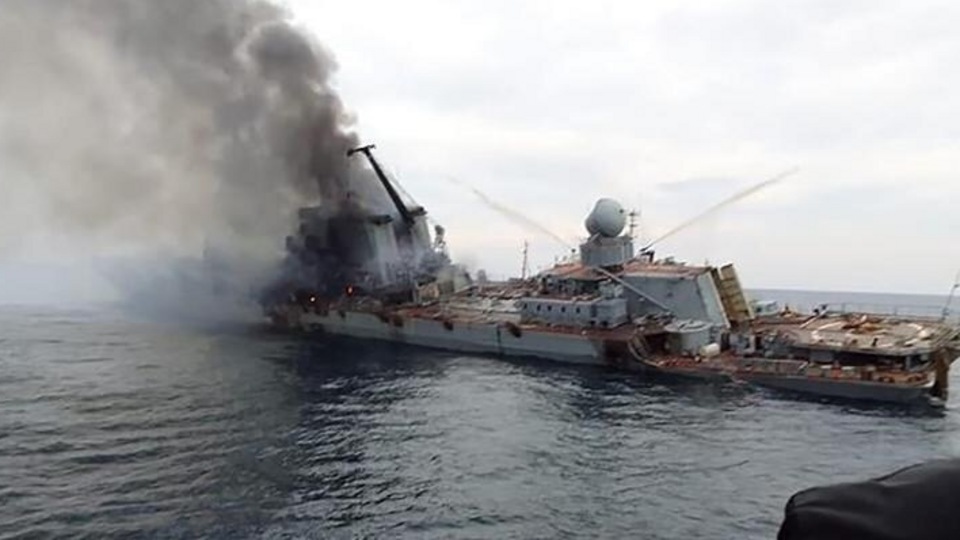
The sinking of a Russian cruiser in the ongoing Ukraine war poses serious questions about the survivability of warships in the day and age of anti-ship cruises as well as ballistic missiles. The anti-ship weapon poses threat to all navies in the world including the Chinese Navy, which has been flaunting its aircraft carriers, Liaoning, and Shandong, against in the Indo-Pacific while threatening the mighty US Navy with DF 21 and DF 26 missiles. The Chinese propaganda media has dubbed DF 21 as a ship killer and DF 26 as killer of the US base in Guam in the Indo-Pacific.
It is learnt that the sinking of the Russian Moskva will be a topic of discussion at the Naval Commanders Conference next week.
While premier Indian Navy warships carry Barak-1 and Barak-8 surface to air missiles along with a close-in weapons suite (CIWS) to tackle aerial and cruise missile threats, the issue gets more complicated in case of saturation attack by the adversary.
“The anti-ship missile age dawned in the 1960s and throughout our career, the focus is on how to avoid missile attacks and fires onboard our ships. The key to warding off an anti-ship missile attack is to ensure that the adversary does not get real-time location of the warship in times of hostilities and detection of the incoming threat to counter it,” said a former Indian Navy admiral.
The 2021 launched ballistic missile tracking ship INS Dhruv, operated by the NTRO, will help the Indian military detect missile launches toward India and its military platforms.
However, the DRDO has developed the CHAFF system, which creates a metal particle cloud away from the warship to divert the incoming anti-ship missile in times of hostilities. India after the US is the second country to develop the CHAFF capability to shield the warship by attracting the incoming missile by creating an illusion of a warship, away from the actual platform. “Once the on-board ship radar detects the incoming missile threat, the CHAFF system is activated by firing metal clouds far away from the actual ship and distracts the missile from hitting the actual target,” said a senior official.
While the CHAFF system may work in hostile conditions, the anti-ship cruise and ballistic missiles pose a real threat to naval armadas as they will take down a ship if undetected. The sinking of a warship is not a mere war event but has a serious impact on the morale of the military and the nation.


