E-Paper



‘Indian science has always been a global front runner’
Geneticist Sir Paul Nurse discusses India's evolving research landscape, budget cuts' effects, cancer trends, and AI's role in diagnostics and treatment.

 Prefer HTon Google


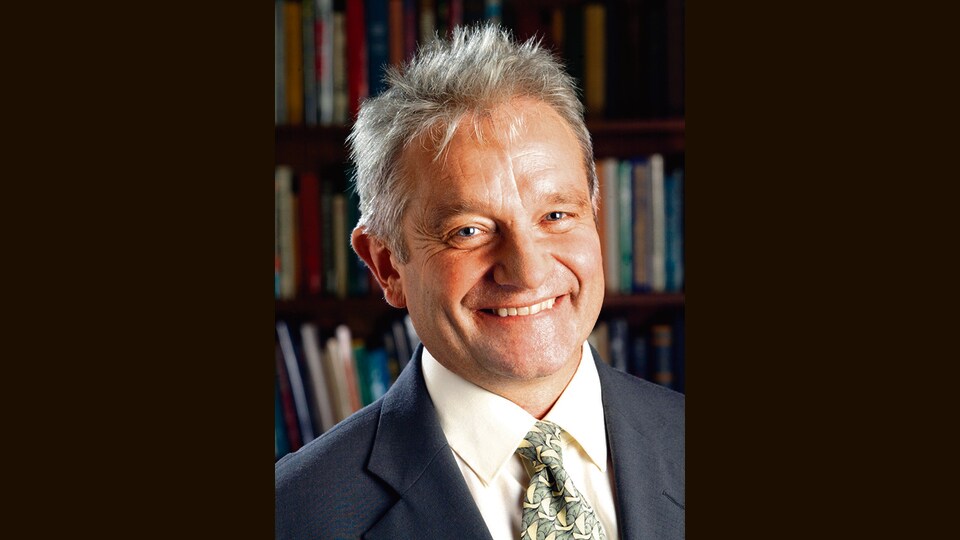
Widely regarded as one of the greatest modern scientists, geneticist and Nobel laureate Sir Paul Nurse spoke to HT about India’s research landscape, impact of budget cuts on the future of research, and his work that led to him winning the Nobel Prize in Physiology or Medicine in 2001. Edited excerpts:
Tell us a bit about your research?
What I work on is cells. We’re all made of billions of cells. I work on the process called the cell cycle by which a cell reproduces itself from one to two. That requires a series of events: Events that particularly lead to the doubling of the DNA and the segregation/separation into two newly divided cells.
What controls that overall process, what goes through all those events in the right order, and the impact that led to the Nobel Prize was the discovery that it’s a very simple system: There’s a particular enzyme called cyclin-dependent kinases, which increases as you go through the cycle and fires off different events at different levels. And then when it gets to the end of the cycle, it’s destroyed and then it goes through it again.
It’s very important –– this cell cycle –– because it underpins the growth and reproduction of all living things. We all came from a single cell and you wouldn’t exist if it hadn’t undergone all of this properly, and it has some relevance to cancer.
Why do you think cancer incidence is rising so sharply globally?
I’m not actually a cancer specialist, but it is a bit strange. The usual answer, which I’m not sure is completely correct, is to say we get older, we survive other diseases –– particularly infectious diseases –– which we’ve managed to control. And that has meant that there’s a greater incidence of cancer.
The second thing is that we are better at diagnosing cancer. So, when people have it, we know that they’ve had it. Having said that, there’s something else going on that I don’t think we fully understand such as environmental factors, but I am not sure how much of that its responsible.
What role do you see AI playing in diagnosis and treatment?
It is going to be an incredibly useful tool for routine activities such as examining images to look for telltale signs that something may happen. If you see a blob somewhere and six months later that leads to cancer, then you don’t actually need to know what the blob means or how it develops. That’s enough to say we should be paying attention to it.
It also isn’t only to do with imaging, but it’s to do with everything. Maybe if you get routine tests, there might be a combination of certain factors that no doctor would take any notice at all. But, if we have the data –– which AI can interrogate –– then you might understand that there’s a certain combination of factors that none of which are attracting attention individually, but together might mean that something will happen.
But, will it lead to new treatment? That’s a more complicated business. You move in a somewhat different direction, which is to do with whether AI will help what we call discovery research about how to understand what is going on in a process like cancer. Now, the answer to that question is yes, but maybe not quite as dramatic as what I just said about diagnosis. Because the way that AI with these large language models works, it works well with only certain type of data. The sort of data that you have in medical records, where you have hundreds of thousands or millions of small differences between data out of which you see the ones that correlates.
What we do in discovery research is a much greater depth of understanding in only a few experimental situations, which doesn’t turn itself so well to the standard AI approaches we have at the moment. So, we can use simple AI and we use it all the time in the lab, which is just to help us do simple experiments better. You look down on a microscope, you look at images. We want to select certain types of cells: We do it manually or you can do it automatically with AI. It makes the work faster and more reliable.
But, I don’t think we have made much progress with AI up until now, which is closer to intuitive thinking. That is to try and mine creative ideas from the data because it’s not actually very creative at the moment. We think it’s creative because it can write a sentence which is grammatically correct. But it isn’t, of course, the basis of creative understanding. So, having creative thinking coming in from AI is something we’ve yet to get to. My view is actually to combine the human mind with the way computers are working rather than saying the computer’s going to do this and the human is out of its hand. In other words, we use it as a machine tool to assist.
What do you have to say about the Indian research landscape?
The Indian situation in science is at a very exciting turn. I’ve been coming to India for 40 years and we are seeing a transformation in the capability of what Indian science can produce. Indian science, mathematics particularly, and the computing link to it has always been the front-runner in the world. We’ll never forget where zero was invented a thousand years ago. It has always been a strength here.
We’re on the edge of a transformation. It’s being increasingly recognised how important science is and that’s true for a country like India as well. It’s important for new innovation and industry; for improving our health; for understanding climate change, and all the other important problems that we face. All of these are important problems and it’s now being recognised by our political masters, including in India.
How do you see the budget cuts happening globally impacting overall research work?
America’s been a shock to us all. Some, including myself, thought it would be a significant issue if Trump was elected. But, it’s being implemented in such a silly way. Most people would say the US is the leading science nation in the world, and we are seeing it rapidly downgraded with all these initiatives.
The world has a long memory, and this is going to cause more damage reputationally than perhaps they imagine, because such crazy things are being said. The fact that it’s turned out to be possible in what we thought was a democratic nation, where there’s checks and balances. There are chances of ripple effects being seen because it’s usually linked to populism. But, we shouldn’t forget that it won’t happen in China, and it’s going to be the biggest gainer.
Did you expect to receive the Nobel prize when you started your research?
I don’t think most serious scientists think about it, and certainly not when they’re 23. If they do, there’s something wrong with them. I began to think a bit later that I could win a Nobel Prize, but that was only when certain things were achieved and delivered.