
 E-Paper



Indian troops start LAC patrolling at Demchok
The Indian Army resumes patrols in Demchok after 4.5 years, with Depsang patrols starting soon, following troop disengagement with China to ease tensions.

 Prefer HTon Google


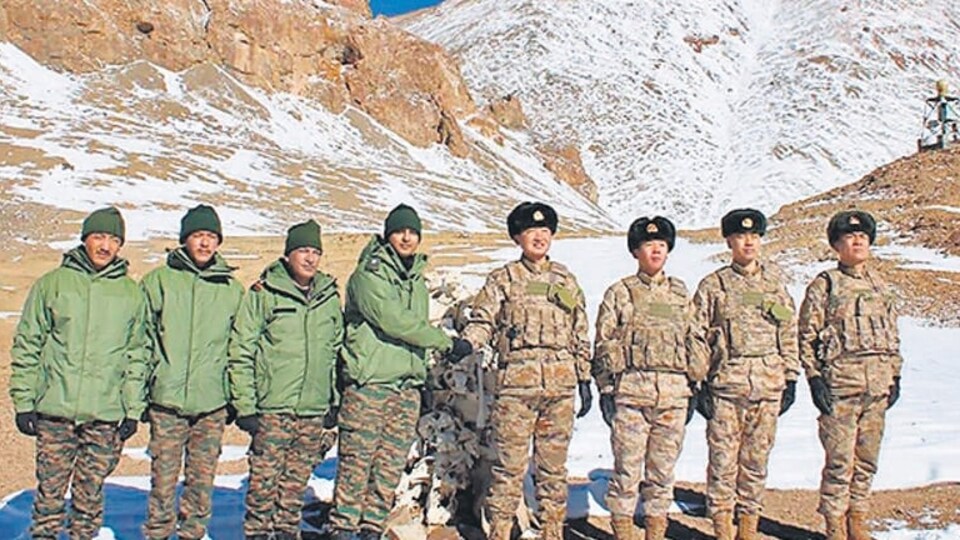
The Indian Army has resumed its patrolling activity in Demchok in eastern Ladakh after a gap of almost four-and-a-half years, and it will soon start patrols in Depsang, restoring the ground situation in the two forward areas along the contested Line of Actual Control (LAC) to what it was pre-April 2020 before the India-China military standoff began, people aware of the matter said on Friday.
Also Read: ‘Difficult to trust’: Ladakh MP not convinced China will respect LAC agreement
Patrols in Depsang could begin in a day or two, the people added, asking not to be named.
The development comes after the disengagement of Indian and Chinese armies from the two areas on Wednesday, and verification of the troop and equipment pullback to a mutually agreed distance from the face-off sites.
Also Read: Continuous efforts led to India-China consensus on LAC pullback: Rajnath Singh
The verification was completed in line with the agreement reached by India and China to reduce border tensions. It involved the use of unmanned aerial vehicles, other aerial means of surveillance and satellite imagery of the areas.
Also Read: Indian, Chinese troops at LAC exchange Diwali sweets after border disengagement
The disengagement began on October 23, two days after India and China announced a breakthrough in negotiations to resolve their stand-off in Depsang and Demchok, the last two flashpoints in Ladakh where the Indian Army and the Chinese People’s Liberation Army (PLA) were eyeball-to-eyeball since May 2020.
As part of the disengagement process, the Indian Army and the Chinese People’s Liberation Army (PLA) pulled back their forward-deployed troops and equipment from the two areas, and dismantled temporary structures that had come up there after the military standoff began.
Patrolling modalities were decided between ground commanders on both sides, the people said.
With this, the Indian Army and PLA have moved past a two-year impasse in negotiations -- the fourth and last round of disengagement from Patrolling Point-15 in the Gogra-Hot Springs area took place in September 2022 after which the talks were deadlocked.
The disengagement has facilitated patrolling by both sides in a coordinated manner, and in the agreed upon frequency and strength (of the patrolling parties), former director general of military operations Lieutenant General Vinod Bhatia (retd) earlier said, adding that the two sides can now chart a path to restore peace and tranquillity along LAC.
On Wednesday, defence minister Rajnath Singh said India and China reached a consensus to restore the ground situation in certain areas along LAC in eastern Ladakh on the back of “continuous efforts.”
“India and China were in diplomatic and military talks to resolve their conflicts in some areas along the LAC. We have reached a consensus following our continuous efforts. We achieved this success due to your discipline and courage. We will continue this process of peace restoration based on the consensus,” he said at the time in Tezpur, where he celebrated Diwali with troops of HQs 4 Corps.
The latest disengagement agreement covers only Depsang and Demchok, and both countries will continue their talks at different levels on other areas where so-called buffer zones were previously created after troop pullback. The disengagement from Depsang and Demchok has not resulted in the creation of buffer zones, as had happened after the previous rounds of troop pullback.
India and China earlier disengaged from Galwan Valley, Pangong Tso, Gogra (PP-17A) and Hot Springs (PP-15), areas where buffer zones were created to temporarily restrict the patrolling activities of both armies in the region. The zones of separation were aimed at eliminating the possibility of violent face-offs. The lifting of the moratorium on patrolling these areas by both sides will depend on the outcome of further talks.
Disengagement from friction areas is the first step towards cooling border tensions. De-escalation of the lingering conflict and the eventual de-induction of rival soldiers must follow to restore peace and tranquillity in the sector. Both armies still have tens of thousands of troops each and advanced weaponry deployed in the Ladakh theatre.


