
 E-Paper



India's federal structure became role model during Covid: PM Modi at NITI Aayog meet
NITI Aayog meeting: Prime Minister Narendra Modi expressed the importance of agriculture diversification and the need to be self-sufficient, especially in edible oils, the think-tanks Ramesh Chand said at a post-meeting briefing.

 Prefer HTon Google


A fruitful interaction was held during the NITI Aayog's seventh governing council meeting where chief minister and lieutenant governors presented the best practices from their states, said NITI Aayog CEO Parameswaran Iyer.
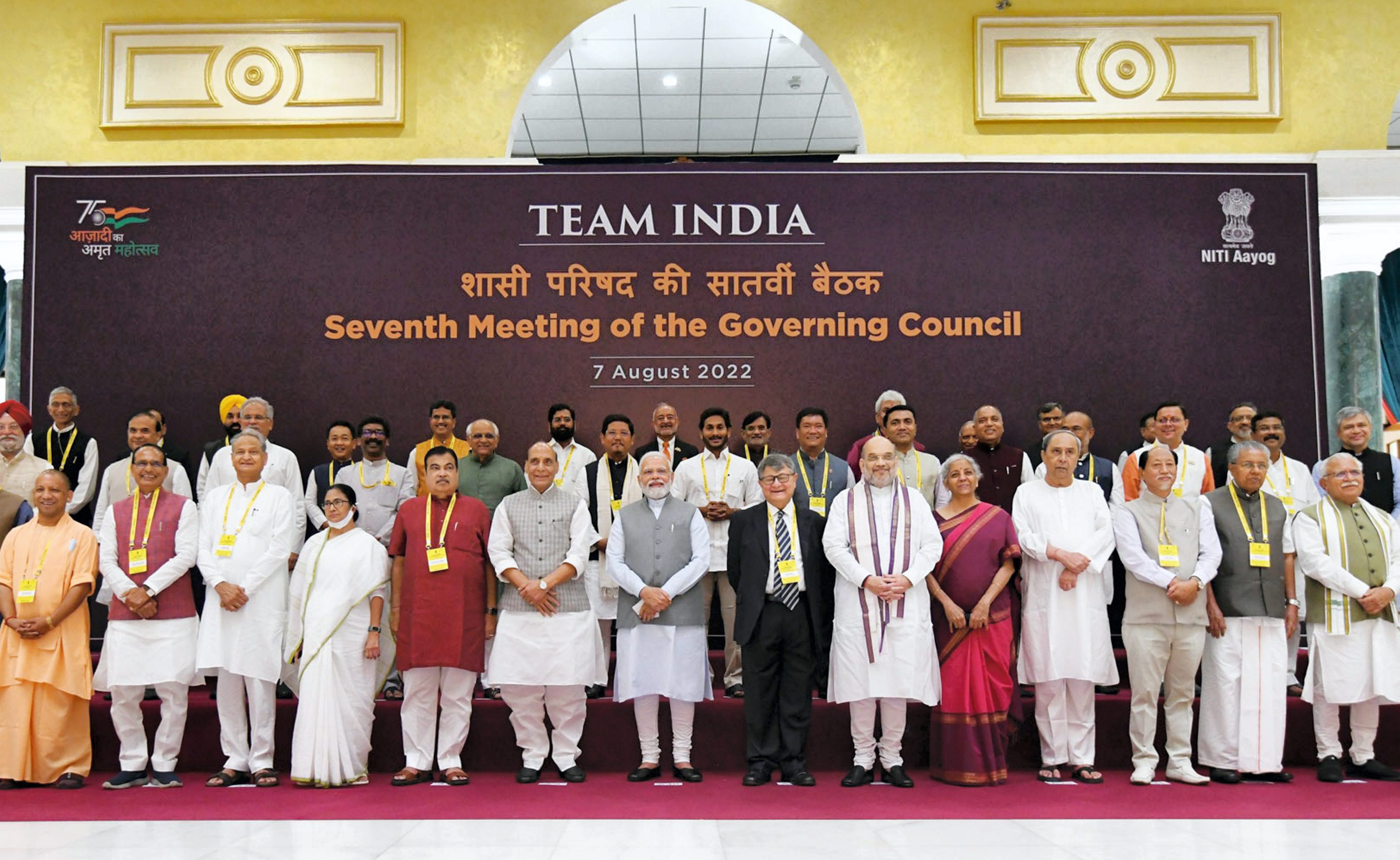
At the meeting Prime Minister Narendra Modi expressed the importance of agriculture diversification and the need to be self-sufficient, especially in edible oils, the think-tanks Ramesh Chand said at a post-meeting briefing.
“We're meeting nearly half of our total demand for edible oil from imports… Overall, states were quite cooperative and are working on this aspect,” Chand further said.
Also read | ‘Share of central taxes’, 'ombudsman's role': CMs demand at NITI Aayog meeting
Presentations were made on NEP 2020, G20, and the importance of exports.
Vice chairman Suman Beri said the PM made important points on India's post-Covid situation, year ahead and his expectation from meeting of NITI Aayog.
Beri said Modi noted the way in which Centre and states during the Covid-19 pandemic made decisions in tandem with each other. "India’s federal structure and cooperative federalism emerged as a model for the world during Covid crisis, the PM said. He also talked about India's aim for 2047,” Beri added.


