E-Paper



EAM Jaishankar participates in Asean Regional Forum meeting, East Asia Summit
External affairs minister S Jaishankar attended Asean Regional Forum and East Asia Summit meetings, stressing zero tolerance towards terrorism.

 Prefer HTon Google


India emphasised a “zero tolerance” approach towards tackling terrorism at a meeting of the Asean Regional Forum (ARF) in the Philippines on Thursday, with external affairs minister S Jaishankar saying there should be no doubt that “acts of terrorism will have consequences”.
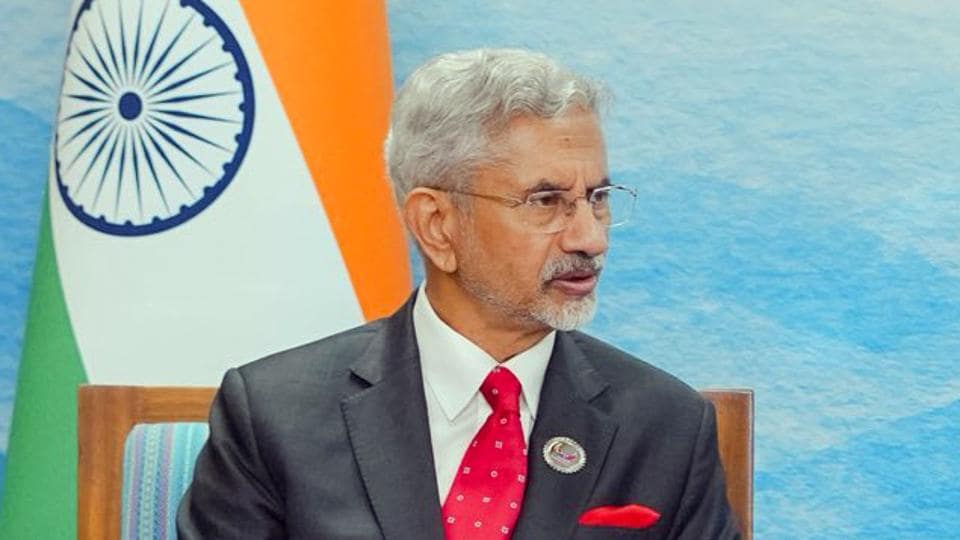
Jaishankar acknowledged the importance of the ARF, a 27-member regional security platform centred around the Asean grouping, in discussing political and security issues in the Indo-Pacific, especially in these complex times.
“There must be zero tolerance for terrorism. Nor should there be any doubt that acts of terrorism will have consequences,” Jaishankar said on social media after addressing the ARF ministerial meeting in Manila.
“We should prioritise choking the financial resources that fuel [terrorism]. India co-chairs the EWG [experts working group] with Malaysia in ADMM+ [Asean Defence Ministers’ Meeting-Plus], taking the lead in producing a compendium of best practices,” he said.
The ARF, which includes Asean member states and China, the European Union, Russia and the US, fosters consultation on political and security issues and contributes to confidence-building and preventive diplomacy in the region.
In the realm of maritime security, Jaishankar said the Indian Navy’s Information Fusion Centre in Gurugram, the Indo-Pacific Maritime Domain Awareness initiative, and the deployment of Indian forces from the north Arabian Sea to the western Pacific were making valuable contributions to counter piracy, trafficking and the narcotics trade and to secure maritime commerce.
Against the backdrop of strikes on merchant vessels in the Russia-Ukraine and West Asia conflicts, Jaishankar said such attacks on maritime shipping and civilian infrastructure were “unacceptable”, and commerce through international waterways should remain safe and unimpeded.
“On South China Sea, underlined that we look forward to a substantive, effective and legally binding [Code of Conduct] fully compliant with UNCLOS 1982 that does not prejudice the legitimate rights of all users,” he said.
He stressed the need for the world community to be on guard against those who undermine non-proliferation and disarmament, and backed a responsible and human-centric approach on AI and deeper cooperation on cybercrimes and other issues.
Jaishankar said the “Manila Plan of Action” and its five pillars were aligned with India’s approach to the Indo-Pacific. “India promotes a collaborative approach to disaster relief, sharing best practices, developing common SOPs and undertaking real-time and table top exercises,” he said.
India also advocates for the Coalition for Disaster Resilient Infrastructure, deploys field hospitals, provides search and rescue support, and sends relief materials and medical supplies during natural disasters.
Jaishankar also participated in the East Asia Summit (EAS), which brings together Asean member states and eight other countries such as India, China, Japan, Russia and the US, and said that “interdependence and common interests co-exist with competitiveness and rivalries” in an uncertain and volatile global order.
“There are structural changes being created by new capabilities, exposure and relationships; politics & security increasingly override economics and efficiency while the propensity to take risks and push the envelope is growing,” he said. At a time when the world economy is reeling under the impact of multiple conflicts, energy, food and health security cannot be taken for granted, he added.
Jaishankar called for dialogue and diplomacy to end the West Asia conflict and made it clear that attacks on seafarers, civilian shipping or infrastructure cannot be countenanced under any circumstances. He also noted that India is a top emerging donor to the UN Relief and Works Agency for Palestine Refugees in the Near East (UNRWA), and believes “a two-state solution can lead to a lasting and durable peace”.
India will host two EAS activities this year — the EAS Conference on Maritime Security Cooperation in Kochi and an EAS Maritime Heritage Festival in Lothal.