E-Paper



India’s transformation critical to strengthening multipolarity in Asia: Jaishankar
Jaishankar said India’s approach to the uncertain world was shaped by its broadening horizons, widening interests and reformist agenda

 Prefer HTon Google


NEW DELHI: India’s transformation is critical to strengthening multipolarity in Asia and the country’s growing weight will ensure the world order remains in favour of freedom, openness and transparency, external affairs minister S Jaishankar said on Friday.
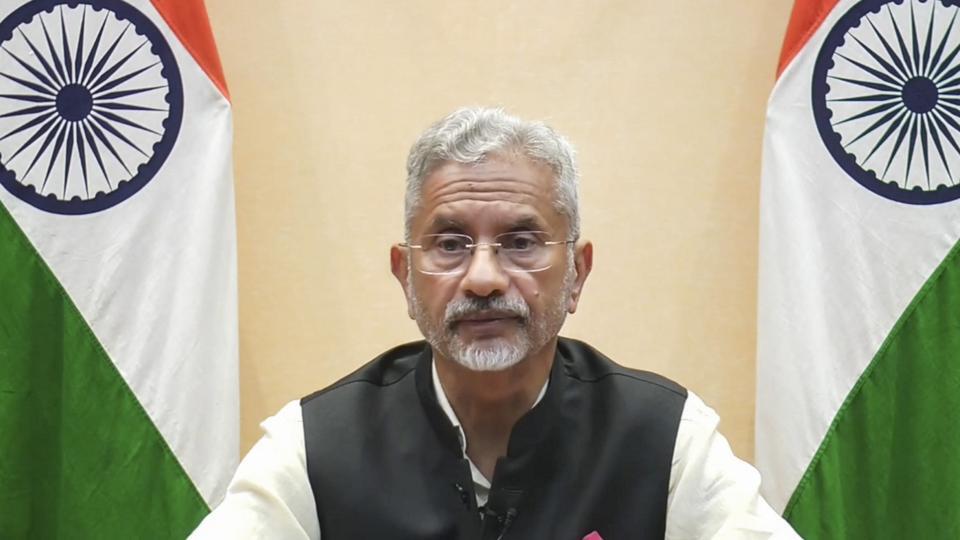
In a virtual address to Nikkei Asia’s 2024 Future of Asia Forum, Jaishankar said the global order is facing stress, including in Asia and the Indo-Pacific, amid greater risk-taking, which is seen in the Ukraine conflict, violence in the Middle East and the disregard for international law and agreements in Asia and the Indo-Pacific.
The supply chain challenge, over-concentrations stemming from globalisation and the use of economic coercion by states have put a premium on resilience and redundancy, he said. The technology challenge has also created a new level of inter-penetration and inter-dependence, and as a result, the era of AI, EVs, green and clean technologies have brought “hope and anxiety in equal measure”.
Referring to New Delhi’s role amid this change, Jaishankar said: “The transformation of India is critical to strengthening multipolarity in Asia itself, a prerequisite for a multipolar world. India’s growing weight will ensure that the overall balance in the world order remains in favour of freedom, openness, transparency and a rules-based order.”
India’s greater sense of responsibility and contributions are making a difference, he said, pointing to Indian warships operating in the Red Sea to protect maritime shipping, the country’s role as a first responder for natural disasters across the Indian Ocean, and initiatives ranging from solar energy to disaster resilience and biodiversity.
He said India’s approach to the uncertain world was shaped by its broadening horizons, widening interests and reformist agenda. “We believe that a free, open, safe, secure, peaceful, prosperous and stable Indo-Pacific is a necessary pre-condition for peace, security and prosperity of the world. In that endeavour, the India-Japan Special Strategic and Global Partnership is a key factor,” he said.
India’s “Neighbourhood First” policy is a consultative, outcome-oriented and non-reciprocal approach that promotes regionalism by extending credit lines and grants, which have been used for road and rail connectivity, construction of transmission lines, improving border customs infrastructure, enhancing health, education, women’s empowerment and provision of essential supplies.
India also continues to focus on enhancing physical, digital and people-to-people connectivity across the region, augmenting trade and development, and contributing to building a secure and stable neighbourhood, he said.
The Association of Southeast Asian Nations (Asean) is at the centre of India’s “Act East” policy that has matured into a wider Indo-Pacific vision, and synergy between India’s Indo-Pacific Oceans Initiative (IPOI) and the Asean Outlook on Indo-Pacific (AOIP)
provides a stronger framework for cooperation, he said.
India’s focus on its extended neighbourhood is also expressed westward through intensified cooperation with West Asian nations, which are among the country’s top trade, investment and energy partners. They also host an Indian community of almost nine million and have shown interest in partnering in forward-looking infrastructure, technology and energy initiatives, Jaishankar said.
Describing Japan as an important development partner for India, Jaishankar said bilateral trade and commercial ties remained “well below potential”. India’s annual bilateral trade in goods with the European Union is worth $135 billion, with the US and China $118 billion each, with the UAE $ 84 billion and with Russia $ 66 billion.
“That with Japan remains close to $23 billion. Similarly, the progress in regard to deepening of investments has fallen short of expectations. More work is also required in supportive domains...,” he said.