
 E-Paper



Isro-Nasa satellite Nisar takes flight
India and the US launched the Nisar satellite to monitor Earth's changes, aiding disaster response and climate studies with detailed data for five years.

 Prefer HTon Google


The Indian and US space agencies on Wednesday launched a powerful satellite that will keep a close eye on Earth and track even minuscule changes on its surface, arming scientists, researchers and disaster response teams with crucial data to help better forecast natural calamities.
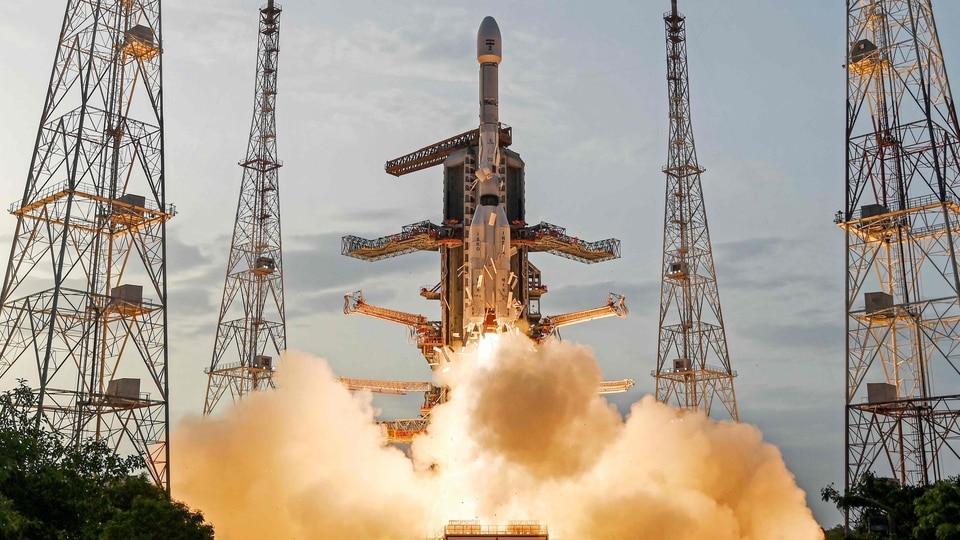
The Nasa-Isro Synthetic Aperture Radar satellite, or Nisar, lifted off from the Indian Space Research Organisation’s Satish Dhawan Space Centre in Sriharikota at 5.40pm, aboard the agency’s GSLV-F16 rocket, in collaboration with Nasa.
Roughly the size of a large SUV, Nisar was injected into orbit at 5.58pm. Over the next few days, the 2,393kg will begin to unfold itself, extending its 30-foot boom and opening the 39-foot diameter (12-meter) reflector, made of gold-plated wire mesh.
Science operations should begin by the end of October.
For the next five years, the $1.5 billion satellite will map virtually all of Earth’s terrain multiple times from its vantage point 743km above Earth. Its two radars — one from the US and the other from India — will operate constantly, scanning the planet in granular detail twice every 12 days. Experts said the satellite can track changes as small as a centimetre.
Data from the landmark effort will transform the way scientists study a rapidly evolving planet and climate. The satellite will push out accurate insights on melting glaciers and polar ice sheets; shifting groundwater supplies; motion and stress of land surfaces prompting landslides and earthquakes; and forest and wetland disruptions boosting carbon dioxide and methane emissions.
Union minister Jitendra Singh called the joint-launch India’s “scientific handshake with the world”.
“Its capacity to penetrate through fogs, dense clouds, ice layers, etc, makes it a pathbreaking enabler for the aviation and shipping sectors,” he said on X.
Isro chief V Narayanan confirmed that the launch was on expected lines and that the satellite was performing within its required parameters.
“All the vehicle system performance is quite normal as expected and predicted. Today we achieved the intended orbit. We have placed it in orbit less than 3km, within the permissible level of 20km,” he said.
Casey Swails, deputy associate administrator of Nasa, who attended the launch, said, “It has been just an incredible decade culminating in this moment from this technical collaboration, the cultural understanding, getting to know each other, building that team across continents, across time zones, missing weekends with families, holidays.”
Nisar will be the world’s first Earth-observing satellite equipped with two radars to sharpen its data gathering – an S-band and an L-band. The S-band radar, built by Isro, allows accurate readings of small plants, bushes and shrubs. The L-band, built by Nasa, helps sense taller vegetation like trees.
Isro and Nasa’s Jet Propulsion Laboratory (JPL) shared the workload, each building their own components, before integrating and testing the spacecraft at the former’s Satellite Integration & Testing Establishment in Bengaluru.
Data from the L-band instrument will be available at the Alaska Satellite Facility (ASF) and from the S-Band will be available on Bhoonidhi at the National Remote Sensing Centre in Hyderabad.


