
 E-Paper



J&K to Assam, government moves swiftly for national security
From the unprecedented challenge on February 14 in Pulwama after a Jaish-e-Mohammed suicide bomber targeted a CRPF convoy to the violence over the CAA in North-East, the Modi government’s response to national security issues has been very sharp.

 Prefer HTon Google


At around 2 am on December 12, Home Minister Amit Shah summoned Tapan Deka, Additional Director, Multi-Agency Centre, and GP Singh, Inspector General, National Investigation Agency, to his house. The summons came a few hours after the Rajya Sabha cleared the Citizenship Amendment Bill after a heated debate. It also came a little after the President accorded his approval and the Citizenship Amendment Act was notified.
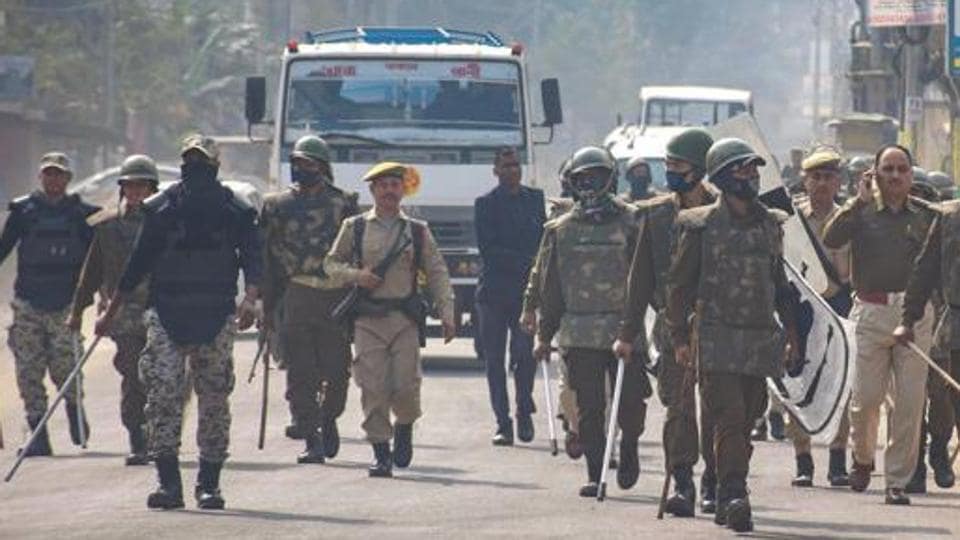
By then, reports of violence and destruction of public property had started coming in from Dibrugarh and Guwahati. Flanked by Home Secretary Ajay Bhalla and Arvind Kumar Director, Intelligence Bureau, both Assam cadre officers, Shah said he had decided to send the summoned officers to tackle the violence in Assam. He was annoyed that the on-going violence had been under-assessed by the state’s BJP government. After despatching Deka, a former leader of the All Assam Students Union (AASU) and a top-notch counter-terror operative, and Singh, a man with a proven record of managing law and order in the region, by a special flight to Guwahati at 4 am. Shah signed off. The results of that move are now evident.
From the unprecedented challenge on February 14 in Pulwama after a Jaish-e-Mohammed suicide bomber targeted a CRPF convoy to the violence over the CAA in North-East, the Modi government’s response to national security issues has been very sharp.
Its ability to synergize the capacities and capabilities of the armed forces, para-military forces and the security agencies in pursuit of national security objectives has been praiseworthy as much as its ability to take decisions.
The decision to order the February 26 airstrike against the JeM terror camp in Balakot in the heart of Pakistan and the abrogation of Article 370 and 35A in Jammu and Kashmir on August 5 would have been fraught with serious consequences had the aftermath not been managed well.
In J&K, for instance, this entailed unprecedented security measures and restrictions, which have been gradually and progressively relaxed, although many of the local political leaders detained continue to be in detention. The situation in the region has been managed by the Director General of Jammu and Kashmir Police Dilbagh Singh and his team with full backing of the central leadership — National Security Advisor Ajit Doval, Amit Shah and Prime Minister Narendra Modi.
While it may be argued that the peace in J&K post abrogation came at the cost of curtailing communication and other ground restrictions, the fact is that there has been no significant loss of lives in protests in the Valley, although there have been terrorist attacks, especially against migrant workers. That was only to be expected with Pakistan continuing to push its agenda and terror groups based in that country continuing their efforts to destabilize the region.
Amidst all this, a big security challenge in the form of the Supreme Court judgment on the long-pending Ayodhya issue came (and went) on November 9 with barely a ripple. Sure, it did raise concerns about deadly communal violence such as that witnessed way back in 1992 when the Babri Masjid was demolished. The entire nation was on tenterhooks on the day of judgment with people fearing that Uttar Pradesh may go up in communal flames, but the maturity of the leadership of both the communities was admirable. UP Director General of Police O P Singh and his team delivered in maintaining peace, supported by Modi, Shah and Doval.
The role of central intelligence agencies in the Balakot air strike as well as containing the fall-out post abrogation of Article 370 and the Ayodhya verdict is worth a mention.
At the Director General of Police (DGP) conference at Pune on December 8, while singling out both the J&K and UP Police for praise, Prime Minister Narendra Modi said in his address that he is aware that the police is the first to bear the brunt in case of a government change at either Centre or State. He told them that they had nothing to fear from either him or any other politicians provided they followed the letter and spirit of the Constitution.


