E-Paper



‘Jailed’ tiger brothers of Bandhavgarh reserve being separated, translocated
Two tigers – T25 and T26 – who were isolated in Bandhavgarh Tiger Reserve after locals believed they were responsible for four people’s deaths, are being separated into environment’s that suit their nature.


T25 and T26 were born to the same mother in 2012. Four years later, the two brothers are being separated – one is being let off into the wild while the other remains in captivity.
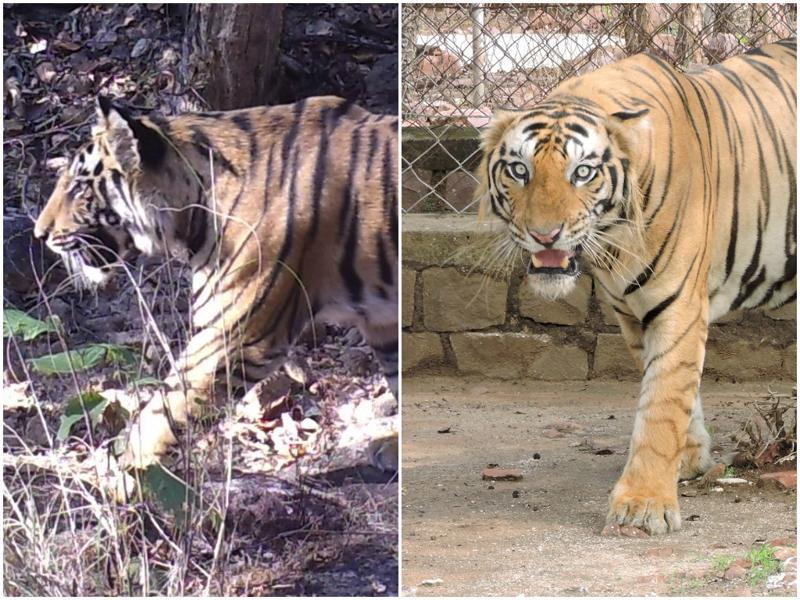
Meet the ‘jailed’ tigers of Bandhavgarh Tiger Reserve.
Born on the reserve, the two were restricted to the Bahera enclosure in 2014 after local villagers in Khitouli area of Bandhavgarh alleged they killed four people.
Following more than year of authorities studying their behavior, the tigers are now being separated from each other to be translocated to environments that best suit their nature.
While T25 was sent to Van Vihar National Park in Bhopal where “he can be near people” and be seen from a safe distance, his brother T26 is being located to the Sanjay Tiger Reserve to be released into wild by the first week of July.
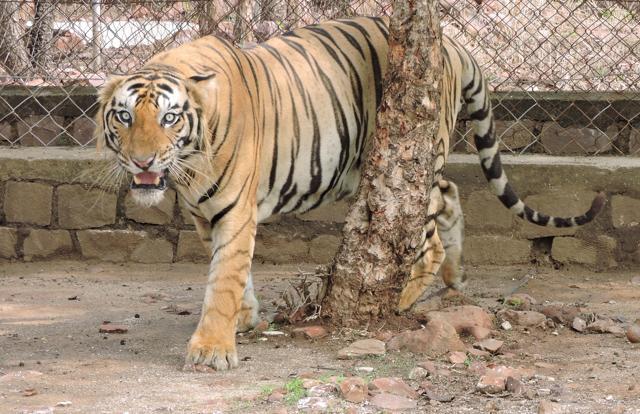
“After we captured the tigers in October 2014 and put them in enclosure, we learnt that T25 was not afraid of humans at all. He was more aggressive and would easily go near humans and even pose for photographs,” the reserve’s field director, K Raman, said.
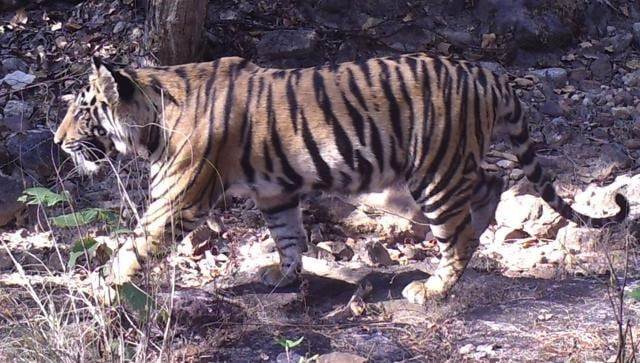
On the contrary, T26 was shy and avoided humans, a trait of a wild tiger.
“After experts from National Tiger Conservation of India (NTCA) and Wildlife Institute of India also came to study them here, we sought permission from NTCA for their translocation. We sought permission for shifting T25 to Van Vihar National Park Bhopal and in case of T26, permission for its translocation to Sanjay Tiger Reserve,” the field director said.
Bandhavgarh Tiger Reserve, located between the Vindhyan and Satpura ranges in Umaria district, has one of the highest tiger densities in the country, with over 60 to 65 tigers and 40 tiger cubs. This has led to an increase in man-animal conflict over the past few years, with both mammals getting killed.
Read | Why India’s tiger count may not paint the true picture of big cat numbers
To monitor his progress in the wild, T26 will be given a radio collar. The NTCA had also asked for a proper survey of the prey base before setting the animal free. Raman said the tiger would be ready to go in the first week of July.
The tiger’s brother, T 25, was successfully translocated to Bhopal on Monday, where he was renamed Bandhu. “But he will always remain T25 for us,” Raman said.
The two brothers were born to T19, a female tiger, and her mate, T 22.
Read more | 3,890 tigers roam world’s forests, count rises for 1st time in century