
 E-Paper



Jaish chief’s brother, son held as Pak pushed to act
Pakistan said it had detained 44 members of banned groups, including the brother and son of JeM chief Masood Azhar, in action that comes against the backdrop of mounting international pressure on the country to crack down on terrorists operating from its soil.

 Prefer HTon Google


Pakistan on Tuesday said it had detained 44 members of banned groups, including the brother and son of Jaish-e-Mohammed (JeM) chief Masood Azhar, in action that comes against the backdrop of mounting international pressure on the country to crack down on terrorists operating from its soil.
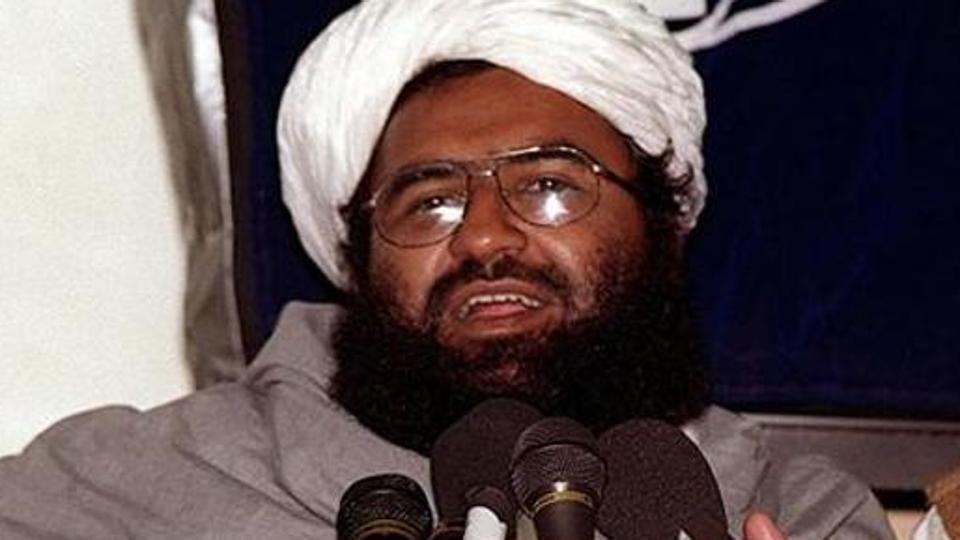
Minister of state for interior Shehryar Afidi and interior secretary Azam Suleman Khan announced the detentions at a news conference in Islamabad, saying the move was aimed at securing Pakistan’s future.
Masood Azhar’s brother Abdul Rauf Asghar, who was accused of masterminding the terror attack on the Pathankot airbase in India in 2016, and Azhar’s son Hammad Azhar are among the detained persons, officials said. The other detained people were not identified and there was no official word on the status of Azhar.
Khan acknowledged a dossier on JeM provided by India contained the names of Asghar and Hammad Azhar. “This is across the board — we don’t want to give the impression that we’re against one organisation,” he said.
Late on Tuesday, Pakistan issued a fresh list of banned groups, inclduing the Jamaat-ud-Dawah (JuD) and the Falah-e-Insaniyat Foundation (FIF).
The two had earlier been on a “watch list” of the interior ministry. JuD and FIF were earlier designated by the US and the UN as fronts for Lashkar-e-Taiba (LeT), the terror group founded by Hafiz Saeed that carried out the 2008 Mumbai attacks.
Also read | Speculation over Jaish chief Masood Azhar’s death amid crackdown reports
The action came almost three weeks after the February 14 Pulwama terror attack, in which 40 Indian troopers were killed, and for which the JeM took responsibility. Indian officials reacted with scepticism to the announcement of the detentions, saying successive governments in Islamabad had made commitments about the country’s soil not being used for terrorism since 2004.
“If this is a Naya [new] Pakistan with ‘naya soch’[new thinking] , we expect to see naya action on the ground,” one government official said, referring to Pakistan Prime Minister Imran Khan’s comments in recent days that there has been a change of mindset on the issue of terrorism in the “Naya Pakistan” he is building.
A brief statement from Pakistan’s interior ministry said, “44 under-observation members of proscribed organisations, including Mufti Abdul Raoof and Hammad Azhar, have been taken in preventive detention for investigation.” The statement added the action was taken following a meeting in the ministry on Monday to implement the National Action Plan (NAP) on terrorism.
Pakistan finalised the NAP after a terror attack on an army-run school in Peshawar in December 2014 killed nearly 150 people, most of them children. However, the implementation of NAP has so far focused on action against terror groups such as the Taliban that carried out attacks within Pakistan and little has been done to counter anti-India groups such as JeM and LeT.
Afridi said, “We are determined about the supremacy of law in Pakistan. We won’t allow the use of our soil against any country. Action will be taken across the board so that Pakistan’s soil cannot be misused at any level by anyone. That is the ultimate objective.”
Khan said all banned groups will be targeted under the action, which is expected to continue for a fortnight, and their assets will be taken over if necessary. Further action will be taken against the detained people after investigations, he added.
Pakistan has conducted similar crackdowns on banned groups in the past in the aftermath of major terror attacks, such as clamping down on JeM after the 2001 attack on India’s Parliament, the rounding up of JuD operatives and sealing of the group’s offices and facilities after the 2008 Mumbai attacks, and a crackdown on JeM and the detention of Masood Azhar after the 2016 Pathankot attack.
Also read | In message to cadre, Jaish chief Masood Azhar’s brother confirms Balakot camp strike
Within weeks and months, the operatives under “preventive detention” were quietly freed by the security establishment or released on the orders of courts. Hafiz Saeed was placed under house arrest at least thrice since the Mumbai attacks, the latest instance being in 2018 to apparently prevent Pakistan being placed on a watch list of the Financial Action Task Force (FATF).
People in New Delhi familiar with the developments said former Pakistan president Pervez Musharraf first made a commitment about Pakistani soil not being used for terrorism against India in 2004, and this was reiterated recently by foreign minister Shah Mahmood Qureshi. “This commitment is important but it isn’t enough,” said a second official who asked not to be named.
In its interactions with interlocutors around the world, India will focus on pressuring Pakistan to deliver on its counter-terrorism commitments, the people said. “We are reaching out to all countries to appeal to members of the UN Security Council to get Pakistan to deal with terrorism on the ground, and there can be no deflection of attention,” the official cited in the second instance said.
“The government’s position is that we have to fight terrorism on our own, but we have to build international pressure on Pakistan,” the official said.
This pressure will include measures for designating Masood Azhar as a global terrorist by UN’s 1267 Committee. “If Azhar gets sanctioned, irrespective of what action Pakistan takes, it will be more difficult for Pakistan to say they aren’t the epicentre of terrorism,” the official added.
Commodore (retired) C Uday Bhaskar, director of the Society for Policy Studies, said India should carefully track Pakistan’s crackdown on terrorists.
“Today’s develop of cracking down on these groups is mildly encouraging but I would be a bit cautious since we have seen this in the past, starting with December 2001. We have seen these kind of announcements in the past but there was no meaningful follow-up, such as cutting terror financing and reducing amenities taken for granted by these groups,” he said.
“Prime Minister Imran Khan brings a certain earnestness to his vision of a new Pakistan and we should give him space, and expect he’ll come up with a time-bound roadmap that is verifiable by Pakistani citizens, who are fed up of these terror groups, India and the global community.”
Also read | ‘Plan to target JeM base conceived a decade ago’: Source


