
 E-Paper



Jaishankar, Wang Yi discuss steps to normalise ties, resume Kailash pilgrimage
Jaishankar and his Chinese counterpart Wang Yi met on the margins of the G20 foreign ministers’ meeting in Johannesburg, South Africa


NEW DELHI: External affairs minister S Jaishankar and his Chinese counterpart Wang Yi on Friday discussed ways to further normalise bilateral ties, such as resumption of the Kailash Mansarovar pilgrimage and direct flights, in the wake of an understanding last year to end the face-off on the Line of Actual Control (LAC).
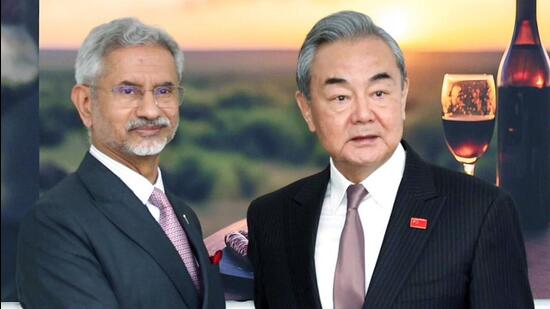
The two foreign ministers met on the margins of the G20 foreign ministers’ meeting in Johannesburg, South Africa – the latest in a string of meetings between top leaders of India and China since the two sides agreed on October 21 to disengage frontline forces at the two “friction points” of Demchok and Depsang in Ladakh sector of the LAC.
Jaishankar and Wang reviewed “developments in our bilateral relationship since their last meeting in November,” external affairs ministry spokesperson Randhir Jaiswal said.
Among the issues that figured during the meeting that lasted for around 30 minutes were management of peace and tranquillity in the border areas, the resumption of the Kailash Mansarovar Yatra, trans-border rivers, flight connectivity and travel facilitation, Jaiswal said.
The two leaders also exchanged views on the G20 and the Shanghai Cooperation Organisation (SCO), he added.
Also Read:Jaishankar to visit South Africa on Feb 20-21 for G20 foreign ministers’ meeting
While China has pushed for the resumption of direct flights, which were suspended in 2020, and enhancement of trade relations, India has been insisting on the resumption of the Kailash Mansarovar pilgrimage from this spring. New Delhi has also expressed concern about Beijing’s plan to build the world’s largest hydropower project on Yarlung Tsangpo river in Tibet, which will have significant ramifications for India and Bangladesh, and called for transparency and consultations with downstream countries.
This was also the second meeting between the two foreign ministers since the two countries began the process of normalising their relations, which had plummetted to a six-decade low because of the four-year-long military standoff in Ladakh sector of the LAC. The face-off was triggered by China’s massing of troops on the disputed frontier in violation of existing border management agreements.
At the start of the meeting in Johannesburg, Jaishankar said there had been “some notable developments” since he last met Wang during the G20 Summit in Brazil last November. “Our NSA and foreign secretary have visited China and there have been discussions about various aspects of our relationship,” he said.
These discussions had looked at the management of peace and tranquillity in the border areas and “other dimensions of our ties”, he said.
Jaishankar noted that India and China have “worked hard to preserve and protect the G20” in a polarised global situation. “This in itself testifies to the importance of international cooperation,” he said.
After the understanding on disengagement on the LAC, Prime Minister Narendra Modi and Chinese President Xi Jinping met on the margins of the Brics Summit in Russia on October 23 and agreed to revive several mechanisms to address the border issue and normalise bilateral ties.
This was followed by meetings between Jaishankar and Wang on the margins of the G20 Summit in Rio de Janeiro on November 18, and defence minister Rajnath Singh and his Chinese counterpart Dong Jun on the sidelines of the Asean Defence Ministers-Plus meeting in Vientiane on November 20. Subsequently, National Security Adviser Ajit Doval travelled to Beijing last December for talks under the Special Representatives mechanism.


