
 E-Paper



Exit polls: NC-Congress alliance expected to have edge over BJP in J&K
The NC-Congress was overall projected to get 40-48 out of 90 seats in the J&K polls, BJP 27-32, PDP 6-12, and others 6-11.


The National Conference (NC)-Congress alliance was expected to have an edge over the Bharatiya Janata Party (BJP) in Jammu and Kashmir (J&K), exit polls suggested three days after the first assembly elections in a decade in the region held across three phases concluded. The votes will be counted on October 8.
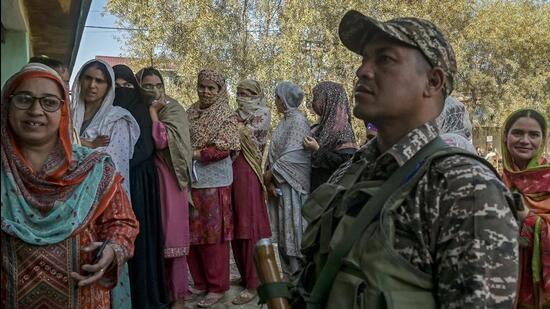
CVoter projected the BJP was expected to get 27-32 seats out of 43 in the Jammu region while NC-Congress 11-15, Peoples Democratic Party (PDP) 0-2, others 0-1. In Kashmir, the NC-Congress was expected to get 29-33 seats out of 47, BJP 0-1, PDP 6-10, and others 6-10. The NC-Congress was overall projected to get 40-48 out of 90 seats, BJP 27-32, PDP 6-12, and others 6-11. A party or an alliance needs 46 seats to form the government.
Republic TV - P Marq projected NC-Congress was expected to form the government with 55-62 seats. The BJP was likely to get 18-24 and others 2-5 seats.
Former chief minister and NC leader Omar Abdullah downplayed the exit polls saying he was amazed that TV channels were bothering with them, especially after the fiasco of the recent general elections. “I’m ignoring all the noise on channels, social media, WhatsApp Etc because the only numbers that matter will be revealed on the 8th of Oct. The rest is just time pass.”
Exit polls this summer showed the BJP was set to match or better its 2019 Lok Sabha tally of 303 in 543-member Lok Sabha. But the Congress-led Indian National Developmental Inclusive Alliance (INDIA) posted unexpectedly strong results winning 233 seats. It restricted the BJP to 240, below the majority mark of 272.
The polls in J&K were seen as a direct contest between the BJP and NC-Congress combine. A last-minute alliance between Engineer Rashid’s Awami Ittehad Party and Jamaat-e-Islami-backed independent candidates was expected to skew the electoral arithmetic.
Other local parties such as the PDP of former chief minister Mehbooba Mufti, former minister Sajjad Gani Lone-led People’s Conference, the Apni Party, and the Democratic Progressive Azad Party were also in the fray.
The elections were held against the backdrop of a spike in terror attacks particularly in Jammu. They were also the first in the region since it was stripped of its semi-autonomous status with the nullification of the Constitution’s Article 370 and statehood in 2019. Article 370 and the restoration of statehood were key poll planks for the NC-Congress alliance.
J&K has been without an elected government since June 2018 when BJP withdrew support to the PDP-led coalition government. The region was under the governor’s rule before the Union government in August 2019 revoked Article 370. The region was also bifurcated into two UTs— J&K with an assembly and Ladakh without one.
In December last year, the Supreme Court upheld the revocation of Article 370 and directed the Election Commission of India to conduct polls for the 90-member legislative assembly by September 30, 2024. The court asked the Union government to restore statehood to the region “as soon as possible”.
In May 2022, a three-member delimitation commission redrew the electoral map of the region, earmarking 43 seats to the Hindu-majority Jammu region and 47 to Muslim-majority Kashmir. Out of the seven new seats, six were allotted to Jammu and one to Kashmir. The regional parties rejected the panel’s decision calling it an attempt to consolidate BJP’s vote bank.
In 2014, the PDP emerged as the single-largest party with 28 seats and formed an alliance of ideological extremes with the BJP, which had 25 seats.


