E-Paper



Joint commission meet with Nepal not right forum for taking up border row: India
Nepal’s foreign ministry, while announcing the visit on Tuesday, said in a statement that the joint commission will discuss the gamut of bilateral relations, including the boundary issue, Covid-19 cooperation, infrastructure, connectivity, trade and transit.

 Prefer HTon Google


India on Thursday signalled that a joint commission meeting with Nepal on Friday was not the appropriate forum for discussing a border row, as Nepalese foreign minister Pradeep Gyawali began a two-day visit aimed at shoring up bilateral ties.
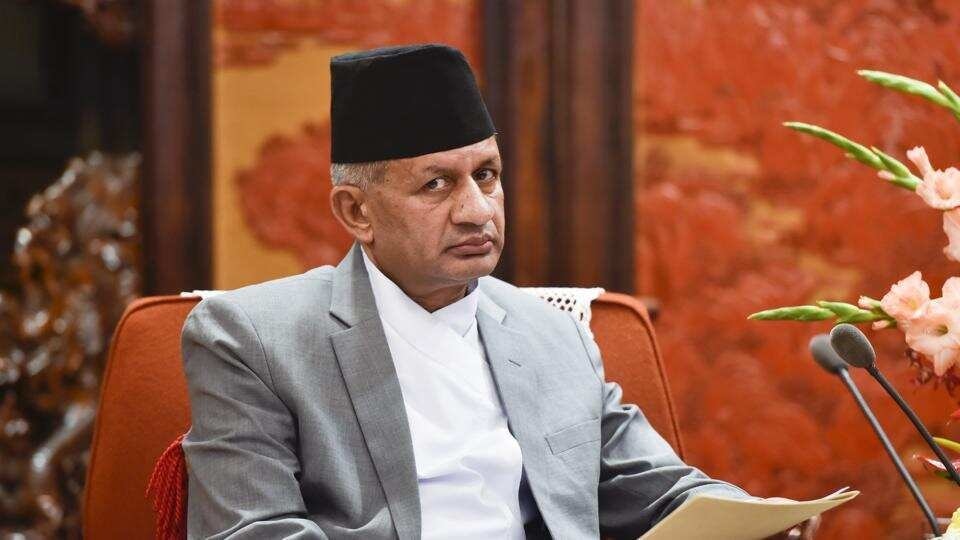
Gyawali is the senior-most Nepalese leader to visit India in more than a year after the Covid-19 outbreak. He is also the first leader to visit New Delhi since Prime Minister KP Sharma Oli triggered political turmoil by dissolving Nepal's Parliament last month and calling early elections.
Nepal’s foreign ministry, while announcing the visit on Tuesday, said in a statement that the joint commission will discuss the gamut of bilateral relations, including the boundary issue, Covid-19 cooperation, infrastructure, connectivity, trade and transit.
However, external affairs ministry spokesperson Anurag Srivastava made it clear the joint commission wouldn’t be the right forum to discuss the border issue. “Our position on the boundary issue is well known. Let me say that the joint commission meeting and boundary talks are separate mechanisms,” he told a weekly briefing.
“The joint commission is an important mechanism that provides the opportunity of reviewing at a high level the entire gamut of our bilateral partnership and providing political guidance to further enhance the special and unique ties that we enjoy,” he said, adding India is looking forward to “constructive discussions” on numerous sectors.
Gyawali will meet his Indian counterpart S Jaishankar for talks on Friday, after which they will chair the joint commission meet. This will be only the sixth meeting of the body since 1987, though it has convened four times since 2014. Gyawali also held several private meetings on Thursday.
The Nepalese delegation includes the foreign secretary and health secretary, reflecting the focus on Covid-19 cooperation. Though Nepal has formally reached out to India and China for vaccines, Kathmandu has indicated a preference for sourcing doses from New Delhi because of factors such as pricing, logistics and well-established links between the health sectors of the two countries.
People familiar with developments said on condition of anonymity that Nepal is hoping India will provide vaccines as assistance to inoculate some portion of the 12 million people it plans to cover in its first phase of vaccinations. Nepal also plans to buy millions of doses from foreign suppliers, including the Serum Institute of India and Bharat Biotech.
India has said its ability to export vaccines after meeting domestic needs will become clear over the next few weeks. Officials have also said India’s neighbours will get priority for the supply of vaccines.
India-Nepal ties came under the shadow of the border row last year after Oli issued a new political map that included Kalapani, Limpiyadhura and Lipulekh, which are part of Indian territory. The map was published in response to India’s opening of a strategic road to Lipulekh, located on the border with China.
The external affairs ministry described Nepal’s new map as “unjustified cartographic assertion”, and the people said the focus of Friday’s meeting will be taking forward development cooperation, including India-backed projects in Nepal.
Given that Oli currently heads a caretaker government, there is unlikely to be any substantive movement on the border issue. One option the two sides could look at is asking the bilateral boundary working group to look afresh at ways to finalise the border in disputed sections at Kalapani and Susta.
Before Oli’s sudden decision to dissolve Parliament, normalcy was restored in bilateral ties by back-to-back visits to Kathmandu last year by Research and Analysis Wing chief Samant Goel, Indian Army chief Gen MM Naravane and foreign secretary Harsh Shringla.
India has been keeping a wary eye on China’s efforts to broker an understanding between Oli and his main rival, Pushpa Kamal Dahal “Prachanda”, in order to keep the Nepal Communist Party united.
Former ambassador Rajiv Bhatia, distinguished fellow for foreign policy studies at Gateway House, said Nepal is among the “borderline countries” in India’s neighbourhood, with which ties require “constant nurturing and hand-holding”.
“India’s thrust over the past few months shows that it has adopted a very clear and calibrated approach while keeping political and diplomatic channels open. Cordial cooperative ties are in the interest of both sides, though there are challenges,” he said, adding the Nepalese side may opt to raise the border issue but the joint commission wasn’t the forum to discuss such matters.