E-Paper



Judge lets 26/11 accused Tahawwur Rana make one phone call to family in Canada
Judge Chander Jit Singh permitted Tahawwur Hussain Rana to make one call to a phone number registered to his daughter in Canada to convey his well being

 Prefer HTon Google


NEW DELHI: A Delhi court on Monday allowed Tahawwur Hussain Rana, the 26/11 Mumbai terror attacks accused in Tihar prison, to make one phone call to his family in Canada after the prison authorities and the National Investigation Agency (NIA) did not object to his request.
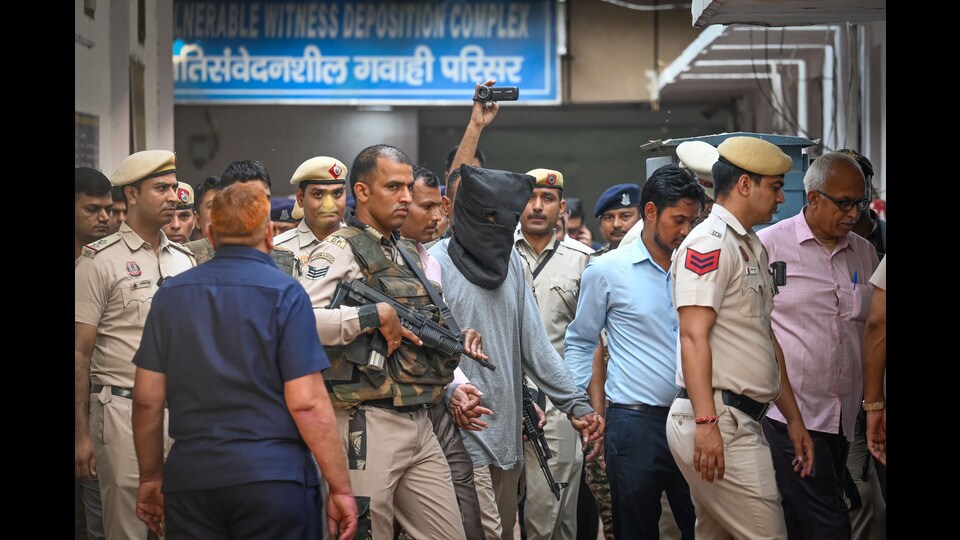
Judge Chander Jit Singh permitted Rana to make the call as a one-time measure to convey his well being on the condition that the call would be strictly governed by the jail manual and the rules laid down by Tihar authorities.
The judge also asked Tihar jail to submit a detailed report on the feasibility of allowing Rana to speak to his family every month and asked the authorities to list the conditions that would need to be imposed on him.
Lakshay Dheer, who is appearing for Rana along with Piyush Sachdev before the city court, said the application submitted to the court listed a contact number of Rana’s daughter based in Canada for the phone call.
Dheer said the jail authorities and NIA didn’t object to the request for a one-time phone call. “While no specific time has been set for the call, it will be conducted only once,” he said.
Rana, a Canadian citizen and former captain in the Pakistan army, was extradited to India on April 10 in connection with charges that he conspired with his childhood friend David Coleman Headley, to conduct reconnaissance of targets in Mumbai for the 26/11 terror attacks.
NIA has also accused Rana of conspiring with operatives of Lashkar-e-Taiba (LeT) and Harkat-ul-Jihadi Islami (HUJI), both designated terrorist organisations under the Unlawful Activities (Prevention) Act (UAPA), along with other Pakistan-based co-conspirators.
NIA arrested him after his extradition and interrogated Rana for 30 days before sending him to Tihar prison.
Under Rule 631 of the Delhi Prison Rules, inmates charged with offences against the state, terrorism, or other serious crimes, such as those under the Maharashtra Control of Organised Crime Act (MCOCA), the National Security Act (NSA), or the Public Safety Act (PSA), are generally denied phone call facilities over concern that they might misuse the privilege to communicate with their associates.
However, prison rules do allow for exceptions, based on individual circumstances which must be approved by senior officials.
According to the jail manual, undertrial and convicted inmates are entitled to at least one phone call per week, with the frequency subject to factors such as the prisoner’s conduct, the nature of the case, and the identity of the person being contacted. All phone numbers must be pre-approved by the jail administration.
To be sure, Rana’s request to speak to his family was rejected by the court in April when he was still in custody of the NIA> At the time, the court held that allowing him to contact his family could compromise the ongoing investigation, citing concerns that he might use coded language to leak information.
In his application before the additional sessions judge, Rana’s lawyers reasoned that he had a fundamental right to communicate with his family, particularly to inform them about his physical and mental condition in custody.
“We also informed the court that our client does not have access to a hearing aid and is facing health issues in jail,” Dheer said. The court has told the jail authorities to file a detailed report on Rana’s health within 10 days.
Rana’s judicial remand was extended to July 9 on Friday when he was produced before the judge via video conference.
As part of the ongoing investigation, NIA has been permitted to collect Rana’s handwriting and voice samples to match them with certain documents and voice recordings recovered during the probe.