
 E-Paper



‘Just because you did it…’: Jaishankar’s crushing comeback to Imran Khan’s barb
External affairs minister S Jaishankar’s acerbic counter to Imran Khan’s description of India-US ties alludes to Islamabad’s policy to operate like a proxy for, first for the Americans and now, China.

 Prefer HTon Google


External affairs minister S Jaishankar has dissed Pakistan Prime Minister Imran Khan’s effort to run down the growing partnership between India and the United States and call India a frontline state of western countries such as the United States.
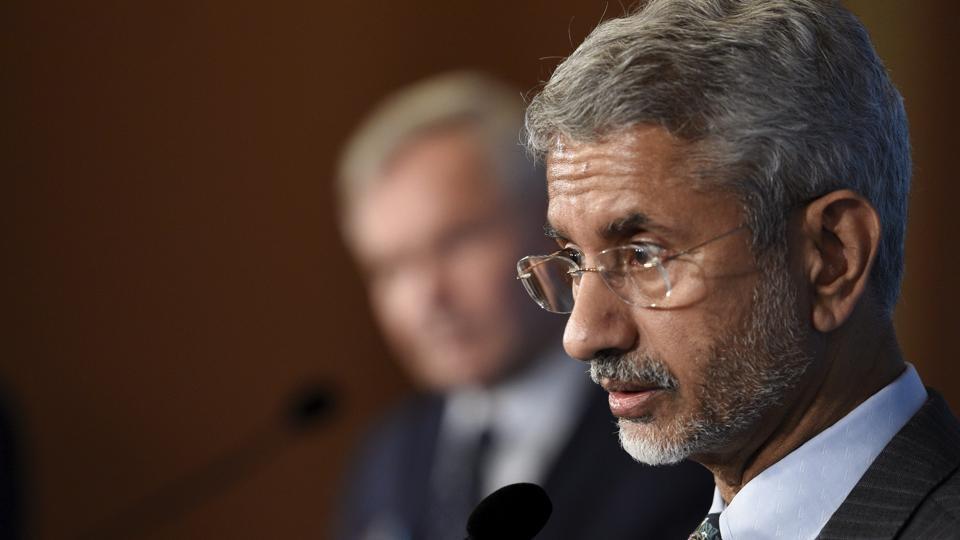
“Those who say all this — they are perhaps reflecting their own history and their own self-worth. This is certainly not India,” Jaishankar told Hindustan Times in an interview on Saturday, delivering his sharpest comeback to the Imran Khan government that aligns with China and accuses India of playing for the United States.
ALSO WATCH | Pak terror tunnel unearthed in J&K; Karachi sacks used in construction
‘For peace along border, one must adhere to agreements’: S Jaishankar | Interview
In an interview to Dunya News, Imran Khan had linked Pakistan’s future with China, asserting that China was the only country to have always stood by it. In the same interview, Khan also said that “it was unfortunate that western powers were using India to contain China”. This, he added, was one more reason why China needs Pakistan on its side; its geo-strategic location was the other.
Jaishankar’s acerbic counter to Imran Khan’s description of India-US ties is seen to allude to Islamabad’s policy over the past few decades to operate like a proxy for a powerful country, first for the Americans and over the last decade or so, for China.
“Think about it,” Jaishankar said.
“India is a civilisational state of very unique nature. Look at our history. Because we went through two very difficult centuries, we particularly prize our independence. Some people feel that because they did something, we will also do the same. India has a certain self-perception of itself,” he said.
Jaishankar said India has a personality of its own. “India has interests of its own. India has a character of its own. It cannot be defined negatively as being against somebody,” the minister said, echoing India’s stand on QUAD, the Quadrilateral Security Dialogue with the US, Japan and Australia that is also viewed as an anti-China front in Beijing.
China and the United States have been at loggerheads after trade and human rights issues, coupled with China’s attempts to arm twist its neighbours in the disputed South China Sea and beyond.
India and the US have found themselves on the same side vis-a-vis China, mostly after People’s Liberation Army soldiers were parked at India’s doorsteps along the Line of Actual Control in India’s East Ladakh sector. The deployment of soldiers set off a stand-off between the two armies that will complete four months next week. China has, despite agreements to disengage, not withdrawn its soldiers from many forward locations.


