
 E-Paper



Qureshi heads to Beijing after Imran Khan’s ‘Pak future with China’ remark
PM Imran Khan this week counted China as Pakistan’s only friend that had supported it politically during good and bad times.

 Prefer HTon Google


Pakistan foreign minister Makhdoom Shah Mehmood Qureshi is leaving for Beijing for ‘strategic level’ discussions with his Chinese counterparts on Thursday, days after Prime Minister Imran Khan underscored that Pakistan’s future is connected with that of its long-time ally China.
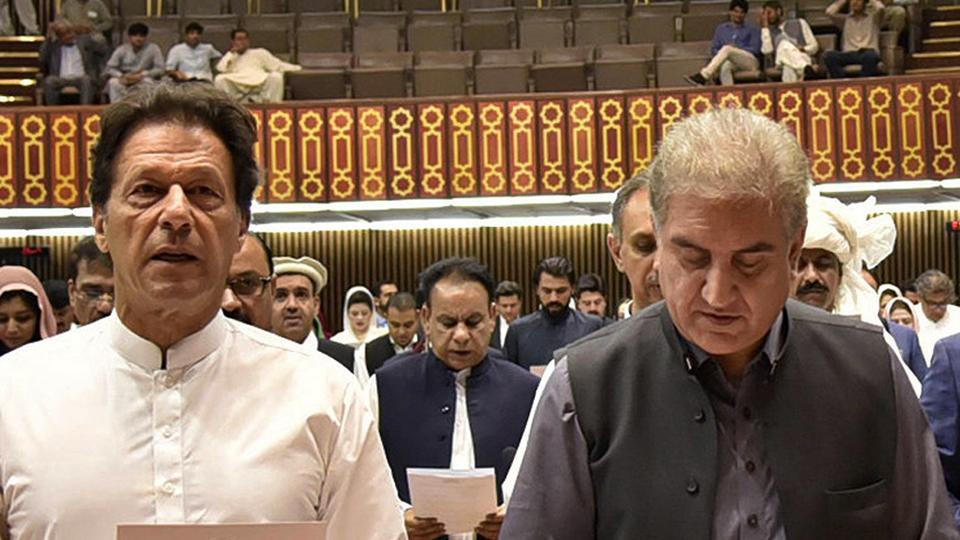
Qureshi will be accompanied by a team of diplomats including foreign secretary Sohail Mahmood, people familiar with the development said.
Qureshi is scheduled to meet China’s foreign minister and state councillor Wang Yi. On the agenda, according to reports in China and Islamabad, are discussions linked to belt and road projects, bilateral ties and preparations for President Xi Jinping’’s visit to Pakistan expected later this year. Qureshi is also expected to seek support for Pakistan’s stand on Kashmir and discuss the India-China standoff in east Ladakh.
PM Imran Khan had underscored the importance of ties with China this week when he, in a television interview, insisted that reports about breakdown in relations with Saudi Arabia were “baseless”. On China, PM Khan said, Pakistan was strengthening ties with China. “It should be clear that our future is connected with China… China also needs Pakistan very much,” he said.
“China is our only friend which has remained politically steadfast with Pakistan during good and bad times,” PM Khan had said.
Like when Saudi kingdom signalled its displeasure by demanding that Pakistan return $ 1 billion out of a $ 3 billion loan extended by Riyadh in 2018, Pakistan had turned to China.
Also Watch | ‘Pakistan is the nerve centre of terrorism’: India’s envoy to United Nations
Qureshi’s visit to Beijing comes at a time he has been under attack in Islamabad, both from within and without the Imran Khan government, for his broadside at Saudi Arabia for not convening the Organisation of Islamic Conference, or OIC meeting of foreign ministers on Kashmir.
Pakistan army chief General Qamar Javed Bajwa made a quick visit to Saudi Arabia this week in an effort to smooth relations between Islamabad and Riyadh.
Qureshi had threatened to approach other Muslim countries for a conference on Kashmir outside the OIC platform if Saudi Arabia did not play ball, a remark that did not go down well in Riyadh that last year prevailed upon Pakistan at the last minute to absent itself from a joint attempt by Turkey and Malaysia to create a new forum of Islamic countries. Foreign ministers of Malaysia, Turkey, Qatar, Iran, and Indonesia attended this meeting.
People familiar with the development in New Delhi said China has been pushing Pakistan to play a lead role in the OIC with support of Turkey and Malaysia.
Gen Bajwa, according to diplomats in New Delhi and Riyadh, is learnt to have conveyed Imran Khan’s regret at Qureshi’s comment and asked Saudi Arabia to agree to a meeting of the smaller group within the OIC, formally called the OIC contact group on Kashmir. From all available indications, Gen Bajwa didn’t get far.


