
 E-Paper



Pak army chief Gen Bajwa’s apology doesn’t help, gets a royal snub in Saudi kingdom
After India cemented its ties with Gulf countries over the last six years, Pakistan distanced itself from its projected Arab legacy and moved towards Erdogan’s Ottoman revival, an Indian diplomat said.

 Prefer HTon Google


Pakistan Army chief General Qamar Javed Bajwa who started his Saudi Arabia visit on Monday to calm diplomatic strains has returned home after been declined a meeting with Crown Prince Mohammed bin Salman. Gen Bajwa had to settle for a meeting with the Deputy Defence Minister Sheikh Khalid Bin Salman, also the younger brother of the Crown Prince, as well as Maj Gen Fayyad Al Ruwaili, the kingdom’s chief of general staff, people familiar with the matter in Riyadh and New Delhi.
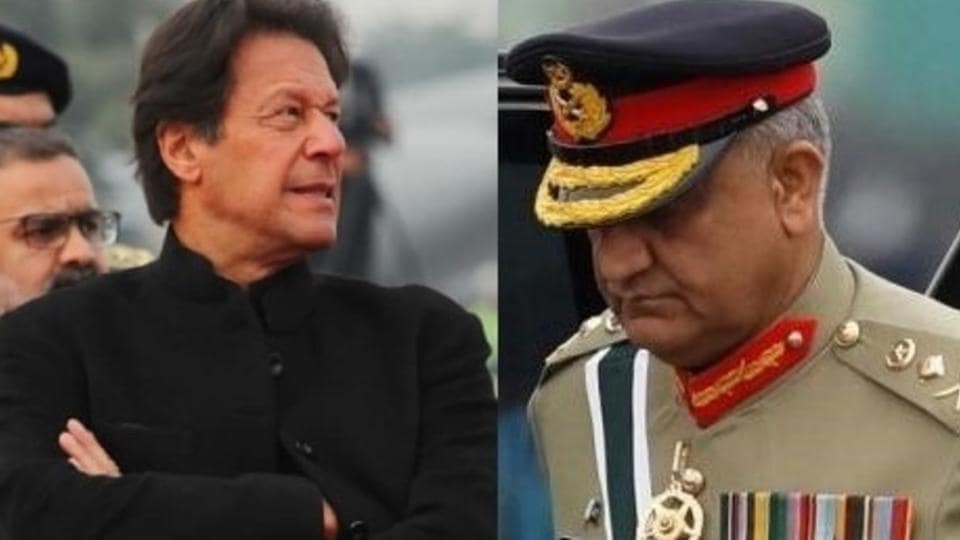
Bajwa is learnt to have conveyed the Imran Khan government’s apology over foreign minister Shah Mahmood Qureshi’s statement that criticised Saudi Arabia over the reluctance of the Organisation of Islamic Countries to convene a meeting of OIC foreign ministers to discuss Kashmir.
But the regret conveyed to Deputy Defence Minister Sheikh Khalid Bin Salman during their meeting on Tuesday, didn’t get Islamabad any further in Riyadh. General Bajwa’s interactions in the kingdom were limited to Saudi’s defence establishment, just as Pakistan military had claimed after news of General Bajwa’s trip was leaked back home.
This version was, however, contradicted by Pakistan minister Sheikh Rasheed on Saturday who told a news channel that the army chief was visiting Saudi Arabia to iron out outstanding minor differences
General Bajwa is accompanied on this visit by the Inter-Services Intelligence (ISI) chief Lt General Faiz Hameed.
There has been a buzz in Islamabad that PM Khan was not averse to dropping Qureshi, who crossed the red line with Saudi Arabia when he threatened to call a conference of Islamic countries outside the OIC if it did not call a conference of foreign ministers to discuss the situation in Kashmir.
Pakistan has long pressed the Saudi-led OIC to convene a high-level meeting to highlight alleged Indian violations in the part it controls but hasn’t got its way so far.
“If you (OIC) cannot convene it, then I’ll be compelled to ask Prime Minister Imran Khan to call a meeting of the Islamic countries that are ready to stand with us on the issue of Kashmir and support the oppressed Kashmiris,” Pakistan’s Foreign Minister Shah Mahmood Qureshi told local media last week.
An Indian diplomat said after India cemented its ties with Saudi Arabia and other Gulf countries over the last six years, Pakistan had distanced itself from its projected Arab legacy and moved towards Erdogan’s Ottoman revival. Turkey’s position on Kashmir mirrors Pakistan’s stand.
At his meeting in Riyadh, Gen Bajwa is also learnt to have floated a proposal for a meeting of the Organisation of Islamic Countries (OIC) contact group on Kashmir on the sidelines of the UN General Assembly meeting to be held under Turkey. The OIC contact group on Kashmir, formed in 1994, is a smaller group of OIC foreign ministers.
It has already met on June 22 this year to discuss Kashmir when foreign ministers of Azerbaijan, Niger, Pakistan, Saudi Arabia, and Turkey attended the meeting. A diplomat in Delhi said the proposal appeared to be a face-saver for Imran Khan vis-a-vis his Pakistan’s domestic audience.
Imran Khan hasn’t commented on Qureshi’s statement so far but over the last one week, there has been an effort to distance PM Khan from Qureshi. Minister for Human Rights Dr Shireen Mazari was the face of this effort when she publicly criticised the country’s foreign affairs ministry by saying that it had let down both the Kashmiris and PM Khan. The criticism was a sharp contrast to PM Khan telling the National Assembly just weeks earlier that Pakistan’s foreign policy, mostly directed at Kashmir, was the biggest achievement of his government.


