E-Paper



Justice Surya Kant-led NALSA launches free legal aid scheme for soldiers, veterans
Justice Surya Kant said the scheme would foster “a sense of responsibility, attachment and deep respect within the judicial space” for their service

 Prefer HTon Google


In a significant move to deepen institutional outreach and bolster access to justice for the nation’s armed forces, the National Legal Services Authority (NALSA), led by senior Supreme Court judge Justice Surya Kant, on Saturday launched the Veer Parivar Sahayata Yojana 2025 –– a first-of-its-kind nationwide scheme aimed at providing free legal assistance to soldiers, veterans and their families.
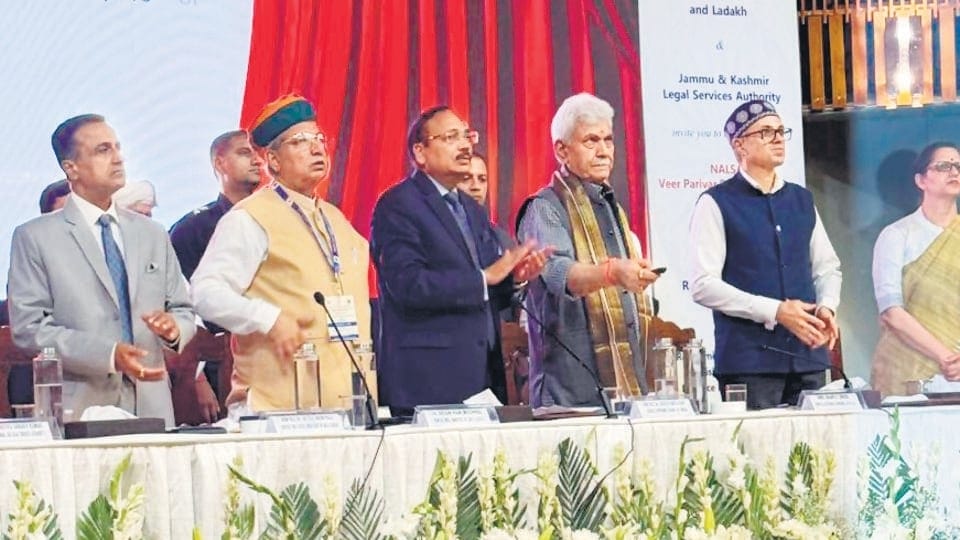
Unveiling the scheme in Srinagar, Justice Kant, also the executive chairman of NALSA, said the initiative marks the judiciary’s solemn commitment to those who defend the country’s borders under the harshest of conditions.
Speaking to Hindustan Times, Justice Kant, who is in line to become the 53rd Chief Justice of India in November this year, called the scheme “a fulfilment of a constitutional duty” and a step toward building “close proximity between the judiciary and the uniformed forces”.
“This scheme has been launched with the unique object of providing legal aid, advice and assistance to the families of army and paramilitary personnel. Because of the unique nature of their responsibilities and their remote postings, they cannot spare themselves to come and fight litigation,” Justice Kant said.
He added that the scheme would not only expedite access to legal redressal for the armed forces but also foster “a sense of responsibility, attachment and deep respect within the judicial space” for their service.
“When they do so much, what are we doing for them?” asked the judge, adding that the idea behind the initiative took shape after the judiciary’s response to the Pahalgam attack earlier this year, followed by Operation Sindoor –– Indian armed forces’ coordinated counterterror response to the Pahalgam attack. It led to the Supreme Court’s unprecedented public expression of condolences and solidarity with the armed forces.
Reflecting on this, Justice Kant said: “It is not just an emotional response, but a constitutional and institutional understanding –– when they are doing so much for the nation, what are we doing for them?”
Citing the Legal Services Authorities Act, he said the judiciary is duty-bound to extend legal assistance to the needy, including soldiers who often face legal disputes, whether involving family, property or neighbourhood conflicts, but are unable to engage in litigation due to their service obligations.
The scheme, he said, ensures that “no additional suffering is imposed on them when they go to court”, and that their families, including homemakers, children and elderly parents, are covered under the legal aid framework.
Justice Kant emphasised that Veer Parivar Sahayata Yojana is a pan-India scheme, extending from “Kerala to Srinagar, from Nagaland and Mizoram to Rajasthan and Gujarat”, he said.
Asked about the sustainability of the scheme beyond his tenure as NALSA executive chairman, Justice Kant expressed confidence in institutional continuity. He said his predecessor as the executive chairman and current CJI Bhushan R Gavai had actively encouraged his initiatives and presence in these events. Similarly, other senior judges, including Justices Vikram Nath who will take over as the NALSA executive chairman in November, have remained involved in the legal aid mission. “This is not a one person’s job. It’s an institutional commitment and I am happy to say that we all work collectively towards it,” Justice Kant emphasised.
During his speech at the event, which also had Union minister of state for law and justice Arjun Ram Meghwal, J&K lieutenant governor Manoj Sinha and J&K chief minister Omar Abdullah in attendance, Justice Kant pointed out that NALSA will establish legal aid clinics at every Zila Sainik Board and Rajya Sainik Board, and expand further if needed.
These Boards already serve as nodal centres where serving and retired personnel access welfare services. “By partnering with them, we aim to bring legal aid directly to their doorsteps,” said the judge adding these clinics will be staffed with trained nodal officers, legal aid counsel and paralegal volunteers.
According to the judge, technology will also play a key role, from online filing of applications and video consultations to dispute resolution through e-Lok Adalats and online mediation, and the digital backend is designed to make legal assistance seamless and accessible.
In his speech, Justice Kant powerfully invoked Article 39A of the Constitution –– the provision that mandates the State to ensure equal justice and free legal aid to the poor and marginalised. He argued that this constitutional promise cannot be fulfilled if those defending the Constitution are left to fend for themselves in legal matters.
“If we fail to extend this support to our brothers and sisters in the military and paramilitary forces, we fall short of our duty,” he said. “How can we speak of the strength of our Constitution if those who safeguard it are unable to secure their own rights?”
Calling the scheme a “historic first step” and a tribute to 30 years of NALSA’s work, Justice Kant declared: “Just as our soldiers stand vigilant at the nation’s borders, we in the legal fraternity will stand equally vigilant in protecting their rights and welfare at home.”