
 E-Paper



Kangaroo courts by media are affecting justice delivery: Chief Justice of India
The CJI said doing justice is “becoming increasingly challenging” and this is now complicated further by “concerted campaigns in media, particularly on social media” against judges


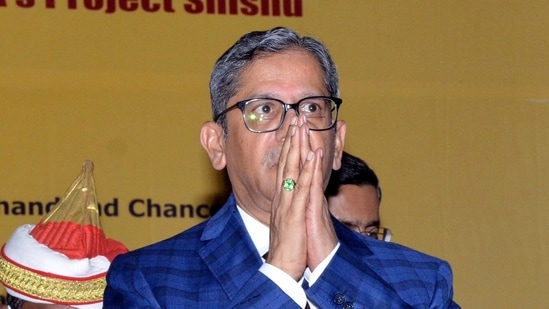
Media channels are running “kangaroo courts” on issues of complicated judicial questions and their “ill-informed and agenda-driven debates” are hurting India’s democracy, Chief Justice of India (CJI) NV Ramana said on Saturday, calling for a course correction by the industry before the courts are compelled to step in.
ALSO READ | ‘Media must introspect on its limits,’ says Anurag Thakur after CJI’s remarks
Delivering a lecture at Ranchi’s National University of Study & Research in Law, justice Ramana spoke at length about the threat from media trials as well as new media tools with “enormous amplifying ability” but without the capability to distinguish “between the right and the wrong, the good and the bad and the real and the fake”.
“Media trials cannot be a guiding factor in deciding cases. Of late, we see the media running kangaroo courts at times on issues even experienced judges find difficult to decide,” he said, adding: “Ill-informed and agenda-driven debates on issues involving justice delivery are proving to be detrimental to the health of democracy.”
“By overstepping and breaching your responsibility, you are taking our democracy two steps backwards. Print media still has certain degree of accountability. Whereas, electronic media has zero accountability as what it shows vanishes into thin year. Still worse is social media,” he added.
The CJI said doing justice is “becoming increasingly challenging” and this is now complicated further by “concerted campaigns in media, particularly on social media” against judges. “Another aspect which affects the fair functioning and independence of judiciary is the rising number of media trials,” he added.
Justice Ramana’s comments have come days after his Supreme Court colleague, justice JB Pardiwala, called for a legal framework to regulate social media in order to stop “agenda-driven attacks on judges” and efforts to influence the outcome of sensitive cases.
Justice Pardiwala was the subject of a social media tirade from some groups of users following the strong comments a bench on which he, along with justice Surya Kant, made in the context of sacked BJP spokeswoman Nupur Sharma. The bench had observed that Sharma, who made objectionable comments against Prophet Mohammed, was “single-handedly responsible for putting the entire nation on fire”.
The Chief Justice urged electronic and social media to self-regulate. “…There is a growing demand for stricter media regulations and accountability. In fact, looking at recent trends, it is best for the media to self-regulate and measure their words,” he said, adding: “You should not overstep and invite interference, either from the government or from the courts”.
“I urge upon the media, particularly the electronic and social media, to behave responsibly. You are as important a stakeholder as we are,” the CJI said.
Justice Ramana also spoke on the debate over the prerogatives of the judiciary and the executive. “One gets to hear that judges, being unelected, should not get into legislative and executive arenas. But this ignores the constitutional responsibilities that is placed on the judiciary. Judicial review of legislative and executive actions, is an integral part of the constitutional scheme. I would go as far as to state that it is the heart and soul of the Indian Constitution,” he said.
Besides these, the CJI also raised concerns about the security of judges and suggested strengthening of the judiciary. “These days we are witnessing increasing number of physical attacks on our judges. Can you imagine a judge who served on the bench for decades putting hardened criminals behind the bars? Once he retires, he loses all the protection that came with the tenure,” he said.
“Politicians, bureaucrats and police officers and other public representatives are often provided with security even after their retirement owing to the sensitiveness of their job. Ironically, judges are not provided similar protection,” he added.
The Chief Justice also flagged the growing burden on India’s courts. “I shall not fail to place on record my worries about the future of judiciary in this country... The burden on an already fragile judicial infrastructure is increasing by the day. There have been a few knee-jerk reactions in augmenting infrastructure,” he said. “However, I haven’t heard of any concrete plan to equip the judiciary to meet the challenges of the foreseeable future, leave alone a long-term vision for the century and ahead.”
Hours later, Union information and broadcasting minister Anurag Thakur called on media companies to introspect, citing justice Ramana’s remarks. “We need to introspect whether we have crossed the ‘Lakshman Rekha’ while delivering news,” he said, while speaking at the National Broadcasting Day function at All India Radio in New Delhi.


