
 E-Paper



Keeping up with UP: Let women decide how many children they want
In the 1970s, the Congress paid the price after the Indira Gandhi government implemented an aggressive family control programme during the Emergency

 Prefer HTon Google


On February 17, Rashtriya Swayamsewak Sangh (RSS) chief Mohan Bhagwat advised Hindu families to consider having three children in the nation’s interest. He expressed concern about the declining Hindu population and cited “scientific opinion” that societies with an average fertility rate below three could disappear.
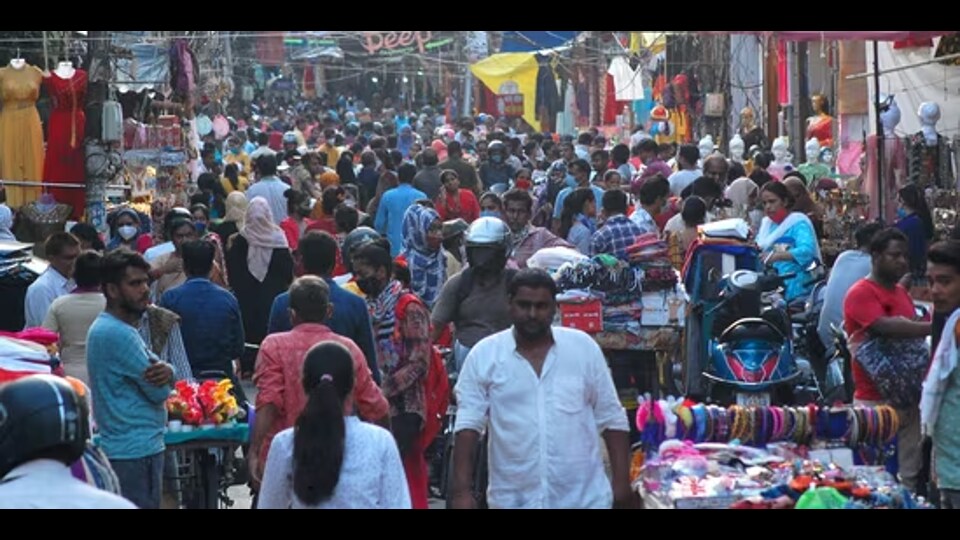
The word “future” is indefinite, and India, with the world’s largest population, is unlikely to disappear. Whether having three children is in the nation’s interest is debatable, with opinion sharply divided.
India surpassed the Chinese population in 2023, decades after China introduced a one-child policy in the 1980s. An aging population forced China to change its policy. Indian planners and health officials would visit China to understand its model.
In the 1970s, the Congress paid the price after the Indira Gandhi government implemented an aggressive family control programme during the Emergency in 1976. As a democratic country, India eventually opted for incentives rather than coercive birth control measures.
To propagate small families, the slogan “hum do, hamare do” was coined. Some states made the two-child norm mandatory for government officials and public representatives at the panchayat level. The southern states now fear the consequences of limiting families as population-based delimitation of assembly and Lok Sabha constituencies is proposed to be carried out.
The anxiety
Bhagwat’s suggestion is apparently driven by the 2011 census data, which showed a marginal decline in the Hindu population and a slight increase in the percentage of Muslims. India’s population grew by 17.7% from 2001 to 2011. The percentage of Hindus dropped from 80.46% in 2001 to 79.8% in 2011. The Muslim population increased from 13.43% to 14.23%.
Union home minister Amit Shah has also spoken about the decline in the Hindu population. According to the 1951 census, the Hindu population was 84% and the Muslim 9.8%. The Hindu population decreased to 82% in 1971 and 81% in 1991. The Muslim population rose to 11% and 12.2%. Despite this trend, the fear that Muslims will outnumber Hindus is unfounded, but it is a political hot potato.
As of now, most studies are based on 10-year data from 2001-2011. The country’s actual population, demographic changes, and the growth of religious groups will only be known after the 2027 census.
In 15 years, from 2011 to 2026, there has been a sea-change in literacy levels, awareness, and understanding of rights. The quest for education has increased across castes and communities, irrespective of their socio-economic status.
Government policy has shifted from aggressive sterilisation in the 1970s to a two-child campaign, and people are also voluntarily preferring smaller families. The Centre has been promoting birth control methods. It launched a programme in 2017 to bring fertility down to replacement levels by 2025.
Personal choice
Bhagwat’s concern is perhaps more about the declining Hindu population, even as the appeal for three children has been linked with the “national interest.” Many of RSS followers will lap up the suggestion, which they feel is imperative to building a Hindu Rashtra, with the common refrain being “Muslims will take over India,” even as demographic data does not support the claim. Let us wait for the 2027 census.
Bhagwat’s statement also goes against the personal choice of families in a very personal matter. Young couples, discouraged by the high cost of living, health, and education, are becoming “pet parents” rather than having kids.
Personal conditions and ambitions drive families to have one or two children rather than the “national interest” and Hindu Rashtra. And more importantly, the nation must be prosperous, not just populated.


