
 E-Paper



Keeping watchful eye on Chinese moves amid Ladakh row: US official
US defence attaché to India Rear Admiral Michael L Baker said the US does work closely with India to exchange views on this area “to make sure that we have a clear understanding of what we think may be happening”


NEW DELHI: The US is keeping a watchful eye on China’s moves along India’s northern borders while working closely with New Delhi to exchange views on the ongoing developments amid the lingering border standoff between India and China along the Line of Actual Control (LAC) in the Ladakh sector, a senior US defence official said on Wednesday.
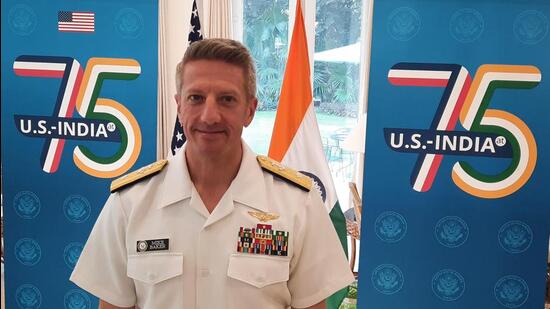
“It is certainly an important area for us,” said Rear Admiral Michael L Baker, the US defence attaché to India.
“We do remain watchful. We do work closely with India to exchange our views on this area to make sure that we have a clear understanding of what we think may be happening and I think it is a space that both India and the US are going to remain watchful of over time. We cannot take our eyes off regional security issues,” he said.
His comments came during an interaction with a small group of journalists while responding to a question on Washington’s assessment of the 30-month-old LAC row and how things could play out in the coming months.
The border standoff between India and China is in its third year, with a full resolution still not in sight even though the two sides have had success in disengaging rival soldiers from some friction areas on LAC and talks are on to end the deadlock that has cast a shadow over the bilateral relationship.
“While the US would definitely be monitoring the situation along the LAC as it is a flashpoint, India is well capable of deterring China’s aggressive behaviour at the northern borders on its own strength,” said former director general of military operations Lieutenant General Vinod Bhatia (retd).
The border row erupted in May 2000 and despite four rounds of disengagement from Galwan Valley, Pangong Tso, Gogra (PP-17A) and Hot Springs (PP-15), the Indian and Chinese armies still have more than 60,000 troops each and advanced weaponry deployed in the Ladakh theatre. The two sides have held 16 rounds of military talks so far, but problems at Depsang in the Daulet Beg Oldi sector and Charding Nullah Junction (CNJ) in the Demchok sector are still on the negotiating table.
To another question on Beijing’s belligerent moves in the disputed South China Sea, Baker said it was critical to be “mindful and watchful” of Chinese actions in other regions as well.
“They have a very aggressive stance in the South China Sea. The US has a pretty clear public position on this too. That’s something we need to be mindful and watchful of.” He said it was important to help countries across the region to have a choice in security partners, and they could partner with someone like India or the US, or both. “That is the key to ensuring that Indo-Pacific remains free and open which is the mutual goal for both India and the US.”
He said India and the US shared an “incredibly strong relationship,” with defence ties being the cornerstone of the bilateral relationship that encompassed dialogue at the top level, several high-level visits, bilateral military exercises and defence technology cooperation.
Asked to comment on the growing cooperation between Russia and China, Baker said, “The aggressive, unwarranted war that Russia is waging in Ukraine, and the amount of support it is getting from that other partner (China) is not in accordance with international law or rules and it is against the UN’s mandate.”


