
 E-Paper



Sowing picks pace but east battles drought concerns
An uneven monsoon has nearly caused droughts in parts of eastern Uttar Pradesh, Bihar and Jharkhand, stoking concerns.

 Prefer HTon Google


The area sown under most kharif crops, barring pulses, has nearly expanded to last year’s levels after being disrupted by torrential rains during most of July. However, an uneven monsoon has nearly caused droughts in parts of eastern Uttar Pradesh, Bihar and Jharkhand, stoking concerns.
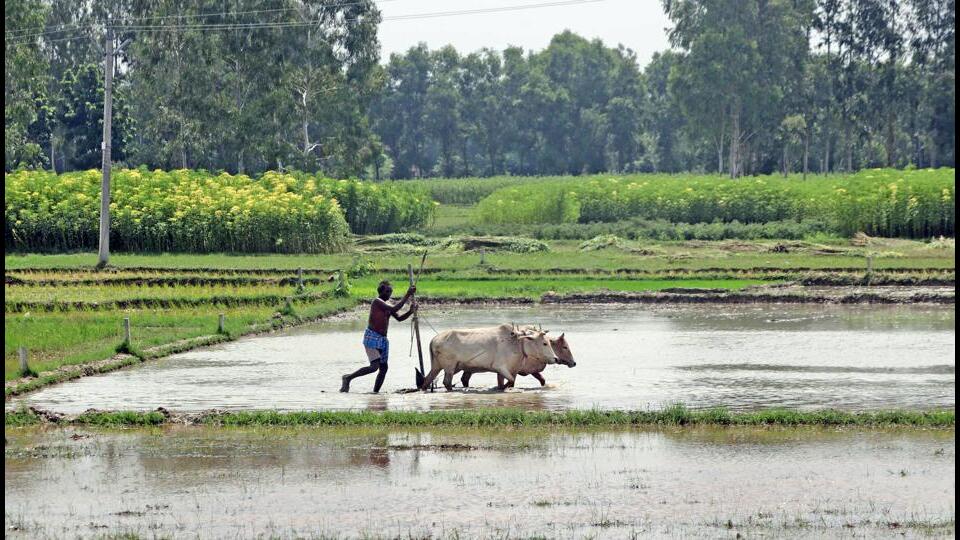
Farmers have sown 23.75 million hectares under paddy, the main summer staple, as on Saturday, up nearly 2% over last year in the corresponding period, official data showed.
Also read: Will rice spoil India’s inflation math?
Last year, the June-September rainy season had been scanty in the same states of the Indo-Gangetic plains, hammering paddy crops and leading to a 2% fall in the output of West Bengal, the largest producer.
Currently, the monsoon is 7% surplus, but was 84% below normal in eastern Uttar Pradesh in the week ended July 26, according to India Meteorological Department. In Gangetic West Bengal, a paddy belt, rains have been 57% deficient.
Jharkhand, another major rice grower, has seen a 68% subpar monsoon in the week ended July 26, the data showed. The weather bureau has forecast a dry spell in August, which could be worrisome for these states.
The total area under all kharif crops stands at 83 million hectare compared to 83.1 million hectare in the same period last year.
Pulses, a scarce group of commodities, have been sown in 9.6 million hectares, lagging nearly 12% compared to last year’s levels for this time of the year. The area under pigeon pea (arhar), a commonly consumed pulses variety whose prices are elevated, stood at 3.1 million hectares, compared to last year’s 3.7 million hectares.
“Crops in areas with excess rain will do well even if monsoon takes an extended pause in August, but there will be pockets of distress in Uttar Pradesh, Bihar, Jharkhand and West Bengal, which have been very dry. Farmers there will have to shift to alternative crops,” said Abhishek Agrawal of Comtrade, a commodity trading firm.
Also read: 10% paddy yet to be transplanted, Punjab officials anticipate spurt in farm fires post harvest
Sowing data from the agriculture ministry also showed a large gap in the acreage under black lentil (urad), another volatile item, at 2.5 million hectares compared to last year’s 3 million hectares.
The area under coarse cereals, or millets, stood at 4.5 million hectares, the same as last year for this time of the year. Oilseeds acreage currently stands at 17 million hectares, higher than last year’s 16 million hectares.


