
 E-Paper



10% paddy yet to be transplanted, Punjab officials anticipate spurt in farm fires post harvest
Owing to extremely heavy rainfall three weeks ago, that led to floods, freshly transplanted rabi crop suffered severe damage in the districts of Patiala, Sangrur, Mansa, Ludhiana, Fatehgarh Sahib and Ropar, so much so that it had to be resown. Even now some areas in these districts are flooded

 Prefer HTon Google


Due to heavy rains and flooding in the last few weeks, the paddy crop over at least 10% area (6.25 lakh acres) is waiting to be transplanted in Punjab and the state agriculture department has set a deadline of August 8 to complete the process.
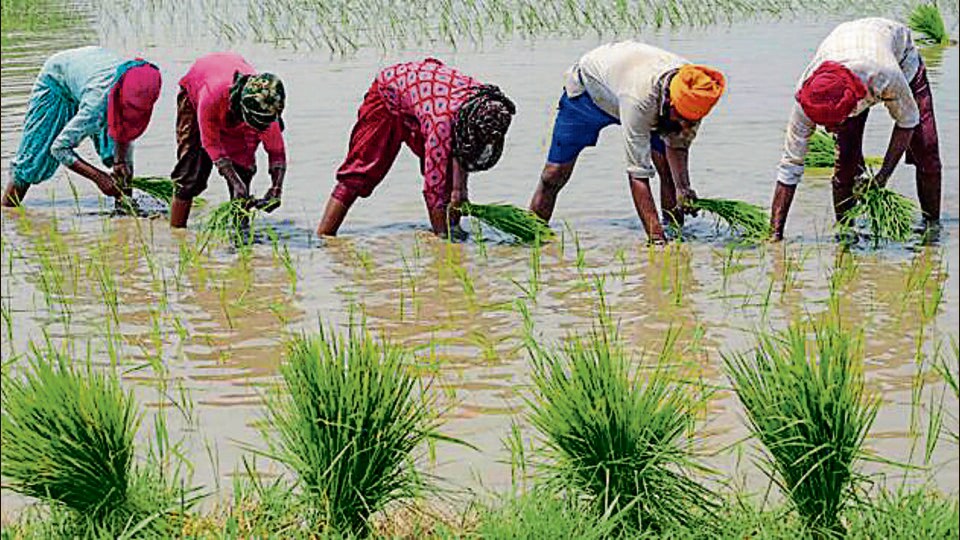
Owing to extremely heavy rainfall three weeks ago, that led to floods, freshly transplanted rabi crop suffered severe damage in the districts of Patiala, Sangrur, Mansa, Ludhiana, Fatehgarh Sahib and Ropar, so much so that it had to be resown. Even now some areas in these districts are flooded.
As per agriculture departments figures, this season, paddy crop is sown over 31 lakh hectares (76 lakh acres) out of which premium aromatic basmati variety has been sown over more than 6 lakh hectares (15 lakh acres). The coarse variety paddy covered under minimum support price will be sown over 61 lakh acres.
“The crop remains to be sown in over 6.25 lakh acres for which a deadline has been set for the first week of August,” Gurvinder Singh, director agriculture, said, adding that early maturing variety PR126 which matures in 90 days has been recommended to be sown.
Officials anticipate spurt in farm fires
With the paddy crop maturing late, the officials are apprehensive that this may lead to a spurt in farm fires as it will leave a short window for cultivators to prepare their filed and sow wheat, another major crop grown in the region.
“Due to late maturing, we are apprehending a spurt in burning of paddy stubble during harvest in November month,” Gurvinder added.
On Thursday, chief secretary Anurag Verma held a meeting with the officials of the departments of agriculture, science and technology and finance and the state pollution control board to discuss a strategy for curbing the practice of setting paddy stubble on fire.
The Centre’s ministry of agriculture, 10 days ago, also held discussions with the state agriculture department on a strategy to stop farm fires. “We have been asked to draw out a strategy to check stubble burning,” Gurvinder added. He said that the Punjab government has assured the Central ministry that despite the odds, the state government would make all efforts to curb farm fires.
Gurvinder said a lot will depend on the weather in November.
“In case of early winters, the crop maturing and harvest will get delayed. But in case of dry and relatively higher temperatures, the crop will mature early,” he said.
The state government has sought ₹350 crore for ex-situ and in-situ management of paddy crop residue.
There were at least 71,000 cases of stubble burning reported in 2021 which came down to 49,000 in 2022. The state authorities are apprehending cases to rise during the kharif harvest, particularly in November months when late sown paddy will be harvested.
Punjab Agricultural University vice-chancellor Dr SS Gosal, advocated surface seeding of wheat immediately after paddy harvest so that the stubble burning could be curbed.
“Hope farmers will realise the environmental hazard and loss of soil nutrients and not burn paddy straw in the upcoming harvest,” he said.
Meanwhile, Balbir Singh Rajewal, who heads a faction of the Bhartiya Kisan Union (BKU), said the scenario this season is very unpredictable.
“At this stage, it can’t be quantified how much area is late sown as still 7-8 lakh acres are waiting to be transplanted. Late sown cop will mean late maturing and delayed harvest and shorter window for wheat sowing,” he said, adding that it may lead to paddy stubble burning over larger areas.


