
 E-Paper



Lancet panel lists 8 suggestions for Centre, states to check surge
The eight recommendations made by 21 experts were published in an article in the British medical journal, The Lancet, on Wednesday.


The Lancet Citizens’ Commission has recommended centralised procurement and distribution of coronavirus disease (Covid-19) vaccines free of cost instead of the current policy of decentralized procurement through state governments, as part of a set of recommendations proposed in response to the alarming resurgence of Covid-19 in India.
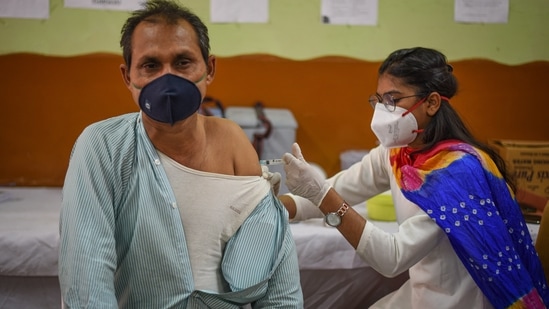
The eight recommendations made by 21 experts were published in an article in the British medical journal, The Lancet, on Wednesday.
“In response to the alarming resurgence of Covid-19 in India, authors drawn from the Commission and its network of fellows have proposed eight urgent recommendations in an article in The Lancet. These recommendations are focused on the immediate steps central and state governments must take to help curtail the loss of life and suffering caused by Covid-19 amid the recent surge in cases,” said the Commission in a press statement.
The Lancet Citizens’ Commission on Reimagining India’s Health System was launched in December 2020 with the aim of laying out a road-map to achieve universal health coverage in India over the coming decade.
Among other measures suggested by the members of the Commission to manage the situation in India are: district level organisation and financing of essential health services; transparent national pricing policy and caps on the pricing of all essential health services; and wide dissemination of evidence-based information on the management of Covid-19, especially on what not to do.
The members also recommended the marshalling of all available human resources, including those in the private sector; an emphasis on community engagement and public participation with no restrictions on civil society organizations to access resources; complete transparency and sharing of government data to enable districts to proactively prepare for future cases ; and urgent investment in genomic sequencing.
By early February, the daily new Covid-19 cases dropped to under 10,000, letting everyone believe that the worst was over. However, the numbers touched as high as 400,000 in the first week of May, catching many off-guard, and experts announcing that India was in the midst of a ferocious second Covid-19 wave.
Vaccination, which experts hailed as the key to fighting subsequent waves, started going down because of the acute supply crunch that forced many states to stop vaccination in the 18-45 years category. At about 2 million doses a couple of weeks ago, the daily vaccinations dropped to about half of what was in April when the process was at its peak.
The article synthesizes and amplifies the suggestions already being made by grass root level workers and experts across the country.
“The humanitarian crisis the resurgence (of Covid) has precipitated requires all persons in central and state governments to set aside their political differences and work in solidarity with each other, and with civil society, to implement the eight clearly articulated recommendations in our article,” said Vikram Patel, one of the Commission members, in a statement.
Patel is the Pershing Square Professor of Global Health, Harvard Medical School; Professor, Harvard T.H. Chan School of Public Health, Cambridge, USA; and Co-founder, Sangath, Goa, India.
Another member, Poonam Muttreja, executive director, New Delhi’s Population Foundation of India, said, “When it comes to Covid-19 vaccines, we are not only talking about centralization but a certain kind of centralization. It is not just about procurement of vaccines, but the Centre should also look at pricing, and equitable distribution.”
Finally, the team also recommended that the profound suffering and risk to health caused by loss of livelihoods should be minimised by making provisions for cash transfers by the state to workers in India’s vast informal economy who have lost their jobs and requiring businesses not to lay-off their workers.


